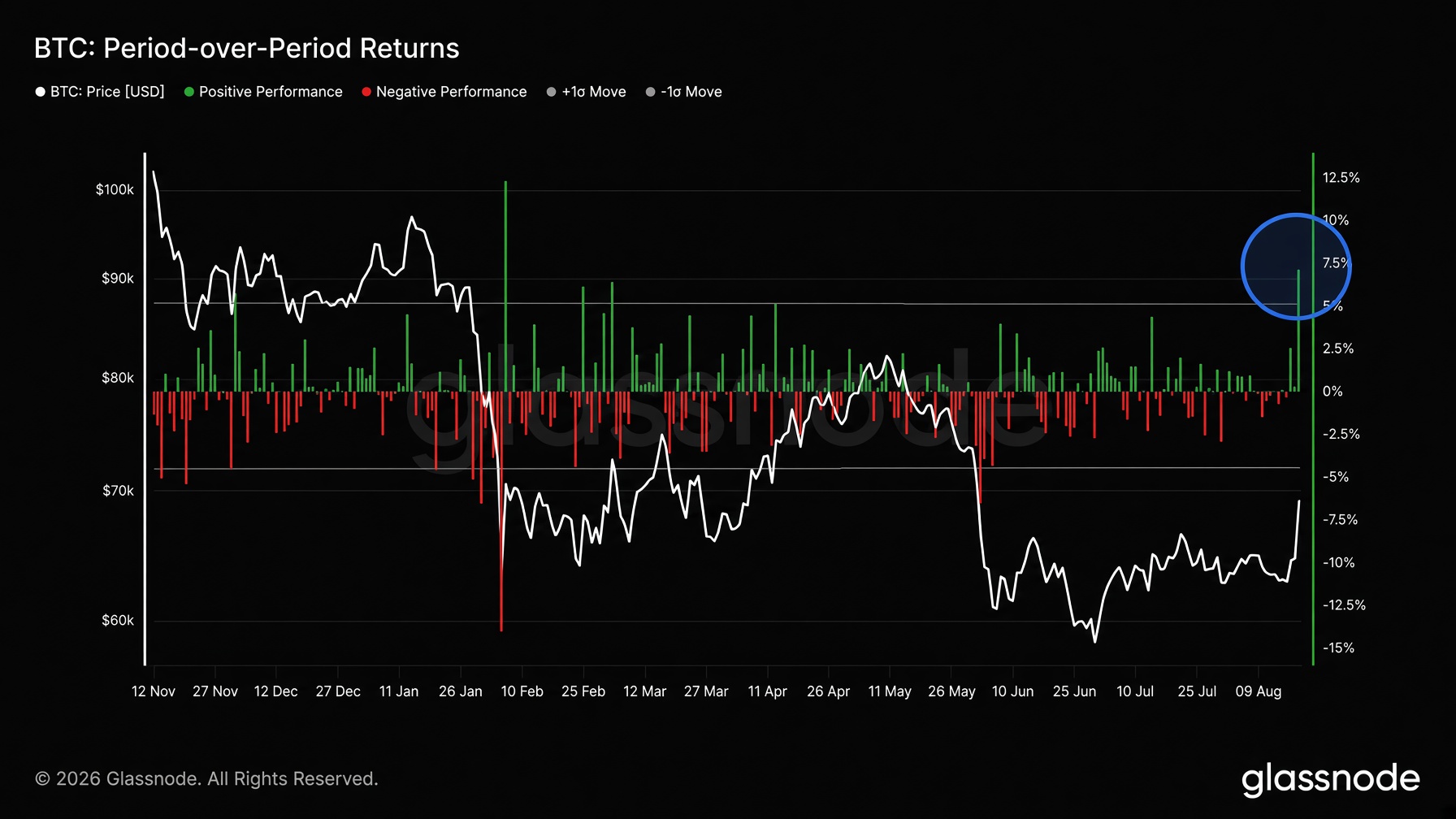
Bitcoin’s August 19 close was a 5.8-sigma move against 30-day volatility, the largest upside spike since October 2023, and it occurred without a prior crash. Glassnode.
By BitBrainers Editorial
The Treasury lit the match
On August 19, Treasury Secretary Scott Bessent announced the department would at least double its liquidity support buybacks for 10, 20, and 30 year Treasury bonds, from $2 billion to $4 billion per operation. He told CNBC the figure could go higher. The operations start September 9 and run through November 4.
The 30 year yield had hit a 19 year high two days earlier, the highest since 2007, while U.S. debt crossed $40 trillion. Treasury stepped in because the bond market was genuinely under pressure. The buyback was reactive. No one had it on a calendar.
Yields dropped to about 4.64 percent on the announcement. By Wednesday they had climbed back above 4.7 percent. The dollar weakened and gold rallied on the same signal. This was a liquidity and dollar trade, and bitcoin got carried along same as gold did.
A move with no crash behind it
Glassnode measured the August 19 spike at 5.8 sigma against 30 day volatility, the largest upside move since October 2023. The part that matters is what is missing from it. These moves usually follow a crash. Something breaks, price capitulates, then the snapback happens. None of that happened here. Bitcoin had been sitting bored in the $63,000 to $65,000 range the week before, intact but going nowhere.
CoinGlass put short liquidations at $3.1 billion across August 19 and 20, with bitcoin alone accounting for $1.65 billion. Thursday was the single largest day of short liquidations on record. By Friday the running two day total had climbed closer to $3.8 billion.
CryptoQuant showed short term holders, wallets under 155 days old, sending 43,300 BTC to exchanges at a profit. That was the largest profit-taking move of 2026 for that cohort. Their SOPR ratio hit 1.01, the highest reading since April. The shorts were squeezed and existing holders took profit into the move.
The Fear and Greed Index went from 46 to 62 in a single day. That is a mechanical flip, and it moved because the price moved. The price did not move because of the index.
What a 1932 market book has to do with this
There is an old observation from Robert Rhea's writing on the Dow Theory that fits this move uncomfortably well. Countertrend rallies inside a bear market tend to move faster and more violently than the decline they are reacting against, and they take less time to unfold than the move they are partially undoing. Speed fails to confirm a real trend change. Speed is the signature of a secondary reaction inside a larger downtrend when it finally lets go.
A four day, roughly 27 percent vertical move through several resistance levels matches that description on paper. Matching the description differs from confirming it. After watching retail traders get liquidated into violent rallies for the better part of five years, this pattern is familiar. Speed alone has never been the thing that separates a real trend change from a short covering event that ran out of shorts.
$67,000 or $80,000, and what actually decides it
The real question is whether spot demand shows up to replace the forced buying that got bitcoin here. Short covering creates no new buyers. It forces existing sellers to become buyers for a few days, and then it is done.
ETF inflows hit $517 million on August 19, which is a real number and also just one day. One day does not establish a trend.
What would actually confirm this: sustained ETF inflows across multiple weeks instead of one good print. STH-SOPR holding above 1 for consecutive sessions instead of spiking once and rolling back over. Bitcoin holding above the short term holder cost basis near $68,700 without a retest that fails. None of that has happened yet. It is an open question sitting on the table.
Evercore ISI's Krishna Guha called the Treasury move "a weak form of Operation Twist" that "changes almost nothing in terms of the fundamentals." $14 billion in expanded buyback capacity against $40 trillion in national debt is too small a number to fix anything structural. It is the kind of number that buys a few weeks of better sentiment, exactly what it has done so far.
The two dates that matter more than the candle
September 9 is when the expanded buybacks actually start. September 15 is the CLARITY Act's procedural vote in the Senate, which needs 60 votes and currently has 53 Republicans committed at best. Grayscale's head of research has called 2026 passage unlikely, citing the Senate calendar and the midterms eating up floor time.
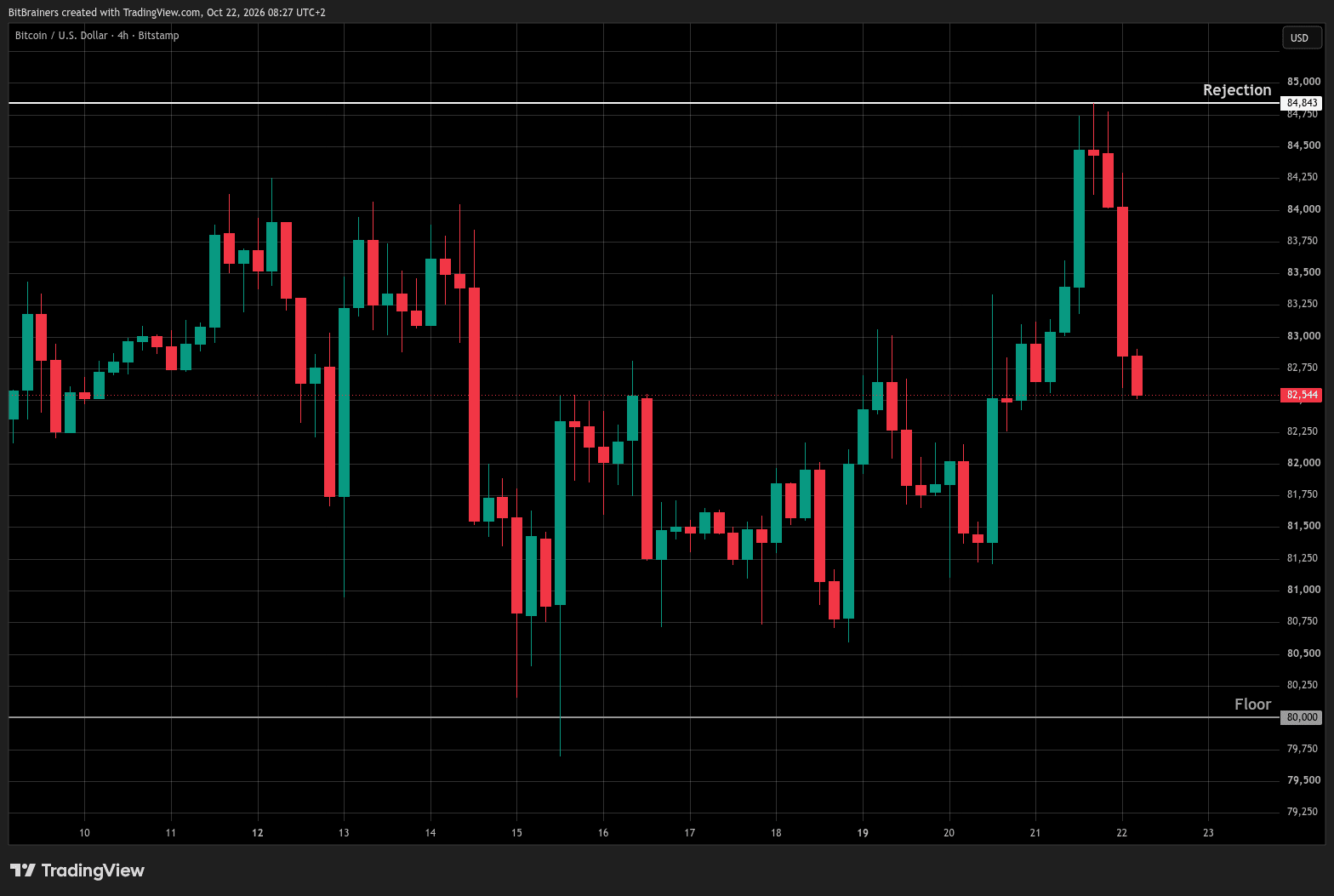
A stall on either date could send this back toward the $67,000 to $70,000 zone fast. That is the same zone this whole move started from four days ago.
The headline number can be ignored for a week. What matters is whether ETF flows repeat instead of spiking once, whether STH-SOPR holds above 1 without a second sharp move, and whether September 9 and September 15 pass without reopening the yield pressure that started all of this to begin with.
BitBrainers Weekly Briefing
One email every Monday. Market structure, key levels, on-chain signals, positioning notes. No hype.
Subscribe $9/monthCancel anytime. No questions.
Sources
Bloomberg Treasury buyback announcement, yield data, market commentary
Glassnode 5.8 sigma move measurement, on-chain volatility data
CoinDesk Short liquidation totals, ETF inflow figures
TradingView Price levels, technical chart data
CoinGlass Liquidation data, derivatives positioning
CryptoQuant Short-term holder exchange flows, SOPR ratio
Evercore ISI Krishna Guha commentary on Treasury operations
Grayscale Research CLARITY Act legislative outlook
Treasury.gov Buyback operation announcements
CNBC Bessent interview, yield reaction coverage
Tools: Kraken for trading. Trezor for storage.
This is market commentary, not financial advice. Nothing here is a recommendation to buy or sell any asset. Do your own research.