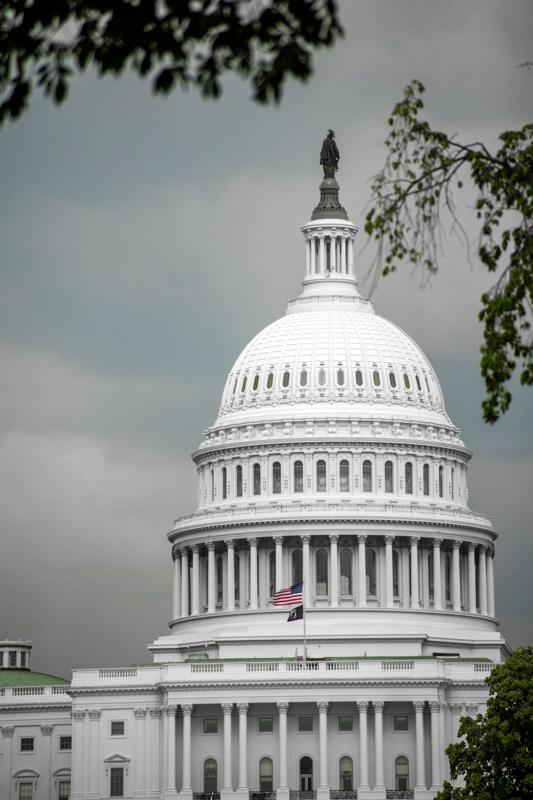
The U.S. Senate Banking Committee just approved the Clarity Act in a 15-9 vote. For the first time in crypto history, Washington is not debating whether to regulate Bitcoin. It is debating how fast.
This is not a small procedural win. This is the first comprehensive market structure bill for digital assets to clear a Senate committee. The bill now heads to a full Senate floor vote, where it needs 60 votes to pass — meaning it cannot survive on Republican support alone.
Here is what is actually in it, why it matters for Bitcoin specifically, and why the window to pass it might be shorter than anyone admits.
What the Clarity Act Actually Does
The bill draws a hard line between two types of digital assets: digital commodities and investment contract assets. Bitcoin lands clearly in the first category. That distinction matters because it determines which regulator has jurisdiction.
Under the Clarity Act, the CFTC — not the SEC — gets exclusive authority over digital commodity spot markets. For years, the SEC under Gary Gensler treated nearly every crypto asset as a potential security, leaving the industry in a legal grey zone where enforcement came before rules. The Clarity Act ends that ambiguity for Bitcoin.
The SEC retains jurisdiction over assets that are structured more like investment contracts — tokens sold to fund a project with an expectation of profit. Bitcoin, which has no issuer, no founding team, and no central authority, does not fit that definition. The bill makes that official.
For institutional investors, this is the signal they have been waiting for. Regulatory certainty reduces legal risk. Reduced legal risk unlocks capital. The GENIUS Act, which established rules for stablecoins, was signed into law in July 2025 and immediately triggered a wave of institutional stablecoin adoption. The Clarity Act is the bigger follow-up.
The Problem: It Is Not Law Yet
The committee vote is one step in a long process. The bill still needs to pass the full Senate, where 60 votes are required. That means Democrats must cross the aisle, and several have already signaled they will not do so without ethics language targeting the Trump family's crypto interests.
Trump and his family have made billions from meme coins and the World Liberty Financial crypto venture. Democrats want conflict-of-interest guardrails written into the bill. Republicans, following White House guidance, want ethics rules that apply broadly to all government officials — not language that singles out the president.
That fight is not resolved. It is the reason the bill has been delayed since January 2026.
Galaxy Research put the odds of the Clarity Act becoming law in 2026 at roughly 50-50. The reason is not opposition to crypto regulation itself. It is the compressed legislative calendar. The Senate must act before August, when campaigning for midterm elections effectively shuts down controversial votes. If the bill does not pass before then, the next realistic window is 2030 — a new Congress would have to restart the entire process from scratch.
Senator Cynthia Lummis, who chairs the Banking Subcommittee on Digital Assets, was blunt about it at the Bitcoin 2026 Conference in Las Vegas: "We are going to get it to the finish line." She also warned that failure to act this year means waiting at least four years.
The Banks Are Not Happy (While Quietly Buying Bitcoin)
The loudest opposition to the Clarity Act is not coming from Democrats. It is coming from the banking industry.
Banks object specifically to provisions around stablecoin rewards. The bill allows stablecoin holders to earn rewards when they spend or use their stablecoins — a feature that competes directly with interest-bearing deposit accounts. The American Bankers Association has lobbied aggressively against any yield-like mechanism for stablecoins, arguing it would pull deposits out of the traditional banking system. On April 10, the ABA launched a last-minute lobbying campaign to pressure senators against the bill.
This fight has delayed the Clarity Act for months. Patrick Witt, Trump's crypto adviser, described continued bank lobbying on this issue as motivated by "greed or ignorance."
Here is the part nobody mentions in polite company: the same banks lobbying against the bill are building crypto products as fast as they can.
Bank of America started recommending Bitcoin ETFs to clients in January 2026. Morgan Stanley filed for a Bitcoin Trust with the SEC the same month. Citigroup is launching a crypto custody service in 2026. Goldman Sachs spent two billion dollars acquiring an ETF issuer in December 2025. Twenty-four major Wall Street firms now offer some form of crypto trading or custody, according to Bitwise.
The Banking Policy Institute — chaired by JPMorgan CEO Jamie Dimon, the man who once called Bitcoin a fraud — urged lawmakers to restrict stablecoins while JPMorgan simultaneously builds blockchain infrastructure.
The banks are not anti-crypto. They are anti-competition. There is a difference.
The Numbers Nobody Is Talking About
While Washington debates the Clarity Act's ethics provisions, the market has already voted.
Bitcoin ETFs added 532 million dollars in a single session the day the Clarity Act cleared committee, pushing total ETF assets under management past 59 billion dollars. Cumulative institutional exposure to Bitcoin now exceeds 106 billion dollars. Institutional players are currently absorbing roughly 500 percent of Bitcoin's daily mining output. For every Bitcoin mined, institutions are buying five.
The stablecoin market sits at 317 billion dollars. The entire crypto market is at 2.6 trillion dollars. These are not speculative numbers from a whitepaper. They are the market that exists right now, operating without a comprehensive legal framework.
The Clarity Act does not create institutional interest in Bitcoin. That interest already exists and is already deployed. What the bill does is remove the legal friction that forces institutions to operate through workarounds, offshore structures, and ETF wrappers instead of holding the asset directly.
That is not a small unlock. That is the difference between institutional exposure and institutional ownership.
What This Means for Bitcoin
Bitcoin's classification as a digital commodity is not new information to the market. Courts and regulators have treated it that way informally for years. What the Clarity Act does is codify it — turning a general consensus into a legal standard.
The practical effects are significant. Exchanges that list Bitcoin would operate under CFTC oversight rather than SEC enforcement. Custody rules would be clearer. Institutional products — ETFs, futures, lending — would have a defined legal framework to operate within.
The bigger implication is psychological. When the GENIUS Act passed, stablecoin issuers immediately began scaling operations they had held back due to regulatory risk. The same dynamic would likely follow the Clarity Act. Asset managers sitting on Bitcoin allocations they cannot fully deploy due to compliance uncertainty would have a cleaner path forward.
Public companies added 369,000 BTC to their balance sheets in the past twelve months. That happened before the Clarity Act existed as law. If it passes, the institutional accumulation that has already been happening accelerates — this time with a legal framework underneath it.
Sources
CoinDesk — Clarity Act Unveiled by Senate Banking Committee
CNBC — Crypto Industry Scores Win as Clarity Act Clears Senate Hurdle
Fortune — Clarity Act Hits a Critical Juncture
CoinDesk — Clarity Act Still Has a Path to Survive Tight Calendar
24/7 Wall St. — Bitcoin ETFs Hit $1 Billion in a Week
CCN — 10 Major US Banks Quietly Building Bitcoin Products
BitBrainers. We check the facts so you don't have to.