

₿ BTC
Loading...
via Binance
Sunday, May 31, 2026
Wall Street's Trillion Dollar Blockchain Problem Has a Name and It's AI Hackers

Near-daily exploits. That is what DeFi protocols are dealing with right now, and it is the single biggest reason the traditional finance giants still will not touch the blockchain the way they should.
This is not a fringe problem. This is not a "crypto bro getting rugpulled" story. This is Wall Street's actual, documented, boardroom-level blocker. The banks have the capital. They have the lawyers. They have the lobbyists. What they do not have is a credible answer to what happens when an AI-powered attacker starts probing their on-chain positions at 3am on a Sunday while their risk team is asleep.
CoinDesk published a piece on May 28, 2026 laying this out clearly. DeFi vulnerabilities are the biggest institutional blocker to TradFi adoption, as exploits are hitting protocols at a near-daily pace. Read that again. Not weekly. Not monthly. Daily.
The Exploit Cadence Is Not a Bug in the System, It Is a Feature of Immaturity
DeFi protocols are software. Software has vulnerabilities. That is not controversial. What is controversial is the pace at which attackers are finding and exploiting those vulnerabilities in 2026, and how AI has turbocharged that process.
Traditional bug discovery used to take time. Attackers needed skilled developers, deep protocol knowledge, and hours of manual review. Now AI tools can scan smart contract code, identify logic flaws, model attack vectors, and simulate outcomes faster than any human audit team can respond.
The asymmetry is brutal. A protocol might take 18 months to build, pass 3 audits, and launch with $500 million in TVL. An AI-assisted attacker can identify a previously undetected vulnerability in days or hours.
Big Banks Are Not Scared of Crypto, They Are Scared of Uncontrollable Loss Events
Here is where most crypto Twitter analysis gets it wrong. The narrative has always been that banks hate crypto because it threatens their business model. That is partly true. But the more immediate blocker in 2026 is operational risk.
Banks have compliance departments, regulators breathing down their necks, and fiduciary obligations to shareholders. A traditional finance institution cannot absorb an exploit-driven loss event without triggering regulatory scrutiny, shareholder lawsuits, and reputational damage that takes years to repair.
Bitcoin, sitting at $73,842 today, is actually less of a concern to institutional risk departments than DeFi protocols. BTC's on-chain mechanics are relatively simple and battle-tested. It is the complex, composable DeFi layer where AI hackers find their playground.
The Audit Industry Has Already Failed to Keep Up With AI Attackers
Security firm CertiK, one of the most cited names in smart contract auditing, has been tracking these exploits closely. The data they have been feeding into public discourse points to a clear pattern: audits are necessary but not sufficient anymore.
An audit is a snapshot in time. It reflects the protocol's code on the day the auditors reviewed it. The moment a team pushes a new upgrade, integrates a new oracle, or adds a liquidity pool, the audit is partially obsolete. AI attackers do not care about your audit certificate.
CertiK's involvement in the conversation around DeFi vulnerabilities is worth watching because they sit at the intersection of the problem and the attempted solution. When even the companies trying to fix security acknowledge near-daily exploit rates, you know the baseline is bad.
Most People Do Not Know That Flash Loan Attacks Are Now Largely AI-Orchestrated
This is the insider detail most crypto blogs skim over. Flash loans, which allow uncollateralized borrowing within a single transaction block, were already a dangerous attack vector before AI got involved. The attack sequence required sophisticated understanding of multiple protocol interactions simultaneously.
Now AI models can map entire DeFi ecosystems, identify composability weaknesses across 5 or 6 protocols at once, and construct multi-step flash loan attack sequences that no human would design manually in a reasonable timeframe. The complexity ceiling has been removed.
When you hear about a protocol getting drained and the post-mortem says "complex multi-protocol attack vector," that is often what happened. It is not necessarily one genius developer. It is increasingly an AI model running optimization loops against your liquidity.
The Contrarian Take: Wall Street Staying Out Is Actually Protecting BTC's Price Structure Right Now
Everyone in crypto frames institutional adoption as universally bullish. More institutions in equals higher prices, end of story. But that framework ignores what kind of institutions and what kind of exposure they would bring.
If a major bank takes a significant on-chain DeFi position and then gets exploited by an AI hacker for a nine-figure sum, the regulatory backlash could be catastrophic for the entire space. We are talking congressional hearings, emergency rulemaking, potential trading restrictions on BTC and ETH in US markets as collateral damage.
The slow pace of TradFi adoption right now is functioning as a buffer. The protocols need to solve the AI exploit problem first. The infrastructure needs to mature. A premature flood of institutional capital into broken DeFi infrastructure could produce the kind of high-profile loss event that sets the entire industry back by years.
Ethereum Is the Primary Battlefield, But BTC Holders Are Not Safe From the Fallout
The vast majority of DeFi exploits hit Ethereum-based protocols. The composability that makes ETH-based DeFi powerful is the same feature that makes it exploitable at scale. BTC doesn't run complex smart contracts natively, so it avoids a lot of this surface area.
But Bitcoin holders are not immune to market fallout when major DeFi exploits happen. In the past, large-scale hacks have triggered short-term panic selling across the entire market. If a Wall Street firm quietly testing DeFi exposure gets hit in 2026, the news cycle will not distinguish between BTC and a compromised Ethereum protocol.
Your BTC bags are fine. Your exposure to the sentiment cascade is not zero.
The Security Stack Needs to Evolve Faster Than the Attack Stack
The real race right now is between defensive AI and offensive AI in the context of smart contract security. Some projects are deploying AI-powered monitoring systems that watch on-chain behavior in real time and can trigger automated pauses when anomalous patterns emerge.
But building that infrastructure takes time, money, and the kind of institutional-grade security thinking that most DeFi teams do not have. The protocols that survive the next 24 months will be the ones that treat security like a continuous operation rather than a pre-launch checkbox.
If you are holding significant crypto assets on-chain or across multiple DeFi protocols, your security posture matters more than ever. A hardware wallet like Trezor keeps your private keys completely off internet-connected systems. It does not protect you from a protocol exploit, but it does protect your core holdings from the kind of wallet-level attacks that often follow large hacks when scammers flood in behind the headlines.
The Trillion-Dollar Number Is Not Hype, It Reflects Real Capital on the Sidelines
The framing of a "trillion-dollar dilemma" in CoinDesk's May 28 piece is not marketing language. Institutional capital that could flow into blockchain-based financial infrastructure is genuinely being held back by unresolved security concerns. Wealth managers, pension funds, and prime brokers cannot responsibly allocate client capital to infrastructure that gets exploited at near-daily rates.
BTC sits differently in this conversation than DeFi. Bitcoin as a store of value and treasury asset is already in institutional portfolios. The next phase of adoption, the phase involving on-chain yield, tokenized assets, and blockchain-native financial products, is what the AI hacker problem is actively blocking.
That next phase is where the real institutional capital velocity comes from. Until the exploit rate drops and AI-powered defense scales to match AI-powered offense, that capital stays in the sidelines.
If you want clean exposure to BTC while all this plays out, Kraken remains one of the most established exchanges for institutional-grade liquidity and security on spot trading. Know where your execution is happening and who is holding custody.
The Assumption You Brought to This Article That You Should Discard Right Now
You probably came in thinking this is a story about crypto being too risky for banks. That framing is backwards. The real story is that the DeFi infrastructure layer specifically is not mature enough to meet institutional risk thresholds. Bitcoin has already cleared that bar for many institutions. The AI hacker crisis is a DeFi-layer problem being incorrectly applied as a blanket label to the entire asset class. Those are two very different things, and conflating them will cause you to misread the market signals when institutional adoption news drops.
Watch CertiK's exploit data feed weekly. Not as a doom signal. As a maturity tracker. The day near-daily exploits become weekly, then monthly, is the day the trillion-dollar pipeline opens.
Disclosure: This post contains affiliate links to Trezor and Kraken. BitBrainers may earn a commission at no extra cost to you. This is not financial advice.
Sources
CoinDesk. Wall Street's trillion-dollar dilemma: Why AI-powered hackers are keeping big banks off the blockchain
BitBrainers. Follow the data, not the noise.
Saturday, May 30, 2026
Is Bittensor TAO a Good Investment in 2026 or Just an AI Narrative Play?
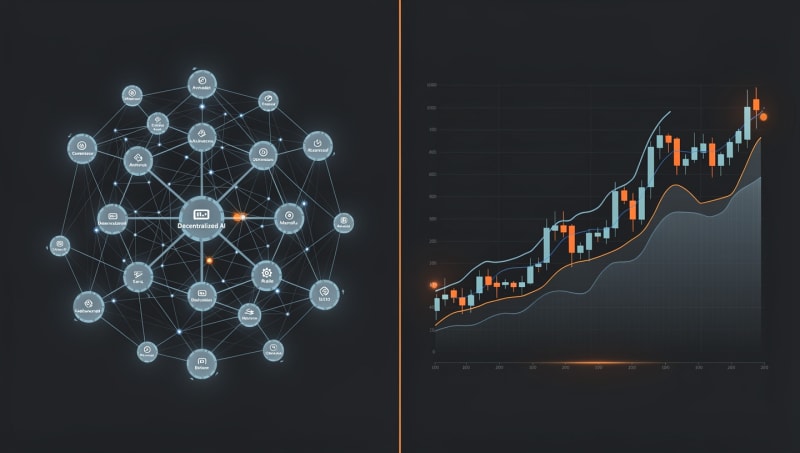
Every bull cycle needs a story. In 2021, it was DeFi. In 2023, it was the ChatGPT wave. In 2026, the story everyone keeps trying to trade is decentralized AI, and Bittensor is the token that keeps coming up. TAO has run hard, pulled back, and run again. Subnet tokens posted 200 to 400% monthly gains in March. Grayscale filed for a spot ETF. Jensen Huang mentioned it.
So is this real infrastructure or is the market just buying the narrative again?
That question has a more interesting answer in mid-2026 than it did a year ago. Because for the first time, there is actual data to look at.
What Changed Since Last Year
The April 2025 version of this conversation was mostly theoretical. TAO had a compelling whitepaper, a unique consensus mechanism called Yuma Consensus, and a hard cap of 21 million tokens that made Bitcoin comparisons easy to write. What it did not have was a live subnet economy with meaningful activity.
That changed fast. The Bittensor ecosystem crossed $1.5 billion in combined subnet market cap, generated over $43 million in real AI usage revenue in Q1 2026 alone, and attracted institutional attention from players like NVIDIA and Grayscale Investments. Two subnets have already broken the $100 million mark.
The key word there is revenue, not emissions. Subnets farming their own token issuance is not a business. Subnets generating fees from actual AI workloads is a different thing entirely.
TAO staked in subnets jumped from $74,400 to over $620 million in one year. That is not a narrative. That is capital with somewhere specific to go.
The Supply Story Is Legitimately Interesting
This is where TAO separates from most AI tokens. The most recent halving occurred on December 14, 2025. Before mid-December, Bittensor emitted roughly 7,200 TAO per day. After the halving, that number dropped to 3,600.
As of Q1 2026, over 70% of the circulating supply of TAO is locked in staking. Combined with reduced daily emissions, the liquid supply available for trading has tightened significantly. You can argue about price targets all day, but the mechanics here are not manufactured. The halving was written into the protocol.
TAO trades with a market cap around $2.75 billion to $2.82 billion, with about 10.83 million TAO in circulation, roughly 52% of total supply. For context, that puts it in serious infrastructure territory, not meme coin territory.
The Subnet Expansion Factor
The network is planning to scale from 128 to 256 subnets in 2026. Grayscale and Bitwise have filed with the SEC for spot TAO ETFs, making it easier for traditional investors to gain exposure without directly holding the token.
Doubling the subnet count matters for a specific reason. Each subnet runs its own AI marketplace. Language models, data indexing, prediction systems, image generation. Every subnet represents a unique AI marketplace, and the demand for TAO tokens rises as more AI models enter those subnets, because only through using the token can individuals participate in the network and gain incentives.
This is the part that separates TAO from tokens that just have AI in the whitepaper. There is a functional loop here: more subnets mean more demand for TAO to participate, which means more staking, which means less liquid supply, which means price pressure to the upside when demand increases. Whether that loop stays intact as the ecosystem scales is the actual question.
The Risk Nobody Is Talking About Enough
Here is the part price prediction articles tend to skip.
On April 10, 2026, the team behind Templar, Covenant AI, exited the network and sold roughly $10 million worth of TAO. TAO dropped between 20 and 25 percent. This event exposed a key structural risk: some subnets depend heavily on a single operator or team.
The Bittensor ecosystem behaves more like an early-stage startup environment than a mature protocol. Most subnets will not succeed. New ideas are constantly being tested, but only a small percentage will achieve sustained usage or revenue. Subnet Alpha tokens often have limited liquidity compared to major crypto assets, and exiting at scale without impacting price can be difficult.
The subnet token mania in March was spectacular on paper. Templar up 444%, OMEGA Labs up 440%, Level 114 up 280%. But those moves cut in both directions. Anyone who bought the top of those subnet tokens in late March had a painful April.
TAO itself is more liquid and more diversified than any individual subnet token, but it is not immune to contagion when a major subnet implodes.
So Is It an Investment or a Narrative Play?
Honestly, in 2026, it is starting to look like both, which is not as contradictory as it sounds.
Most AI-related tokens move with narrative shifts. TAO moves with mechanics. That usually makes price action look slow, until it suddenly is not.
The narrative layer is real and will continue to drive short-term price action. Every AI headline from OpenAI, Google, or Meta creates a reflex trade into TAO. That is not going away.
But underneath the narrative, there is a working supply mechanism, a growing fee economy in subnets, and institutional infrastructure being built around it. If Bittensor establishes itself as a neutral intelligence layer outside Big Tech, the supply math supports much higher valuations by the end of the decade.
TAO is expected to trade between $160 and $500 in 2026, with a potential retest of higher resistance if bullish momentum continues. The wide range tells you something useful: nobody actually knows, and anyone pretending otherwise is selling you something.
What you can say with reasonable confidence is that TAO has more fundamental backing today than it did twelve months ago. The subnet revenue numbers are real. The halving supply math is real. The institutional filing activity is real. That does not make it a guaranteed winner, but it does mean the bull case is no longer purely vibes.
The honest answer to the headline question is this: TAO is increasingly an investment that still behaves like a narrative play. That combination tends to produce the most asymmetric outcomes in crypto, for better and worse.
Position sizing accordingly.
On The Radar This Week
The SEC has a pending decision on a joint spot TAO ETF filing from Grayscale and Bitwise, with a ruling expected by August 2026. That is the single biggest near-term catalyst for TAO and the one to watch. An approval would open institutional inflows that the current Grayscale trust structure cannot replicate.
Also in focus: Bittensor implemented an emissions refactor in mid-May that concentrates new TAO rewards among top-performing subnets. The market has not fully priced what that means for underperforming subnet tokens. Expect rotation.
TAO is currently trading around $276, rebounding off the $255 level after pulling back from March highs. The $300 level is the line to watch. If it holds above that on the next push, the $350 to $400 range comes back into play.
BitBrainers. We check the facts so you don't have to.
Friday, May 29, 2026
Bitcoin's Four-Year Cycle Is Not Dead. It Is Just on Schedule.

Bitcoin peaked at $126,080 on October 6, 2025. It is now down roughly 40% from that high, trading around $75,650. Most people are asking when it recovers. Benjamin Cowen is asking a different question: whether we have even seen the bottom yet.
Cowen, founder of Into The Cryptoverse and former NASA researcher, has been consistent since February. The base case is October 2026.
The Cycle Math
His reasoning is not sentiment-based. It is mathematical. The previous two cycles topped on day 1,059 and day 1,168 from their prior lows. This cycle topped on day 1,162. Almost identical timing. If the tops arrived on schedule, Cowen argues the bottoms will too, roughly a year after the peak, putting the floor at October 2026 and matching December 2018 and November 2022.
CryptoQuant's models independently support this window, flagging September through November as the highest probability zone. The post-halving math points to a bottom 912 to 922 days after the halving, which also lands in late September or early October 2026.
Fidelity has documented the same four-year pattern. Bear market bottoms formed in January 2015, December 2018, and November 2022, spaced approximately four years apart. If the cycle continues, the next low lands squarely in the second half of 2026.
What Happened in 2018 and 2022
To understand why Cowen's framework matters, it helps to look at what those previous cycles actually looked like from inside them.
In 2018, Bitcoin dropped 80% from its $20,000 peak to $3,200 in December. Along the way it produced sharp countertrend rallies that convinced traders the worst was over. It bottomed in February, rallied for months, then broke those lows in June before the final flush. Bear markets rarely move in straight lines. They grind participants down slowly, offering just enough hope to keep them positioned wrong.
The 2022 cycle was equally brutal. Bitcoin fell 78% from $69,000 to $15,476 in November 2022. Countertrend rallies of 20 to 30% appeared before the next leg down. Historically, bear markets take 19 to 25 weeks between major breakdowns. The current cycle has only been running about 14 weeks from its recent high, which means the timeline still fits prior bear market structures perfectly.
A simple but historically accurate indicator worth watching is the 50-week moving average crossing below the 100-week average. It called every bottom since 2015. In 2015, 2019, and 2022, the crossover marked the floor within the same range. As of now, that crossover has not triggered. The signal is still telling us something.
This Cycle Is Different in One Key Way
What makes this cycle unusual is not the timing. It is the mood at the top.
In 2017 and 2021, Bitcoin peaked amid retail frenzy. Social interest in crypto exploded. That euphoria triggered the usual altcoin rotation, with capital flooding from Bitcoin into smaller tokens after BTC topped.
This time, Bitcoin peaked on apathy. Social interest in crypto has been declining since 2021. The top came in quietly. As a result, the altcoin rotation never happened. Alts never ran. The cycle compressed into Bitcoin, and now it is unwinding the same way, without the noise, without the drama, and without the clear signal that a bottom is near.
Cowen's observation on this point is worth keeping: Bitcoin topped within one week of when it historically tops, despite all the narratives declaring the four-year cycle dead. ETFs, sovereign reserves, corporate treasuries. Every cycle had its version of this time is different. None of them broke the timing pattern.
The Recent Rally Is Not What It Looks Like
Bitcoin bounced from its lows to $82,800 recently. Bulls called it a recovery. Cowen called it a dead cat bounce, and his reasoning is technical. The bounce lasted 16 weeks and was rejected at the 200-day simple moving average. That is precisely what happened ahead of the final leg down in both 2018 and 2022. Rejection at the 200-day SMA is a classic bear market signal, not a recovery confirmation.
His floor estimate before any durable recovery: $60,000. Bitcoin's realized price, the average cost basis of all coins in circulation, sits near $54,000. That level has historically acted as support during prior bottoms. A flush toward that zone would not be unprecedented. In 2018 and 2022, the final capitulation brought price down to or through the realized price level before the real bottom was confirmed.
If October Is the Bottom, What Comes After
This is where the cycle framework becomes interesting rather than just painful.
Every Bitcoin bear market since 2015 has been followed by a significant recovery. From the 2015 bottom, Bitcoin rallied from $200 to nearly $20,000 by the end of 2017. From the 2018 bottom at $3,200, it eventually reached $69,000. From the 2022 bottom at $15,476, it ran to $126,080, a 716% gain.
The pattern is consistent: approximately one year of decline, then roughly two years of recovery and accumulation into the next bull market. A useful framework from cycle analysts describes it as one year of parabolic advance, one year of severe drawdown, and two years of recovery and reaccumulation. If October 2026 marks the low, the accumulation window opens immediately after.
Those who bought in late 2018 and late 2022 were not rewarded immediately. They were rewarded 18 to 24 months later, which is exactly how the cycle works. The entry point matters more than the entry price narrative that surrounds it.
There is also a monetary policy dimension that has aligned with each prior bottom. M2 liquidity bottomed in 2015 and 2018 just as Bitcoin hit lows. In 2022, M2 again hit a trough and aligned with the Bitcoin bear market floor. If global liquidity conditions begin expanding again into late 2026, the macro backdrop would match the historical pattern for the next accumulation phase.
What to Watch
Three indicators are worth monitoring over the coming months.
First, the 50-week and 100-week moving average crossover. It has called every bottom since 2015 and has not fired yet. When it does, the historical setup for accumulation begins.
Second, Polymarket and prediction market odds on macro events. In the current environment, US-Iran ceasefire odds and Federal Reserve policy signals are moving Bitcoin more than on-chain metrics. These markets move before the news does.
Third, ETF flow data. BlackRock's IBIT and the broader spot Bitcoin ETF complex are now the primary institutional price signal. Sustained inflow recovery after a period of outflows has historically marked the shift from distribution to accumulation in this cycle.
Cowen is not predicting permanent doom. He is predicting that the clock needs to finish running before the next phase begins. The four-year cycle topped on schedule. His argument is simply that bottoms arrive on schedule too.
The counterargument, ETFs, sovereign Bitcoin reserves, institutional adoption, is real. But every previous cycle had its own version of this time is different, and none of them broke the timing pattern.
The four-year cycle is not dead. It is just on schedule.
Sources: BeInCrypto — Bitcoin Four-Year Cycle Not Dead, Analysts Eye October 2026 as the Ultimate Bottom | BeInCrypto — Former NASA Researcher Shares Bitcoin Prediction for 2026 | Fidelity — Bitcoin Four-Year Cycles Explained | KuCoin — Cowen Predicts Bitcoin Bottom in Late 2026, Calls Recent Rally a Dead Cat Bounce
BitBrainers. We check the facts so you don't have to.
The Automated Crypto Income Machine. No Office. No Boss. No Alarm Clock.

Most people who want to earn money from crypto think about one thing: buying low and selling high. That is the hardest way to do it. The market is unpredictable, the volatility is brutal, and most retail traders end up on the wrong side of a liquidation event they did not see coming.
There is a different model. One that does not depend on calling the top or timing the bottom. One that generates income whether Bitcoin goes up, down, or sideways. It runs while you sleep, while you travel, while you are doing something else entirely. It is not magic. It is infrastructure.
This is what an automated crypto income machine actually looks like in 2026.
The Problem With Trading as an Income Strategy
Trading is not passive income. Trading is a job and a brutal one. It requires constant attention, emotional discipline, real-time data, and the ability to make decisions under pressure with money on the line. Most people who try it discover this the hard way, usually after a significant loss.
The $1 billion in crypto liquidations that happened on May 28, the day US strikes near the Strait of Hormuz collapsed ceasefire hopes, wiped out 93% of long positions in under 60 minutes. The people on the wrong side of that trade were not stupid. They were positioned for continuation in a market that had been trending upward. One geopolitical headline changed everything in less time than it takes to make coffee.
Active trading can generate income. But it is not a machine. It is a grind. The moment you stop paying attention, the machine stops working or worse, starts working against you.
A real income machine generates revenue independently of your attention. Here is how that gets built in crypto.
Layer One: Content That Compounds
The first income layer is a content operation. A crypto blog or media property that publishes consistently, builds organic search traffic over time, and monetizes through advertising and affiliate commissions.
This is not a new idea. What is new in 2026 is that AI has made it possible to run a content operation at a scale that previously required a full editorial team with a fraction of the overhead. AI models can research topics, structure arguments, verify information against live sources, and produce publication-ready content. The human role shifts from writing to strategy, curation, and quality control.
The economics of this model are straightforward. Display advertising through Google AdSense pays on a per-thousand-impressions basis. Crypto affiliate programs pay on a per-conversion basis, when a reader signs up for an exchange, purchases a hardware wallet, or opens a trading account through your link. Kraken pays commissions on referred trading volume. Trezor pays on hardware wallet sales. Coinbase pays on new account signups.
The compounding effect matters here. A post published today can generate traffic and affiliate clicks for years. A library of 200 posts generates more passive income than a library of 20 and the gap widens over time as search rankings build. Content is an asset that appreciates. Most assets depreciate.
Layer Two: Automated Trading
The second income layer is algorithmic trading. Not manual trading automated systems that execute predefined strategies based on technical signals, without requiring you to watch a screen.
In 2026, AI-powered crypto trading is no longer a niche tool. It has become a core strategy for participants who need to operate at the speed the market now moves. The CME just went 24/7. Institutional algorithms run around the clock. A human trader sleeping through a 3am Strait of Hormuz headline is already behind before they wake up.
A well-constructed trading bot does not guarantee profits. Nothing does. What it provides is consistency, speed, and disciplined execution three things that human traders consistently fail to maintain under pressure. A bot does not panic sell at 3am. It does not hold a losing position because it cannot face the loss. It does not overtrade because it is bored on a slow afternoon.
The parameters matter enormously. Position sizing, leverage, stop loss placement, the signals that trigger entries and exits these are the variables that determine whether a bot makes money or loses it. Building and testing these systems takes time and real capital exposure. But once a working system is running, it operates as a genuine income layer that functions independently of your attention.
Layer Three: Social Media Distribution
The third layer is distribution building an audience across X, YouTube, and TikTok that amplifies the content operation and creates additional monetization paths.
X Premium offers revenue sharing based on impressions generated by your posts. YouTube monetizes through AdSense once a channel reaches 1,000 subscribers and 4,000 watch hours. TikTok's creator fund pays on view counts. None of these are significant income sources at small scale but they compound with the content operation, drive traffic to the blog, and build the affiliate conversion funnel.
The AI dimension here is real. HeyGen and similar tools allow creators to build avatar-based video content that does not require on-camera presence. A blog post becomes a video script. A video script becomes a YouTube Short. A YouTube Short drives traffic back to the blog. The same content asset generates income across multiple platforms simultaneously.
The audience also has direct economic value beyond platform monetization. An engaged following in crypto is a warm affiliate conversion pool. A reader who trusts your analysis is more likely to sign up for an exchange through your link than a cold visitor from search. Distribution compounds the income from every other layer.
Why This Model Works in Crypto Specifically
Crypto is an unusually good niche for this model for four reasons.
First, the audience is global and digitally native. Crypto readers are already online, already comfortable with digital products, and already accustomed to taking action, opening accounts, buying hardware, making transfers based on content they read online. Affiliate conversion rates in crypto are among the highest of any content niche.
Second, the news cycle never stops. Bitcoin trades 24/7. Markets move on weekends, at 3am, during holidays. A content operation that publishes consistently has an infinite supply of material. There is no off-season in crypto.
Third, the affiliate economics are exceptional. Hardware wallet sales generate commissions on physical products with real margins. Exchange affiliate programs pay on trading volume, meaning a single referred user who trades actively can generate recurring commissions for years. These are not the thin margins of generic content affiliate programs.
Fourth, the regulatory environment is clarifying. The CLARITY Act is moving through Congress. No CBDC means the dollar's digital future runs through private infrastructure. Institutional adoption is accelerating. The long-term trajectory of crypto as an asset class and an industry creates a durable content and affiliate opportunity that is likely to grow, not shrink, over the next decade.
What This Actually Requires
None of this is passive at the start. Building the content library takes time. Getting trading systems to a point where they run profitably without constant intervention takes iteration and real losses along the way. Growing a social media audience takes consistency over months, not days.
The machine does not arrive fully assembled. It gets built piece by piece, tested under real conditions, and refined based on what actually works. The AI tools available in 2026 compress the timeline significantly — what previously required a team and significant capital can now be built by an individual with the right setup and the discipline to execute consistently.
But the fundamental requirement has not changed. You have to build it before it runs itself. The income is passive once the infrastructure exists. Getting the infrastructure to that point is active work.
The people who understand this and build anyway, are the ones who end up on the right side of the wealth transfer that is happening in real time as traditional income models break down and new ones emerge.
The machine is available. Most people are still waiting for someone to hand them the keys.
BitBrainers. We check the facts so you don't have to.
Wednesday, May 27, 2026
Saylor Wants 1 of Every 21 Bitcoin Ever Made. This Is Why He'll Actually Pull It Off.
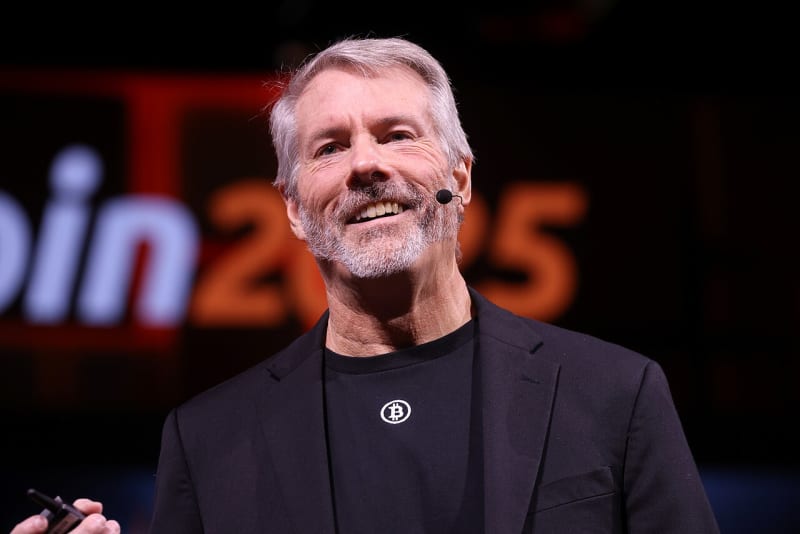
Everyone has an opinion on Michael Saylor. Most of them are wrong.
The skeptics say the model is fragile. That leveraging a company to buy a volatile asset is a house of cards waiting to collapse. That one bad quarter, one margin call, one market crash will unwind everything. They've been saying it for three years. Strategy just keeps buying.
Here's what the critics keep missing.
The Numbers Right Now
Strategy currently holds 843,738 Bitcoin, acquired at an average price of roughly $75,700 per coin. Total cost: approximately $63.87 billion. The target is 1,000,000 BTC by end of 2026. That means Saylor still needs around 156,000 more coins.
To hit that target, the math requires roughly $540 million in purchases per week through December. That sounds insane until you realize Strategy has done it repeatedly, and has nearly $49 billion in remaining authorized capital to deploy.
According to CoinDesk, Strategy would need to maintain a pace of around 6,158 BTC per week to hit the milestone by year end. It has exceeded that pace multiple times already in 2026.
This Week Was Different
Instead of buying Bitcoin, Saylor bought back debt.
Strategy retired $1.5 billion of its 2029 convertible notes at an 8% discount, paying roughly $1.38 billion in cash. Total debt dropped from $8.2 billion to $6.7 billion. According to The Crypto Times, the move contributed 0.7% points to year-to-date BTC yield.
This is not a retreat. This is balance sheet management before the next move. The debt load was the one legitimate argument bears had. Saylor just cut it by $1.5 billion in a single transaction, at a discount.
Why the Model Holds
The thesis was never just "buy Bitcoin." It was build a machine that keeps buying Bitcoin regardless of price, regardless of sentiment, regardless of what the market does on any given week.
Strategy issues stock and debt. It converts that capital into Bitcoin. Bitcoin appreciates over time. Rinse. Repeat.
When Bitcoin crashed from $126,000 to $60,000 during the Middle East conflict earlier this year, Strategy didn't capitulate. It bought $1 billion more. When the stock dropped, Saylor kept buying. When critics called the model broken, the company posted a 13.3% BTC yield year-to-date in 2026.
The bears keep waiting for the machine to break. It hasn't.
The Funding Model Most People Don't Understand
Strategy doesn't fund Bitcoin purchases the way a hedge fund does. It doesn't take on short-term risk hoping for a quick flip. The company uses a layered capital structure: convertible notes, perpetual preferred shares, and at-the-market equity offerings.
The STRC preferred shares alone carry an 11.5% annual dividend. That sounds expensive until you understand the logic. Saylor is essentially paying a premium to borrow capital he immediately converts into an asset he believes will outperform that cost of capital by a significant margin over time.
This week's debt retirement reinforces that logic. Buying back $1.5 billion in notes at an 8% discount means Strategy paid less than face value to eliminate future obligations. That's not the behavior of a company running out of runway. That's a company cleaning up its capital structure because it plans to keep running the same playbook for a long time.
What 1 Million Bitcoin Actually Means
There are 21 million Bitcoin that will ever exist. Around 3 to 4 million are estimated to be permanently lost. Roughly 1.1 million are held by long-term holders who haven't moved coins in years. Miners hold a portion. Governments hold a portion.
The liquid, actively traded supply is far smaller than the headline number suggests.
Strategy owning 1 million Bitcoin wouldn't just be a corporate milestone. It would represent roughly 5% of total supply held by a single publicly traded entity with a stated policy of never selling. Every week that Strategy buys and holds, that supply comes off the market permanently.
The critics frame this as concentration risk. That's one way to look at it. Another way is to recognize that Saylor is systematically removing Bitcoin from circulation at scale, which has a very specific effect on the available supply for everyone else.
The One Thing That Could Break It
To be fair, the model is not invincible. The scenario that causes real problems is a prolonged Bitcoin price collapse combined with a credit market freeze that prevents Strategy from rolling or refinancing its obligations.
If Bitcoin dropped to $40,000 and stayed there for 18 months while debt markets closed, Strategy would face serious pressure. That's the bear case and it's legitimate.
But that scenario requires Bitcoin to revisit levels not seen since early 2024, at a time when institutional adoption is accelerating, ETF inflows have hit hundreds of billions, and sovereign wealth funds are allocating. The probability of that happening while the macro environment simultaneously freezes credit markets is low. Not zero. Low.
Saylor has already survived a version of this. Bitcoin dropped to $60,000 this year from $126,000. Strategy kept buying. The balance sheet held. The model survived its most serious stress test so far and came out the other side with more Bitcoin and less debt.
The 1 Million Target Is Not a Bet
This is the part most people misread. Reaching 1,000,000 Bitcoin is not a prediction or a gamble. It is a stated operational target backed by $49 billion in authorized capital, a proven funding model, and a weekly purchase cadence that has continued through bear markets, geopolitical crises, and regulatory uncertainty.
There are only 21 million Bitcoin that will ever exist. Strategy is on track to own roughly 1 in every 21. Not as a speculative position. As a treasury strategy with a defined funding model, a weekly purchase cadence, and a balance sheet that just got cleaner.
Everyone keeps asking if Saylor will fail. The more interesting question is what happens to the Bitcoin price when he doesn't.
On The Radar This Week
The questions this story is raising that have not been answered yet.
- Will Strategy resume weekly Bitcoin purchases in June, or does the debt retirement signal a longer pause to strengthen the balance sheet first?
- At what Bitcoin price does the STRC preferred share dividend become unsustainable relative to BTC yield?
- If Strategy reaches 1 million BTC, does it trigger any regulatory scrutiny around market concentration?
- How does the broader institutional accumulation trend change if Strategy hits its target and declares the mission complete?
- Will other publicly traded companies accelerate their own Bitcoin treasury strategies now that Strategy has survived its biggest drawdown?
Disclosure: This post contains affiliate links to Trezor and Kraken. BitBrainers may earn a commission at no extra cost to you. This is not financial advice.
Sources
The Crypto Times. Debt Down, Bitcoin Up: Strategy Slashes $1.5 Billion in Debt at 8% Discount
CoinDesk. The Math Behind Strategy's Path to 1 Million Bitcoin by End of 2026
BitBrainers. We check the facts so you don't have to.
Tuesday, May 26, 2026
Everyone Is Watching the Golden Cross. Watch the Volume Instead.
A golden cross just showed up on Bitcoin's chart. BTC is simultaneously sliding toward $75,000. If you think those two things contradict each other, you have not been paying close enough attention to how this market actually works.
The Golden Cross Is a Lagging Signal and Most People Trade It Like It Is Not
Here is the thing nobody in the hype cycle wants to say out loud. The golden cross, where the 50-day moving average crosses above the 200-day moving average, is built entirely from past price data. By definition, it tells you what already happened. It does not predict what happens next. Yet every time one appears, a fresh wave of retail traders treats it like a bat signal from the future.
The chart pattern itself is real. The crossover is happening. But the market does not owe you a rally just because two moving averages changed positions.
BTC Bleeding to $75K While a Bullish Signal Forms Is Not Unusual
This setup, a technically bullish signal appearing during a price decline, has shown up in Bitcoin's history repeatedly. The golden cross does not flip the price switch on contact. Price can and does continue lower even after the cross prints, sometimes for weeks. What the cross does signal is a structural shift in medium-term momentum, not an immediate floor.
BTC sitting near $75,579 while traders watch this signal play out is not a contradiction. It is the market doing exactly what it does: confusing as many people as possible before making a decisive move.
ZEC Dropping 9% Is a Loud Signal About Risk Appetite Right Now
Zcash getting crushed while Bitcoin bleeds is not random noise. When privacy coins and lower-cap assets take disproportionate hits relative to BTC, it tells you something direct about where money is going. Risk is coming off the table. Traders are not rotating into speculative positions right now. They are pulling back.
ZEC has always been volatile, but a 9% single-day drop in this environment is not just ZEC's problem. It reflects a broader pullback in appetite for assets outside the BTC core. Watch what altcoins do when BTC stabilizes. If they do not bounce aggressively off BTC's floor, the market is telling you the liquidity is not there.
The Most Dangerous Trade Right Now Is Chasing the Cross
Here is what most people do not know about golden cross setups specifically in Bitcoin cycles. Institutional desks and algorithmic traders are well aware of how retail responds to these signals. When a golden cross is widely anticipated and publicly discussed, it becomes a potential liquidity zone for larger players to distribute into. The excitement generates buy orders. Those buy orders can become exit liquidity for anyone who positioned earlier and wants out.
This is not conspiracy thinking. It is basic market structure. Publicly known signals attract crowded trades. Crowded trades are dangerous.
The Current Setup Demands You Watch Volume Not Just the Cross Itself
The golden cross without confirming volume is a decoration, not a signal. If BTC forms this cross while daily volume remains suppressed and spot buying does not pick up, the cross means very little in practice. Volume is the engine. The cross is just the dashboard light.
What you want to see is a sustained increase in spot volume on major exchanges as BTC attempts to reclaim a meaningful level above $75,000. Without that, the cross is just two lines touching on a chart while the price continues drifting. Watching the volume profile over the next several days matters more than the cross itself.
Altcoin Pain Confirms BTC Is Not Leading a Broad Rally Yet
ZEC's 9% dump on May 27, 2026 is one data point in a pattern that has been building. Altcoins across the board have been underperforming BTC on relative terms for the past several days. That is what a defensive market looks like. Capital consolidates into BTC when confidence is uncertain. It does not spread.
A genuine bull impulse in this market would show alts holding ground or gaining while BTC stabilizes. Right now you are not seeing that. You are seeing BTC slide and alts fall faster. That is not the precondition for a broad market rally off a golden cross.
If You Are Holding Significant Positions, Your Security Setup Matters Right Now
Volatility like this, BTC near $75,000 and alts dumping, creates a specific type of risk that has nothing to do with charts. It creates urgency. People make fast decisions to buy, sell, or move assets when prices move sharply. Fast decisions under pressure are when security mistakes happen. Hot wallets get drained. Exchange accounts get phished.
If your BTC is sitting on an exchange during a volatile stretch, that is a calculated risk. If it is sitting in cold storage on a Trezor, you are not making panicked decisions with your keys exposed. The golden cross can wait. Your security posture cannot.
Why the Golden Cross Sometimes Fails Completely
The failure mode for a golden cross is simple and worth naming directly. If the 50-day MA crosses above the 200-day MA but price is already well below both averages, the cross is happening in a vacuum. The price action has already moved on. The signal is technically valid but contextually useless because the market is pricing in something the moving averages have not caught up to yet.
This is one reason why traders with experience use the golden cross as one input among many, not as a standalone signal. Cross it with volume data. Cross it with the macro picture. Cross it with what alts are doing. One indicator telling you one thing is barely information. Multiple indicators telling you the same thing is a setup.
The Contrarian Take Most Blogs Will Not Give You
Everyone is framing the golden cross as a reason for optimism and the price slide as the thing fighting against it. Flip that framing. The price slide might be the honest signal and the golden cross might be the noise. Moving averages lag by design. The current price of BTC is live data. Traders are voting with real money right now and they are voting near $75,000 with no obvious aggressive buying floor forming. The lagging indicator saying bullish things does not override the real-time tape saying uncertain things.
Markets have spent years teaching retail to buy golden crosses. Which makes it worth asking seriously: who is on the other side of those trades?
What Actually Happened When Bitcoin Last Had This Setup
Without fabricating a specific case, the pattern of a golden cross printing during a drawdown and failing to produce an immediate reversal has repeated across Bitcoin's history. The cross printed. The price continued lower for a period. Then, weeks or months later, the underlying trend the cross was trying to describe did eventually materialize. The cross was right about direction. It was wrong about timing.
That timing gap cost traders who bought the signal immediately and held through continued pain. Being right about the direction but early on the timing can be just as punishing as being wrong.
Trading Execution Still Matters More Than Signal Watching
If you are actively trading around this setup, execution quality matters. Slippage, fees, and order routing on the platform you use directly affect whether a trade with a thin edge stays profitable. Using a well-structured exchange like Kraken gives you access to proper order types, real liquidity, and a platform built for traders who take execution seriously, not just casual buyers.
This is not the environment to be executing important trades on a sketchy platform with no depth. Near $75,000 with a technically significant signal in play, the spread and execution cost on a bad exchange can eat whatever edge you thought you had.
Before You Leave, Challenge One Assumption You Walked In With
You probably came into this post thinking the golden cross is either definitively bullish or definitively being undermined by the price action. The actual situation is more uncomfortable than either take. The golden cross is a real technical event with real historical significance. The price bleeding toward $75,000 is also real. Both things are happening simultaneously because the market does not resolve ambiguity cleanly or on your schedule. The one thing to watch is not the cross itself. It is whether BTC forms a credible floor near current levels with volume support before the cross's window of influence expires. If BTC holds and volume builds, the cross becomes confirmation. If BTC continues lower, the cross becomes noise. The price action in the next several trading days decides which story gets written. Set a price alert at the current range low and do not make a decision until the market shows you something definitive.
Disclosure: This post contains affiliate links to Trezor and Kraken. BitBrainers may earn a commission at no extra cost to you. This is not financial advice.
Sources
CoinDesk. Traders watch bitcoin 'golden cross' as BTC slides to near $75,000, ZEC dives 9%
BitBrainers. Because most crypto content is garbage.
Sunday, May 24, 2026
Bitcoin Has $1 Trillion Sitting Idle. The Market Hasn't Noticed Yet.

There are roughly 19.8 million Bitcoin in circulation. A significant chunk of that has not moved in over a year. A new report from Ledn puts a number on what that frozen capital represents, and that number is $1 trillion. That is not a rounding error. That is an economy-sized pile of BTC sitting completely outside the productive financial system, and most of the industry is too busy chasing memecoins to notice.
This Is Not About Lost Coins, It Is About Deliberate Inaction
Everyone always talks about lost Bitcoin. Wallets with forgotten passwords, early miners who deleted their hard drives, coins that vanished into the ether before custody even existed as a concept. That story has been told to death.
This is different. The Ledn report is pointing at Bitcoin that is actively held, deliberately kept, and still producing nothing. Holders know they have it. They just have no practical, low-friction way to put it to work without selling it. That distinction matters enormously for where this market is heading.
Think about what that means structurally. You have a base asset with a fixed supply, a growing number of long-term holders who refuse to sell, and a capital market that cannot access that liquidity. That is a bottleneck, not a feature.
Long-Term Holders Are the Backbone of a Broken Liquidity System
The Bitcoin thesis has always leaned hard on scarcity. Diamond hands, HODL culture, 21 million hard cap. That narrative is not wrong, but it has a side effect nobody talks about at conferences: it creates a system where the most committed participants are also the most financially paralyzed.
A long-term holder sitting on 5 BTC at $76,605 today has roughly $383,000 in value. That is real money. But if they need capital for a business, a property, or a market opportunity, their only real option under the current system is to sell. Selling triggers a taxable event. It breaks the position. It defeats the entire long-term thesis they built their strategy around.
So they sit. They hold. And $1 trillion in aggregate does the same.
Bitcoin-Backed Credit Exists and Almost Nobody Is Using It Properly
Here is the part most people do not know. Bitcoin-backed lending has been available for years through platforms like Ledn, and the infrastructure to unlock this capital without selling already exists. The problem is not technological. The problem is trust, access, and the catastrophic blowups that torched this sector in previous cycles.
Celsius collapsed. BlockFi collapsed. Voyager collapsed. When those platforms imploded, they took billions in customer deposits with them. The psychological damage from those failures set Bitcoin-backed credit back by years. Retail holders saw what happened and swore off the entire concept, even though the underlying idea of using BTC as collateral is sound.
The market essentially threw out the model because of execution failures, not because the concept was flawed. A surgeon killing a patient through negligence does not mean surgery should be banned. It means you need better surgeons.
The Report Is Ledn's, and Their Incentive Is Worth Acknowledging
Ledn is a lending platform. They published this report. That context matters. When a company whose revenue depends on people using Bitcoin as collateral publishes a report saying there is $1 trillion of untapped Bitcoin collateral waiting to be used, you read it with one eyebrow raised.
That does not make the data wrong. The analysis of dormant Bitcoin supply is grounded in on-chain realities that any blockchain explorer will confirm. But you should understand the origin of the thesis. Ledn wants borrowers. This report is also marketing.
The actual insight inside it is still valid. The framing around their specific solution is where you apply the skepticism filter.
Institutional Entry Is the Real Catalyst Nobody Is Pricing In
The $1 trillion figure becomes meaningful when you add one variable: institutional credit infrastructure. Right now, most of that locked Bitcoin lives with retail and mid-sized holders who have limited access to sophisticated lending products. Institutions have been building those rails.
Spot Bitcoin ETFs pulled in billions in inflows since approval, proving that institutional demand for BTC exposure is not theoretical. But ETFs are passive. They park capital. They do not unlock it. The next frontier is institutional-grade Bitcoin credit, where large holders can post BTC as collateral and access dollar liquidity at scale without touching their stack.
When that infrastructure matures, the liquidity dynamics of the entire Bitcoin market change. Supply on exchanges could tighten further while demand from credit markets grows. That is a setup worth watching, not one worth ignoring because it sounds boring.
The Tax Problem Is the Actual Hidden Barrier
This is where the institutional narrative and the retail reality diverge completely. Institutions have tax structuring tools. They have treasury teams, CFOs, and lawyers who can build around a sale event. A retail holder with 3 BTC does not have that.
For most individual Bitcoin holders, selling even a portion of their stack to access liquidity means realizing a capital gain, reporting it, and handing over a cut to the government. In the United States, depending on your income bracket and how long you have held, that number stings. Borrowing against BTC avoids that trigger entirely, which is exactly why the credit model is compelling for the retail holder sitting on unrealized gains.
The tax advantage of borrowing over selling is not a technicality. For long-term holders, it is often the entire point.
The Contrarian Read Is That This Unlocking Could Be Net Bearish Short-Term
Everyone framing this story is doing it through the lens of bullish liquidity injection. More capital deployed, more market activity, stronger Bitcoin ecosystem. The bull case is obvious and it is being repeated everywhere.
Here is the read most people are skipping. If Bitcoin-backed credit becomes widely accessible, some of that newly unlocked capital will flow directly into speculative assets. Leveraged positions. Altcoins. High-risk bets funded by BTC collateral. When those positions go wrong, which they will because leverage always finds a way to go wrong, lenders liquidate the collateral. That means forced BTC selling at the worst possible moments.
The history of crypto credit cycles is a history of collateral cascades. More liquidity infrastructure does not automatically mean more stability. Sometimes it means more synchronized, faster-moving crashes when sentiment turns.
Security Becomes Non-Negotiable the Moment Your BTC Has Financial Utility
If you are thinking about using Bitcoin as collateral, or even just thinking more seriously about the value sitting in your wallet, custody is no longer an afterthought. It is the foundation of everything. A hardware wallet like a Trezor is not optional infrastructure for anyone holding meaningful value. It is the baseline.
Counterparty risk in lending is already a risk you are taking on. Adding exchange or software wallet exposure on top of that is compounding risks you do not need to take. Keep your stack on hardware until the moment it moves for a specific purpose, and know exactly why it is moving.
What You Should Actually Do with This Information Right Now
Watch the Bitcoin-backed credit sector over the next two quarters. Not to dive in blindly, but to track which platforms are gaining traction, which are building conservative loan-to-value structures, and which are replicating the reckless leverage models that destroyed the sector in previous cycles.
If you are actively trading and managing liquidity across exchanges, Kraken gives you a regulated, established venue to operate from. Understanding the difference between a trading account and a lending account matters more now than it did even six months ago.
The assumption most readers brought into this post is that locked Bitcoin is just a neutral fact of the market, a background condition that does not really change anything. That assumption is worth challenging hard. Locked capital is not neutral. It is a constraint that shapes price discovery, market depth, and credit access across the entire ecosystem. The moment that constraint starts loosening through maturing infrastructure, the market structure shifts. Whether that shift is bullish or volatile depends entirely on how the credit architecture is built and who oversees it.
Disclosure: This post contains affiliate links to Trezor and Kraken. BitBrainers may earn a commission at no extra cost to you. This is not financial advice.
Sources
CoinDesk. A massive $1 trillion hidden market is waiting to be unlocked in bitcoin, says new report
BitBrainers. No hype. No fluff. Just crypto that matters.
70% of Crypto Wrench Attacks Happen in France and the Data Is Absolutely Wild

Seven out of every ten physical crypto attacks on record happen in a single country. Not Nigeria. Not Russia. Not some lawless jurisdiction with zero financial oversight. France. The heart of the European Union, a G7 economy, home to some of the most sophisticated financial institutions on the planet, is where crypto holders are getting physically targeted at a rate that should have every serious investor rethinking their security setup from the ground up.
This is not theoretical risk. This is not a scam email or a smart contract exploit. Someone shows up at your door, or corners you somewhere, and they want your keys. By force. That is a wrench attack. And according to a new report covered by Cointelegraph, France dominates this specific category of crypto crime in a way that defies easy explanation.
France Dominates This Category for Reasons That Go Deeper Than Coincidence
France has been notably aggressive about crypto disclosure requirements. The country requires residents to declare crypto holdings to tax authorities, which means a paper trail exists. That paper trail does not stay private. Court filings, leaked data, social media flexing, and over-enthusiastic KYC reporting all contribute to an environment where the wrong people can figure out who holds what.
Think about what that means in practice. When an attacker in France wants to find a target, they do not need to hack an exchange or run a phishing operation. They use public information, legal disclosures, and social engineering to identify HODLers. The regulatory transparency that governments sell as protection is functioning as a targeting database for violent criminals.
This is not an accident. It is a structural problem baked into French crypto regulation.
Physical Attacks Are the Threat Vector That No Ledger Can Protect Against
Hardware wallets protect you from hackers sitting in another country. They do absolutely nothing when someone is standing in your living room. The Trezor sitting in your drawer is only as secure as your ability to keep your mouth shut, your holdings private, and your physical location protected.
The brutal reality of a wrench attack is that your 24-word seed phrase is only one threat away from being handed over. Most people who think they are "secure" because they use a hardware wallet have stopped thinking at step one. Security is not a single device. Security is a layered system where hardware is just one component.
If you do not own a Trezor yet, you are already behind. But owning one without a broader privacy strategy is like having a vault with the combination written on a sticky note on your fridge.
The Wrench Attack Playbook Targets Visible Wealth and Sloppy OpSec
Attackers identify targets through a surprisingly short list of vectors. Public social media posts showing gains or portfolio sizes. Local crypto meetup attendance and community group participation. Exchange account data obtained through breaches or insider access. Tax filings and legal records in jurisdictions with disclosure requirements.
France ticks multiple boxes here simultaneously. High crypto adoption rates, relatively high wealth concentration in certain urban areas, and mandatory regulatory disclosure create a perfect environment for motivated criminals to operate with a shortlist in hand. Paris alone has seen multiple documented incidents in recent years where victims were approached at or near their homes.
The attackers are not sophisticated hackers. They are opportunists with research skills and a willingness to escalate to violence. That combination is genuinely dangerous.
Most People Do Not Know This About Wrench Attacks in Europe
Here is something that almost never appears in mainstream crypto security coverage. A significant portion of European wrench attacks involve insiders, meaning people the victim knew personally or semi-personally. Not random strangers. Former business partners, acquaintances from the local crypto scene, people who attended the same conference, or individuals connected to someone who knew about the holdings.
This completely reframes the threat model. Most people build their security around the assumption that the attacker is a stranger. The data suggests that social proximity to your crypto activity is one of the highest risk factors you can carry. Bragging to even one wrong person is enough to paint a target on yourself.
Your best security posture starts well before you touch a hardware wallet. It starts with who knows you hold Bitcoin at all.
The $76,826 BTC Price Environment Is Making This Problem Worse Right Now
With Bitcoin sitting at $76,826 as of May 24, 2026, the financial incentive for physical attacks has never been cleaner. A holder with even 1 BTC is sitting on a life-changing amount of money by the standards of most criminal actors. The math for a wrench attack makes more sense at current prices than it did during lower price cycles, and attackers know it.
This is not a distant risk that matters only to whale-level holders. Someone with 0.5 BTC at current prices holds significant value. In France specifically, that person may have already been identified through mandatory tax declarations or KYC records that leaked, were stolen, or were accessed by someone with inside connections to a financial institution.
The price appreciation that makes Bitcoin exciting to hold is the same mechanism that raises your physical threat profile.
Self-Custody Without Privacy Is a Half-Finished Security Strategy
The crypto community has spent years evangelizing self-custody as the answer to exchange risk. The mantra "not your keys, not your coins" is legitimate, but it is incomplete. Not your keys, not your coins is the starting point for financial sovereignty. But your keys in your hands with your address visible and your holdings announced is a different kind of risk that custody debates completely ignore.
Kraken and other exchanges have their own security risks, but a sophisticated exchange has armed security, legal compliance teams, and insurance structures. Your apartment in Lyon does not. The self-custody argument needs to be paired with an equally serious conversation about physical operational security or it is just half an argument.
Using an exchange for a portion of holdings while maintaining strict privacy around any cold storage is not a weak compromise. It is a rational response to a genuine threat profile.
French Authorities Are Aware and the Response Has Been Inadequate
French law enforcement has acknowledged crypto-related violent crime as a growing category. The problem is that most regulatory energy in France has gone toward financial compliance and tax enforcement, not toward protecting individuals whose publicly disclosed holdings make them targets. The system that creates the risk has not meaningfully addressed the risk it created.
Victims of wrench attacks in France face a secondary problem that most crypto security discussions miss entirely. Even after reporting the attack, proving the extent of losses to investigators unfamiliar with wallet structures, seed phrases, and non-custodial holdings is a significant challenge. Recovery through legal channels is rare. The reporting rate for these crimes is believed to be low because victims assume nothing will come of it.
This dynamic means the 70% figure likely understates the actual concentration of incidents in France.
The Contrarian View Nobody Wants to Hear About Regulation and Safety
Most crypto libertarians will tell you that regulation is the enemy and France is a cautionary tale about government overreach. That reading is too simple. The problem is not that France regulates crypto. The problem is that France built a disclosure-heavy regulatory framework without simultaneously building meaningful protections for the individuals it compelled to disclose.
Regulation can coexist with privacy if the system is designed with threat modeling in mind. The failure in France is a design failure, not a proof of concept against regulation itself. Other jurisdictions should take note, because mandatory crypto disclosure without data protection infrastructure is a feature request for violent criminals, not a public safety measure.
The assumption most readers walk in with is that physical security threats come from bad actors operating in legal shadows. The French data suggests the opposite is increasingly true. Legal systems, correctly followed, are generating target lists that criminals are actively using. Compliance is not the same as safety. In France right now, compliance might be actively working against safety for individual Bitcoin holders.
Disclosure: This post contains affiliate links to Trezor and Kraken. BitBrainers may earn a commission at no extra cost to you. This is not financial advice.
One thing to do right now: Audit who in your life knows you hold Bitcoin. Not who you told recently. Everyone, ever. Then figure out which of those people could identify your approximate holdings and your home address simultaneously. That intersection is your real threat surface, and it is probably larger than you think.
BitBrainers. No hype. No fluff. Just crypto that matters.
Sources
Cointelegraph. 70% of all crypto wrench attacks happen in France: Report
Saturday, May 23, 2026
11% of Bitcoin's Hashrate Is About to Leave Earth for Mars

Chun Wang, co-founder of F2Pool, one of the longest-running and most influential Bitcoin mining pools on the planet, is set to lead the first SpaceX crewed mission to Mars. That sentence alone should stop you mid-scroll. Not because of the space angle. Because of what it means for Bitcoin's network security when a single person controls that much hashrate and leaves Earth.
This is not a feel-good story about crypto going interstellar. This is a structural question that every serious BTC holder needs to sit with right now.
F2Pool Is Not a Small Player You Can Dismiss
F2Pool has been one of the dominant forces in Bitcoin mining for years. According to the CoinDesk report published May 22, Chun Wang controls approximately 11% of Bitcoin's total hashrate through F2Pool. That is not a rounding error. That is a meaningful slice of the computational power that secures every block, every transaction, every sat you hold.
To put that in context, Bitcoin's security model depends on no single entity controlling the network. The moment any actor approaches or exceeds 51%, the theoretical attack surface opens up. 11% is well below that threshold on its own, but it is far from irrelevant. It is the kind of number that starts conversations in mining circles.
The Mars Mission Is Real and the Timeline Is Not Vague
This is not a hypothetical. SpaceX is moving forward with crewed Mars missions, and Chun Wang is confirmed to lead the first one. The CoinDesk report from May 22 lays this out directly. We are talking about one of the most operationally significant figures in Bitcoin's mining ecosystem voluntarily removing himself from Earth-based operations to lead humanity's first crewed Mars mission.
Wang is not a passive investor in F2Pool. He is a co-founder with direct influence over how that mining pool operates, how fees are structured, and how hashrate decisions get made. When someone at that level exits the operational picture, the downstream effects on pool governance are not trivial.
What Actually Happens to Hashrate When Its Controller Leaves
Here is what most people skip past. Mining pools do not operate themselves. There are humans making decisions about fee structures, block template selection, transaction filtering, and emergency protocol responses. F2Pool has existing management and infrastructure, so the pool does not vanish. But leadership transitions in mining pools have historically created instability.
When Bitmain went through its internal power struggle between Jihan Wu and Micree Zhan, hashrate distribution across the network shifted noticeably. Pools associated with each faction saw fluctuations. Client miners, the farms pointing their rigs at F2Pool, watch governance closely. Uncertainty at the top creates exactly the kind of environment where large mining operations start diversifying their hashrate across multiple pools.
If even a fraction of that 11% redistributes to other pools over the next 6 to 12 months, it changes the competitive balance at the top of the hashrate leaderboard. Watch Foundry USA, AntPool, and ViaBTC. They will be the immediate beneficiaries of any F2Pool client migration.
Most People Do Not Know This About Pool Leadership and Block Selection
Here is the insider knowledge that rarely makes it into mainstream crypto coverage. Mining pool operators have discretion over which transactions get included in blocks and in what order. This is called block template construction, and it gives pool leadership real, non-trivial influence over the mempool experience for everyday users.
Pools can choose to deprioritize certain transaction types, apply fee thresholds that differ from the broader market, and in some cases comply with jurisdiction-specific transaction filtering. The person at the top of a pool's leadership structure sets the tone for these decisions. When that person is physically on Mars with a communication delay measured in minutes, the question of who is making real-time block template decisions becomes operationally significant for a network that produces a block roughly every 10 minutes.
The Decentralization Narrative Just Got More Complicated
Bitcoin maximalists love to point at the protocol's decentralization as its greatest strength. And they are right about the protocol. But the mining layer is a different story. The concentration of hashrate among a handful of large pools has been a known concern for years, and it never fully went away.
Right now, with BTC sitting at $75,589 as of May 23, the mining economics are real. Miners are generating meaningful revenue. That revenue is concentrated among the biggest pools. F2Pool controlling 11% of hashrate is not an accident. It is the result of years of operational scale-building, competitive fee structures, and client acquisition. Replacing that institutional knowledge when leadership exits to Mars is not a weekend project.
Interplanetary Communication Delay Is Not a Metaphor, It Is a Technical Problem
The speed-of-light communication delay between Earth and Mars ranges from roughly 3 minutes to over 20 minutes depending on orbital positioning. Bitcoin blocks get found every 10 minutes on average. If something goes wrong with F2Pool's infrastructure, a critical governance decision needs to be made, or a rapid response to a network event is required, Chun Wang will not be the one making that call in real time.
This is the part of the story that the hype coverage buries under excitement about SpaceX and crypto going to space. The operational reality is that the most connected, most hands-on figure at one of Bitcoin's largest pools will have a communication latency that makes real-time decision-making impossible. Whoever takes operational control of F2Pool on Earth becomes extraordinarily important to Bitcoin's mining layer, and right now almost nobody is asking who that person is.
The Price Reaction to This News Tells You Something About Market Maturity
BTC is trading at $75,589 today and the market has not dramatically repriced on this news. That is either a sign of maturity or a sign that traders have not fully processed the implications. In earlier cycles, anything involving a major mining pool's leadership would have moved price. The market's current composure might reflect confidence in Bitcoin's resilience, or it might reflect the fact that most retail participants simply do not track hashrate distribution closely enough to know why this matters.
Institutional participants almost certainly noticed. Mining-focused funds and hashrate derivatives desks will be running scenarios on F2Pool client retention right now. Retail is catching up slowly, if at all.
The Contrarian Take Nobody Wants to Hear
Most coverage of this story frames it as a triumph. Crypto reaching Mars, Bitcoin's global reach, etc. But the contrarian read is this: The Mars mission highlights just how person-dependent Bitcoin's mining layer still is at the pool level. The protocol is decentralized. The mining infrastructure that runs it is not. It is concentrated, it is human-operated, and it is vulnerable to exactly the kind of key-person risk that a single-point-of-failure departure to Mars exposes.
If you hold significant BTC, this is a moment to think about what you actually trust. You trust the protocol. Fine. But you are also trusting a mining ecosystem where 11% of the securing hashrate is connected to one individual's operational presence on Earth. That tension is real and it does not get resolved by excitement about SpaceX.
What You Should Actually Watch Right Now
Do not watch the Mars mission coverage. Watch F2Pool's hashrate share over the next 90 days. CoinWarz and BTC.com both track pool distribution in near real time. If F2Pool's share starts declining from that 11% figure as client miners redistribute to Foundry or AntPool, that tells you the market is pricing in leadership transition risk before it shows up in any headline.
If you are holding BTC through this period, make sure your custody is sorted. A hardware wallet like Trezor keeps your keys entirely off any exchange infrastructure, which matters when network-level governance questions are unresolved. And if you are actively trading the volatility that mining news like this can create, Kraken gives you the liquidity depth to move without getting slipped on size.
The assumption you walked in with is probably that this story is bullish because crypto is going interplanetary. Challenge that. The actual story is about what happens to 11% of Bitcoin's hashrate security when its most influential controller is physically unreachable. That is worth watching a lot more carefully than the launch date.
Disclosure: This post contains affiliate links to Trezor and Kraken. BitBrainers may earn a commission at no extra cost to you. This is not financial advice.
Sources
CoinDesk. F2Pool founder who controls 11% of bitcoin's hashrate to lead first SpaceX mission to Mars
BitBrainers. Follow the data, not the noise.
Thursday, May 21, 2026
Why Mark Cuban Was Never Really a Bitcoiner
Mark Cuban just confirmed he sold most of his Bitcoin. The crypto community reacted with the usual noise. But the real story is not about the sale. It is about what the sale reveals: Cuban was never a Bitcoiner. He was an allocator who borrowed the narrative.
There is a difference. And that difference matters more than the price move that follows.
A Bitcoiner Has a Thesis That Does Not Depend on Short-Term Performance
Real Bitcoin conviction is not built on correlation studies or inflation hedge models. It is built on fixed supply, censorship resistance, permissionless settlement, and the belief that a neutral monetary network outside government control has long-term structural value.
None of those properties require a good quarter to justify holding. None of them break when Bitcoin sells off alongside equities during a risk-off event. They are structural, not cyclical.
Cuban's thesis was cyclical. He wanted a hedge. He wanted something that would move independently of his other assets. When it did not behave that way, he had no deeper reason to stay. That is not a Bitcoiner. That is a portfolio manager who ran an experiment and closed the position when the hypothesis failed.
The Digital Gold Narrative Was Engineered for Institutional Adoption, Not Born From Bitcoin's Nature
The store-of-value framing that Cuban and others used did not emerge organically from Bitcoin's market behavior. It was a deliberate rebranding that gained traction around 2020 when institutional access became easier.
Before that, Bitcoin was described primarily as censorship-resistant money and a payments network. The digital gold narrative took over because it gave compliance departments a defensible mental model. Saying "we bought digital gold" clears a boardroom faster than "we bought a volatile asymmetric bet on a decentralized monetary protocol."
Cuban bought a marketing narrative. Millions of retail traders bought the same one. The difference is Cuban had enough capital to exit publicly and enough media access to explain himself. Most retail holders just quietly sold at a loss and moved on.
He Enjoyed the Community Until the Community Stopped Being Useful
This is the part that stings. Cuban was happy to absorb the credibility that came with being seen as a Bitcoiner. The community gave him that freely. He appeared on podcasts, made bullish comments, let people assume he was a true believer.
When the thesis broke, he did not quietly rebalance. He went public with a critique that framed Bitcoin as a failed hedge instrument. The same community that gave him credibility is now the audience for a narrative that serves his exit.
A Bitcoiner who changes their mind typically goes quiet or updates their thesis. Cuban used the exit as content. That tells you everything about what his relationship with Bitcoin actually was.
Bitcoin at $77,555 Right Now Does Not Care
As of May 22, 2026, BTC is sitting at $77,555. Not a capitulation number. Not an euphoric peak. A consolidation range where conviction holders accumulate and thesis-driven allocators exit.
Cuban's sale does not move this number in any meaningful direction. His stack, relative to daily BTC volume, is noise. What matters is what long-term holders are doing at this range. On-chain data consistently shows that during these consolidation periods, coins move from weak hands to strong ones. Cuban just participated in that transfer from the selling side.
The Pattern Is Consistent Across Macro Names Who Tried Bitcoin
Paul Tudor Jones. Stanley Druckenmiller. Raoul Pal. Each came in with a macro framework. Each applied traditional hedging logic to an asset that operates on completely different principles. Some updated their thesis and stayed. Others went quiet. Cuban went public with an exit narrative.
The pattern is not that these are bad investors. They are exceptional at what they do. The pattern is that Bitcoin does not fit neatly into traditional portfolio theory, and the people who approach it purely through that lens will eventually find a moment where the fit breaks. Cuban found his moment during geopolitical volatility that did not produce the uncorrelated returns he expected.
Shallow Conviction Exits at the First Sign of Thesis Stress
This is the actual lesson. Not that Bitcoin failed Cuban. Not that Cuban was foolish. The lesson is that the depth of your conviction determines how you behave when your original reason for holding gets stress-tested.
If you hold Bitcoin because you believe in fixed supply and sovereign money, a correlation study is irrelevant to your thesis. Your thesis is not about short-term hedge behavior. It is about a 10-plus year structural shift in how value is stored and transferred globally.
Cuban never held that thesis. He held a different one. It broke. He left. That is entirely rational given what he believed. It just was not Bitcoiner behavior, because he was never really one.
What You Should Actually Watch
Ignore the Cuban noise. Watch what conviction holders do at this price range. Watch on-chain accumulation addresses. Watch whether long-term holder supply continues to increase or starts to drop. Watch whether the next macro shock produces a different correlation pattern than previous ones as institutional infrastructure matures.
Those are the signals worth your attention. A billionaire closing a thesis-driven allocation is portfolio management news, not Bitcoin news.
If you are holding BTC on fundamentals and you use a Trezor hardware wallet to keep your keys off exchanges, Cuban's exit changes nothing about your position. If you are on Kraken actively trading around this range, the Cuban story is background noise compared to the actual order flow data you should be watching.
Cuban was never in your trade. His exit is not your signal.
The Broader Pattern This Exposes
Cuban's exit matters not because of the BTC he sold, but because of what it reveals about how many people currently holding Bitcoin are holding it for reasons that do not survive a prolonged correlation event or a macro drawdown.
The digital gold narrative brought a wave of macro-driven allocators into Bitcoin between 2020 and 2024. Many of them entered with the same hedging thesis Cuban used. Some updated their views as they spent more time with the underlying properties of Bitcoin. Others, like Cuban, are waiting for the right moment to exit cleanly.
The honest question for any Bitcoin holder right now is not what Cuban is doing. It is what thesis you personally hold, and whether that thesis would still make sense if Bitcoin dropped 50% tomorrow. If the answer is no, then your conviction is closer to Cuban's than you might want to admit. That is not a criticism. It is useful information about your actual risk tolerance versus the one you tell yourself you have.
The people who have held through multiple 80% drawdowns were not holding a hedge thesis. They were holding something closer to a philosophical position about money, sovereignty, and long-term value transfer. That kind of conviction does not exit because of one bad correlation quarter.
Cuban was never in that camp. Now he has confirmed it publicly. The Bitcoin being handed from his side of the trade to conviction holders at this range will sit in cold storage for a decade. That is how these transfers typically end.
Disclosure: This post contains affiliate links to Trezor and Kraken. BitBrainers may earn a commission at no extra cost to you. This is not financial advice.
Sources
Decrypt. Mark Cuban Says He Sold Most of His Bitcoin
BitBrainers. We check the facts so you don't have to.
Subscribe to:
Posts (Atom)
Strategy Says Its Bitcoin Covers The Dividend For 32 Years. The Real Number Is Different.
Photo: Gage Skidmore , CC BY-SA 2.0 By BitBrainers Editorial Strategy says its Bitcoin reserve covers STRC's dividend for 32 years. ...

-
Over 80% of retail crypto traders who subscribe to AI signal services lose money within their first six months — not because the signals ar...
-
By BitBrainers Editorial Two ceasefires have failed this year, and Bitcoin gave back the entire rally both times. A third framework was s...
-
Most traders spend hours hunting for the perfect indicator on TradingView's public library. They download garbage built by randos, tweak...


