
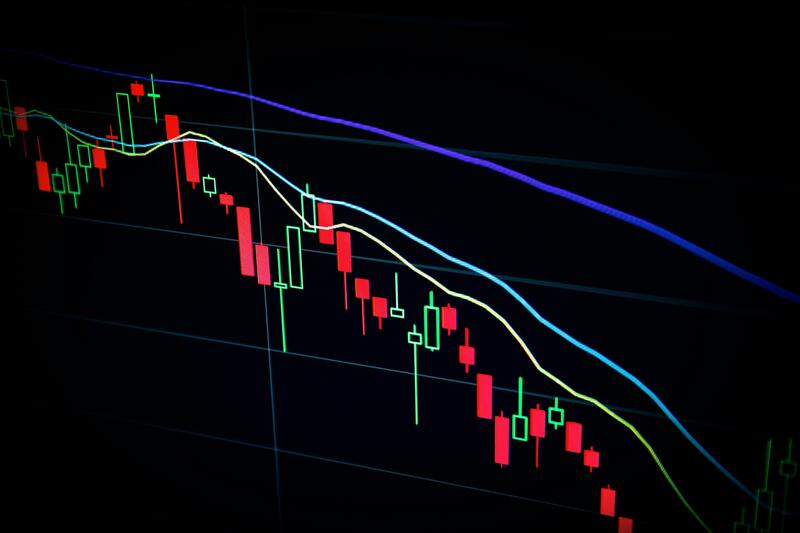
Bitcoin hit an all-time high of $126,080 on October 6, 2025. It is now trading at $78,000. That is a 38 percent drawdown over seven months, and every week someone publishes a price target suggesting it snaps back to six figures this month. Here is what the data actually says.
May 2026 has more live catalysts than any single month since the ETF approvals in January 2024. But catalysts and price outcomes are not the same thing. Understanding the difference between what is building and what is triggering will determine whether you make good decisions this month or get shaken out at exactly the wrong time.
Where Bitcoin Actually Stands Right Now
BTC has been rejected at $80,000 multiple times over the past three weeks. The level is not arbitrary. It represents a psychological threshold, a cluster of short liquidations, and a zone where a significant number of underwater holders from late 2025 are sitting with break-even exits. Every time price approaches $80,000, sell pressure from that cohort caps the move.
The Fear and Greed Index sits at 43, squarely in fear territory. Futures funding rates are negative, meaning the majority of leveraged traders are positioned short. Open interest has not expanded meaningfully despite the recent bounce from $75,000 support. These are not the conditions of a market about to make a vertical move to $126,000.
What they are is the conditions of a market quietly building a base. Exchange BTC holdings have fallen to 2,693,000 BTC, down 170,000 BTC over six months as long-term holders move coins to self-custody. Wallets holding over 1,000 BTC have grown by 142 addresses over that same period. Whales are accumulating. Retail is sitting in fear. That divergence is historically significant.
Glassnode's RHODL ratio currently sits at 4.5, the third highest reading in Bitcoin's history. The only comparable prior readings occurred at the 2015 cycle bottom and the 2022 cycle bottom. Both were immediately followed by sustained bull markets. That does not guarantee the same outcome this time, but it is not a signal serious analysts dismiss.
Four May Catalysts That Actually Matter
There are four specific events this month that could meaningfully move Bitcoin price. Not price targets from analysts. Actual events with dates attached.
The first is Strategy's Q1 earnings on May 5. MicroStrategy, now rebranded as Strategy, holds 818,334 BTC. Q1 covered Bitcoin's worst quarter since the Iran war started, with BTC crashing to $62,000 in February and spending most of the quarter below $75,000. The earnings report will show heavy paper losses on those holdings. The question is whether the market has already priced that in or whether the headline number triggers a new wave of selling pressure on crypto-adjacent equities and sentiment.
The second is the Federal Reserve Chair transition on May 15. Jerome Powell exits and Kevin Warsh takes over. Warsh has been broadly described as pro-crypto and pro-market. His first press conference as Chair will be watched closely for any signal about the pace of rate decisions and his stance on digital asset policy. A single statement from a new Fed Chair carries significant market weight in the first weeks of a tenure.
The third is the CLARITY Act Senate Banking Committee markup, expected in May. Senator Tim Scott has described the bill as being in the red zone. Senator Cynthia Lummis has publicly committed to a May markup. If the committee advances the bill, compliance teams at major funds and banks that have been sitting on the sidelines waiting for federal cover will have a green light to increase exposure. That institutional unlock does not happen overnight but the signal effect on price is immediate.
The fourth is the Iran conflict. Bitcoin has been trading under macro pressure since the war escalated in late February. Oil prices elevated by conflict are inflationary, which keeps the Fed cautious, which keeps risk assets capped. If a ceasefire materializes in May, the macro headwind that has been suppressing Bitcoin for three months lifts. That would be the clearest single catalyst for a sustained move above $80,000.
The Realistic Price Range for May
The honest answer to whether Bitcoin goes back to $126,000 this month is no. That is not a realistic May outcome regardless of which catalysts trigger.
The realistic bull case for May is a clean break above $80,000 followed by a test of the $85,000 to $90,000 range. That requires at least two of the four catalysts above to land positively and ETF inflows to return after the three consecutive outflow sessions that ended April. April was the strongest ETF inflow month since October 2025, with $2.44 billion coming in. BlackRock's IBIT alone captured 70 percent of those flows. If May's first two weeks see inflows resume, the structural case for breaking $80,000 becomes much stronger.
The base case is range-bound trading between $75,000 and $82,000 while the market digests the macro environment and waits for regulatory clarity. Finbold's AI price models project a May 31 average of $76,199, implying Bitcoin stays roughly flat from current levels. That is not a bearish outcome. It is a consolidation outcome, which is what healthy bull market corrections look like before the next leg.
The bear case requires a combination of Strategy earnings panic, ETF outflows continuing into May, and the CLARITY Act stalling again. In that scenario, the $75,000 support gets tested seriously and a move toward $70,000 becomes possible. That level has not been tested since February and would represent another 10 percent drawdown from here.
What Institutional Data Is Actually Saying
Franklin Templeton's director of digital asset research stated on April 30 that the firm expects Bitcoin to recover above $100,000 in 2026 even in the base case. ARK Invest projects Bitcoin's market cap reaching $16 trillion by 2030, implying a price north of $800,000 at that horizon. Standard Chartered has a $150,000 target for 2026, revised down from $300,000 due to slower ETF absorption than initially projected.
These are not May price targets. They are 2026 targets. The distinction matters because most retail traders read institutional price targets and apply them to the wrong timeframe. Franklin Templeton is not saying Bitcoin hits $100,000 this month. They are saying the conditions for that move are building and the regulatory environment makes it the base case for the full year.
April ETF inflow data supports that framing. $2.44 billion in a single month is not a market in distribution. It is a market in accumulation at prices that institutional analysts consider discounted relative to year-end targets. The whales buying on-chain and the ETFs buying through regulated vehicles are sending the same signal. The disagreement is about timing, not direction.
One data point that rarely makes headlines: mining difficulty dropped on May 2 from 135.59T to approximately 131.43T. Lower difficulty improves miner profitability directly, which reduces the forced BTC selling pressure that comes from miners covering operational costs. When miners stop selling, available supply tightens. That is a small but real structural tailwind entering May that most retail analysis completely ignores.
What to Actually Watch This Month
Ignore the daily price targets on social media. The signal-to-noise ratio in crypto Twitter in May is going to be extremely low as every catalyst gets hyped beyond what the data supports.
Watch the Senate Banking Committee calendar for the CLARITY Act markup date. That single event has more potential to move Bitcoin price than any technical level or analyst forecast. Watch weekly ETF flow data every Thursday. Three consecutive outflow weeks would change the picture materially. Watch the $75,000 support level. As long as that holds, the base case remains intact.
May is a setup month. The move to $100,000 and beyond gets built in months like this, not in the vertical pumps that follow. The traders who understand that are accumulating quietly. The ones waiting for confirmation will buy significantly higher.
A hardware wallet like the Trezor keeps your accumulated BTC outside exchange risk while you wait for the setup to play out. If you are using an exchange as your primary hold, Kraken has navigated every regulatory cycle since 2013 and holds MiCA authorization for EU traders.
"Bitcoin hit the all-time high of $126,080 on Oct. 6, 2025, but it has been undergoing a healthy correction after the flash crash." - Franklin Templeton Digital Assets, April 30 2026
Disclosure: This post contains affiliate links to Trezor and Kraken. BitBrainers may earn a commission at no extra cost to you. This is not financial advice.
You Might Also Like
BitBrainers. We check the facts so you don't have to.


No comments:
New comments are not allowed.