₿ BTC Loading... via Binance

Wednesday, April 8, 2026

How Hedge Funds Use AI to Trade Crypto While Retail Sleeps

How Hedge Funds Use AI to Trade Crypto While Retail Sleeps
Over 70% of all crypto trading volume on major exchanges is now generated by algorithmic systems — not humans. While you are refreshing CoinGecko at 2am wondering if BTC is going to hold support, institutional desks already executed thousands of trades, repositioned their books, and locked in profits you never saw coming.

This is not speculation. This is the market you are trading in right now.


The Institutional Edge Is Not What You Think

Most retail traders assume hedge funds have an edge because they have more money. That is partially true, but capital is not the actual weapon. The weapon is speed, data, and execution infrastructure — and AI is the thread connecting all three.

Firms like Alameda Research (before its spectacular implosion), Two Sigma, and dedicated crypto funds like Multicoin Capital and Pantera do not have analysts sitting at desks clicking buy and sell. They have quant teams building models that ingest on-chain data, order book depth, derivatives funding rates, and even social sentiment — and they act on all of it in milliseconds.

According to a 2023 report by Kaiko, institutional BTC trading desks generate average order sizes 47x larger than retail — and they route those orders through dark pools and OTC desks specifically to avoid moving the market before they are fully positioned. By the time price action is visible on your chart, the institutional trade is already done.


What the AI Models Are Actually Doing

Let me break this down without the academic fluff.

Hedge fund AI systems are not magic. They run on three core functions that most retail traders never even attempt to build.

1. Order Flow Prediction

The most profitable use of AI in crypto trading is predicting short-term order flow imbalances. These models analyze the full limit order book — not just the bid-ask spread you see on the surface — and detect when large orders are being absorbed or when liquidity is about to get pulled. On Bitcoin specifically, these signals are cleaner than on altcoins because BTC markets are deeper and more mature. Firms use this to front-run the front-runners, essentially.

2. Funding Rate Arbitrage on Perpetuals

This one is less glamorous but highly profitable. Perpetual futures on BTC have funding rates that flip positive or negative depending on market sentiment. When retail gets euphoric and longs pile up, funding goes deeply positive — meaning long holders pay shorts every 8 hours. AI systems detect these imbalances early, open the correct side of the trade, and collect the funding while delta-hedging their exposure so they have zero directional risk. Purely mechanical yield extraction.

3. Cross-Exchange Latency Arbitrage

BTC price does not move identically across Binance, Coinbase, and Kraken at the exact same millisecond. Professional systems co-locate servers near exchange matching engines and exploit these micro-price differences at high frequency. This is not accessible to most retail traders due to infrastructure cost — but understanding it explains why BTC prices converge so quickly and why "obvious" arbitrage opportunities disappear before you can click.


What Retail Can Actually Replicate (And What They Cannot)

Here is where I will be direct: you are not building a latency arbitrage system in your bedroom. That game is over for retail. The infrastructure cost to compete in sub-millisecond execution is prohibitive.

But funding rate harvesting? Trend-following bots on BTC? Sentiment-driven entry signals? Those are real, and retail traders run them profitably today.

I personally run a modified trend-following bot on BTC/USD using a combination of Bollinger Band squeezes and volume-weighted signals. It does not beat institutional quants on short timeframes. But it removes emotion from my entries, runs 24/7, and captures moves I would have missed sleeping. That is the realistic value proposition.

For execution, I use Kraken — specifically because their API is rock-solid for automated trading, their BTC/USD and BTC/EUR markets are among the most liquid for retail, and their fee structure does not punish you on high-frequency bot activity the way some platforms do. If you are not already on Kraken, set up your account here: Join Kraken Exchange

The tools that actually work for retail AI trading include 3Commas for grid bots, Hummingbot for market-making strategies (open source, genuinely powerful), and custom Python scripts running on TA-Lib. What does not work: any "AI trading signal" Telegram group charging $49/month, any bot that claims 300% annual returns, and anything that requires you to hand over your exchange API keys with withdrawal permissions enabled.


The On-Chain Intelligence Layer Most People Ignore

This is where hedge funds have a genuine edge that retail can partially close — if they do the work.

On-chain data for Bitcoin is publicly available. Glassnode, CryptoQuant, and Checkonchain are not secrets. But hedge funds build proprietary pipelines that process this data in real time and feed it directly into trading models. Exchange inflows, miner selling behavior, dormant wallet reactivation, stablecoin minting velocity — all of it gets ingested automatically.

CryptoQuant data showed that in the 72 hours before major BTC sell-offs in 2022 and 2023, exchange inflows from large wallets spiked significantly before price reacted. Institutions were reading that signal in real time. Most retail traders saw it days later in a Twitter thread.

You do not need to build a full quant pipeline to use this. Spending 15 minutes each morning reviewing Glassnode's free tier metrics — exchange reserve changes, SOPR, and realized price bands — gives you a data-driven context that puts you miles ahead of pure chart traders.

One more thing on security: if you are accumulating BTC based on real analysis rather than gambling, you need a hardware wallet. I use a Trezor for my long-term holdings because it is open-source firmware and battle-tested. Do not let the bots accumulate BTC that you then leave on an exchange. Grab a Trezor here: Get Trezor Hardware Wallet


Key Takeaways

  • Institutional AI in crypto runs on three pillars: order flow prediction, funding rate arbitrage, and latency arbitrage — and only the first two are realistically accessible to retail traders
  • 70%+ of crypto volume is algorithmic — when you trade on emotion, you are trading against systems that have no emotion and never sleep
  • Funding rate harvesting on BTC perpetuals is the closest retail traders can get to replicating institutional AI strategies without millions in infrastructure
  • On-chain data is public but underused — checking exchange inflows and SOPR daily gives you a genuine edge over chart-only traders
  • Solid execution infrastructure matters — Kraken's API reliability and liquidity make it the right foundation for any automated BTC trading setup

Frequently Asked Questions

Can retail traders actually use AI to trade Bitcoin profitably? Yes, but not the same way hedge funds do. Retail AI trading works best on medium-frequency strategies like trend-following bots, grid trading, and funding rate collection — not high-frequency latency arbitrage. Tools like Hummingbot and 3Commas are real options, and a basic Python bot running on Kraken's API is genuinely achievable with some technical effort.

What is funding rate arbitrage and why does it matter for BTC? Funding rates are periodic payments exchanged between long and short holders of perpetual futures contracts. When the market is overly bullish, longs pay shorts. AI systems open the correct side and hedge their directional exposure so they collect this yield risk-free. For Bitcoin specifically, funding rate swings are large enough and frequent enough that this strategy generates meaningful returns for firms running it systematically.

How do hedge funds get on-chain data faster than regular traders? They do not get different data — Bitcoin's blockchain is public. The difference is that institutions build automated pipelines that process and act on on-chain signals in real time, while most retail traders check it manually, if at all. The good news is that free tools like Glassnode and CryptoQuant expose most of the same data, and simply checking them consistently already puts you in a better position than traders who rely on price action alone.


Start Here — One Thing to Do This Week

Pull up CryptoQuant's free BTC exchange reserve chart and check whether net inflows or outflows have been dominant over the past seven days. Cross-reference that with the current funding rate on BTC perpetuals. That combination — supply moving to exchanges and funding going positive — has historically preceded the largest retail liquidation events. You do not need an AI system to read those two signals. You just need to start reading them.

Build the habit first. Automate it later.


Follow BitBrainers — we only write about tools we would actually use ourselves.

How to Monetize a Crypto Blog: What Actually Works

How to Monetize a Crypto Blog: What Actually Works

Most crypto blogs make under $200 a month. That is the truth nobody puts in their "how I make $10k passive income blogging" YouTube thumbnail. I know because I spent 18 months building my first crypto blog before I understood which revenue streams were real and which ones were content marketing for someone else's product.

If you are building a crypto blog in 2024, here is the honest breakdown of what actually generates income — and what burns your time for nothing.


The Dirty Secret About Crypto Blog Monetization

Here is what the guru content hides: 90% of crypto blogs never crack $500/month. According to a 2023 analysis by Authority Hacker, the median monetized blog earns less than $200/month across all niches. Crypto is not special. Most blogs fail not because the niche is wrong, but because the writer monetizes before they build trust.

I made that mistake. I slapped affiliate banners on a blog with 12 posts and zero search traffic. I made exactly $0 for four months straight. The lesson is not that crypto blogging does not work — it is that sequence matters. You build audience first. You monetize second.

The other dirty secret: crypto monetization works best when your content is actually about solving problems. Reviews, tutorials, security guides, and trading explainers convert. Hot takes and price predictions do not. Keep that in mind as you read the rest of this.


The Revenue Streams That Actually Pay Out

Not all monetization is equal. Here is the breakdown from my own experience, ranked by realistic earning potential for a blog doing 5,000–20,000 monthly visitors.

Affiliate Marketing — The One That Actually Scales

Affiliate marketing is the backbone of every profitable crypto blog I have seen. The commissions in this space are genuinely large compared to most niches. Crypto exchanges and hardware wallet companies pay real money because their customer lifetime value is high.

The two affiliate programs I recommend without hesitation:

Exchanges: I use Kraken as my primary exchange recommendation. Kraken has been operating since 2011, has never been hacked, and supports Bitcoin natively with strong liquidity. When I write beginner tutorials about buying BTC for the first time, I link Kraken. It converts because it is actually a good product — and that is the only way affiliate marketing works long-term. If you recommend garbage, your readers stop trusting you. Full stop.

Hardware wallets: Security content converts extremely well. Any post about protecting Bitcoin, setting up cold storage, or explaining why you should not leave BTC on an exchange is a natural entry point for a Trezor recommendation. Trezor is the wallet I have used personally since 2018 and the one I recommend without caveats. The hardware wallet affiliate payout is solid, and the content almost writes itself — people genuinely need this information.

The rule for affiliate content: write the review or tutorial you wish existed when you were learning. Do not write a sales page dressed up as a blog post. Readers smell that immediately.


Sponsored Content — Lucrative But Dangerous to Your Reputation

Sponsored posts in the crypto space pay well. A single sponsored article from a mid-tier crypto project can pay $300–$1,500 depending on your traffic and domain authority. Some blogs pull this off without damaging their credibility. Most do not.

The problem is that crypto sponsors are often projects with shaky fundamentals, aggressive marketing budgets, and very little interest in whether your readers make money. I turned down four sponsorship deals in 2022 from projects that rugged within 12 months. That was smart. But I also took one early on that I should not have, and I lost reader trust that took six months to rebuild.

The rule I follow now: only accept sponsorship from companies whose product I would use myself. That list is short. Bitcoin infrastructure companies, established exchanges, security tools. Anything asking me to promote an altcoin project with an anonymous team gets a hard no — regardless of the payout.


Newsletters and Paid Subscriptions — Slow But Compounding

According to Beehiiv's 2024 creator data, the average paid newsletter in the finance/investing space charges $8–$15 per month per subscriber. At 200 paid subscribers, that is $1,600–$3,000 monthly recurring revenue. That number compounds as your audience grows.

This takes the longest to build but creates the most durable income. Free newsletter first, value heavy, consistently. Then introduce a paid tier once readers are already showing up every week expecting your analysis.

Bitcoin-focused content works particularly well here. Macro analysis, on-chain data breakdowns, weekly BTC price context — readers who care about this pay for it. ETH and altcoin content attracts more casual readers who churn faster. Lead with Bitcoin, add broader market context only when it genuinely adds value.


Digital Products — High Margin, One-Time Work

Courses, ebooks, and templates have high profit margins and no inventory. A 40-page guide on Bitcoin cold storage setup, sold at $19, needs to sell 53 copies a month to generate $1,000. That is achievable once you have search traffic and a warm email list.

I sell a beginner BTC security checklist and it consistently generates income with zero ongoing work. The key is that the product solves a specific, searchable problem. "How to set up a Trezor for the first time" is a real problem people Google. "My thoughts on crypto" is not.


How to Actually Start: The Sequence That Works

Step one: Pick one specific Bitcoin or crypto problem to solve. Not "crypto education." Something like "how to buy and secure your first Bitcoin without getting rekt." That specificity drives search traffic.

Step two: Write 20 posts before you touch monetization. All SEO-targeted, all solving real problems. Use tools like Ahrefs or even free alternatives like Ubersuggest to find what people actually search. Target low-competition, high-intent keywords first.

Step three: Set up your affiliate accounts early — Kraken and Trezor both have straightforward application processes — but do not add links until your content is solid. Affiliate links on a thin blog get flagged and convert at near zero anyway.

Step four: Build an email list from post one. Use a free tool like Beehiiv or Kit. Every piece of content should have one clear reason for a reader to subscribe. This list becomes your paid newsletter, your product launch list, and your most resilient traffic source.

Step five: Add monetization at month three or four, once you have traffic data showing what content actually pulls readers in. Double down on what works. Kill what does not.


Key Takeaways

  • Affiliate marketing is the highest-converting monetization channel for crypto blogs — but only works when you recommend products you actually use
  • Sequence matters: build 20+ pieces of quality content before monetizing anything
  • Newsletter and paid subscriptions create durable recurring revenue, but take 6–12 months to compound meaningfully
  • Sponsored content pays well but destroys trust fast if you say yes to the wrong projects — set hard criteria before accepting any deal
  • Bitcoin-focused content consistently outperforms altcoin content for building a loyal, monetizable audience

Frequently Asked Questions

How long does it take to make money from a crypto blog? Most blogs start generating meaningful affiliate income around month 4–6, assuming consistent publishing and basic SEO targeting. Do not expect significant revenue before you have at least 20–30 indexed posts pulling organic search traffic. Patience here is not optional — it is part of the strategy.

Do I need a big audience to make money from crypto blogging? No. A small, high-intent audience converts better than a large passive one. A blog with 3,000 monthly visitors who are actively researching how to buy and secure Bitcoin will outperform a blog with 30,000 casual readers every time. Quality of traffic beats volume.

Is crypto blogging still worth starting in 2024? Yes, but the low-effort content era is over. Generic "what is Bitcoin" posts compete against billion-dollar media companies now. The opportunity is in specificity — deep tutorials, honest reviews, and security guides that actually help people protect real money. That content still ranks and converts.


Realistic Expectations and Your First Move

Expect six months before your blog earns $500 in a single month. Expect 12 months before it becomes a consistent side income. Those timelines are realistic for someone publishing 2–3 posts per week and actively building an email list.

The bloggers who fail treat this like a lottery ticket. The ones who succeed treat it like a business — one that requires consistent work before it pays back.

Your first action step: Write one piece of content today that solves a specific Bitcoin problem you personally had when you were learning. Publish it. Then do it again next week.


Follow BitBrainers — passive income strategies from someone who has lost money so you do not have to.

AI vs Traditional Indicators: Which One Actually Makes Money

AI vs Traditional Indicators: Which One Actually Makes Money

80% of retail traders using AI trading tools lose money faster than traders using basic moving averages. Not because AI is bad — because most people are using it completely wrong, buying into hype, and running tools they don't understand on setups they haven't tested.

I've been trading since 2017. I run actual bots. I've burned money on garbage tools so you don't have to. Here's the honest breakdown.


The Problem With "AI Trading" as a Category

Most things marketed as "AI trading tools" are not AI. They're rule-based scripts with a GPT wrapper slapped on for the sales page. Real machine learning in trading requires massive datasets, constant retraining, and still fails in chaotic market conditions — like every BTC halving cycle, every Fed pivot, every Binance blowup.

That doesn't mean AI is useless. It means you need to separate the signal from the marketing noise.


What Traditional Indicators Actually Do Well

Let's give credit where it's due. For Bitcoin specifically, a handful of traditional indicators have held up through multiple cycles:

RSI divergence on the weekly BTC chart has called every major top since 2017. Not perfectly, not to the day — but if you were watching BTC RSI go parabolic above 85 on the weekly in late 2021 and ignored it, that's on you.

Volume-weighted moving averages (VWAP and VWMA) are still the backbone of my bot logic for BTC swing entries. They're not sexy, but they cut through noise in a way that pure price-based MAs don't.

The 200-week moving average on Bitcoin is practically scripture at this point. Every time BTC has touched it in history, it's bounced. That's not AI. That's pattern recognition that even a spreadsheet can run.

The limitation: traditional indicators are lagging by design. They tell you what happened. They do not tell you what's about to happen in a low-liquidity altcoin or during a black swan event.


Where AI Actually Adds Edge

Here's where I'll defend the technology — when it's applied correctly.

Sentiment analysis at scale. No human can read 50,000 tweets, Reddit posts, and news headlines per hour and extract a directional bias. AI can. Tools like Santiment and LunarCrush do this for BTC and ETH, and when you layer their sentiment data on top of a traditional RSI setup, you get cleaner entries. I've personally used sentiment spikes as a confirmation layer before taking BTC long positions on Kraken — sign up here if you're not already using it — and it's cut my false entry rate noticeably.

Pattern recognition across multiple timeframes simultaneously. My bot scans BTC across the 15m, 1H, 4H, and daily chart simultaneously for confluence. Doing that manually is exhausting. An AI-assisted screener handles it in seconds.

Anomaly detection. When BTC order book depth suddenly shifts or whale wallets start moving, AI tools catch it before any lagging indicator does. This isn't theoretical — on-chain analytics platforms have called major BTC moves hours before traditional TA caught up.


What Doesn't Work (Stop Buying This Stuff)

  • "AI bots" on Telegram that promise 85% win rates. They're scams. Full stop.
  • Automated trading tools that don't let you see the underlying logic. Black box = black hole for your capital.
  • AI tools trained only on equity markets applied to crypto. BTC doesn't behave like Apple stock. The training data matters enormously.
  • Overfit models. If a tool backtests at 90% accuracy but fails live — and most do — it was trained to fit past data, not predict future price.

The Honest Answer: It's Not Either/Or

The traders I know who are consistently profitable — and I know a few — combine both. They use traditional indicators to define the structure and bias (is BTC in a macro uptrend or downtrend?), and they use AI-assisted tools for timing and confirmation.

Running either in isolation leaves money on the table or blows up your account. Running them together, with clear rules and position sizing, is where edge actually lives.

And whatever you're making from that edge — keep it off exchanges once you've locked in profits. A Trezor hardware wallet is non-negotiable if you're holding any meaningful BTC stack. Not your keys, not your coins. We've all seen what happens when that lesson gets ignored.

The Honest Framework for Combining Both

The traders who consistently outperform are not using AI instead of traditional indicators. They are using AI to filter the setups that traditional indicators flag.

The workflow that has worked in my own bot development runs roughly like this. Traditional indicators set the structural context. RSI divergence on the weekly tells me whether the macro trend is exhausted. VWMA on the four hour tells me where institutional order flow is concentrated. These do not change based on a single news event. They are slow, stable, and reliable for what they measure.

AI layer sits on top and handles the variable that traditional indicators cannot. Sentiment shifts. On-chain anomalies. Funding rate divergences across exchanges. Unusual wallet clustering before a major candle. These signals are too fast and too fragmented for a moving average to capture. AI aggregates them in near real time.

The mistake most retail traders make is using AI as a replacement for structural analysis rather than an addition to it. They see a bullish AI sentiment score and enter without checking whether BTC is sitting below the 200 day moving average in a macro downtrend. The AI signal was real. The trade was still wrong because the context was missing.

Start with your traditional setup. Use it to identify the structure and the probable range. Then use AI tools to time entries within that structure based on sentiment and on-chain confirmation. Neither layer alone is sufficient. Together they cover the two things that actually determine whether a trade works: where you are in the cycle, and when the crowd is positioned for a move.


The One Thing to Try First

Before you spend a dollar on any AI tool, pull up BTC on a weekly chart and add RSI. Watch where RSI divergence has appeared at every major top and bottom. Understand why it worked. Once you have that foundation, then layer in a sentiment tool like Santiment and see how the data interacts with what you're already reading.

Build from fundamentals outward. Not the other way around.


Follow BitBrainers — we only write about tools we would actually use ourselves.

Building a Telegram Bot That Sends You Daily BTC Alerts

Building a Telegram Bot That Sends You Daily BTC Alerts

Most traders miss Bitcoin's best moves not because they lack information — but because they're drowning in it. The average crypto dashboard throws 47 different metrics at you before you've had your morning coffee. You end up paralyzed, or worse, you miss the one signal that actually mattered.

Here's the fix: a lean, purpose-built Telegram bot that cuts through the noise and delivers exactly what you need about BTC, every single day, straight to your phone.

I run three of these bots personally. They've saved me from bad trades and flagged good ones. Here's how to build one that actually works.


Why Telegram and Not Email or Discord

Email is dead for time-sensitive alerts. Discord is noisy. Telegram hits your phone the way a text message does, and the API is genuinely one of the cleanest to work with — no OAuth headaches, no rate-limit nightmares for personal use.

Telegram bots also run silently in the background. No app refresh, no checking dashboards. The signal comes to you.


What Your Bot Should Actually Track

Don't build a bot that spits out price every morning. You have a phone widget for that. Build it around decision-relevant data:

  • BTC daily close vs. 200-day MA — is Bitcoin above or below the line that separates bull from bear territory?
  • Fear & Greed Index — pulled from the Alternative.me API, free, reliable
  • Funding rates on perpetual futures — elevated positive funding = crowded longs = potential squeeze coming
  • Exchange netflow — are coins moving onto exchanges (selling pressure) or off them (accumulation)?
  • 7-day realized volatility — tells you whether the market is coiling or expanding

That's five data points. Takes 30 seconds to read. Tells you everything you need to know to start the day with context.


The Actual Build (No Fluff)

You need three things:

1. A Telegram Bot Token Open Telegram, search @BotFather, type /newbot, follow the prompts. You get a token. Takes 90 seconds.

2. Python Script with a Scheduler Use python-telegram-bot library and APScheduler to trigger your message every morning at the same time. Pull BTC price and 200-day MA from CoinGecko's free API. Pull Fear & Greed from api.alternative.me. For funding rates, Bybit and Binance both offer public endpoints.

3. A Cheap VPS to Keep It Running A $5/month DigitalOcean or Hetzner droplet works. Don't run this on your laptop — you need 24/7 uptime.

The script itself is under 150 lines of Python. If you can read code, you'll understand it in 20 minutes. If you can't, ChatGPT will write 80% of it for you and you just need to wire it together.


Where Execution Actually Happens

The bot tells you when to pay attention. Your execution platform is separate. I use Kraken for spot BTC trades because the fee structure is transparent, the API is robust, and I've had zero issues withdrawing large amounts.

When the bot flags that BTC is sitting below the 200-day MA with high exchange inflows and fear at extreme levels — that's not a "maybe monitor" signal. That's a "get to Kraken and set your buy orders" signal. The bot is the early warning system. Kraken is where the trade happens.


Keeping Your BTC Safe After You Buy

If your bot is doing its job, you'll accumulate. Don't leave it sitting on an exchange. I move anything I'm not actively trading into cold storage — specifically a Trezor hardware wallet.

The whole point of building your own alert infrastructure is taking control. Leaving your BTC on an exchange while running your own custom bots is a contradiction. Own your keys.


What This Bot Won't Do

It won't trade for you. It won't predict the future. It won't replace reading charts or understanding macro context. Any bot that claims to do those things is selling you something.

This bot does one thing well: it removes the excuse of "I didn't see the signal." That's more valuable than most paid services charging $50/month for a newsletter.

ETH and alt traders can absolutely adapt this — swap out the BTC endpoints, add DeFi-specific metrics like TVL or gas fees. But start with Bitcoin. The signals are cleaner, the data is more reliable, and BTC dominance context tells you most of what you need to know about the broader market anyway.


Start Here

Build the Fear & Greed alert first. Seriously. Just get a Telegram message every morning that says "Fear & Greed: 28 (Fear)" or "Fear & Greed: 79 (Greed)." One line. One data point.

It forces you to build the infrastructure, test the delivery, and immediately get value before you add complexity. Once that's working, bolt on the 200-day MA check. Then funding rates. Layer it slowly.

You'll be running a better daily briefing than most paid crypto newsletters within a weekend.

Common Mistakes That Kill the Bot Before It Helps You

Most people build the bot, run it for two weeks, and then quietly stop checking it. That defeats the entire purpose. Here is what goes wrong and how to avoid it.

The first mistake is alert fatigue. If your bot messages you five times a day, you will start ignoring it within a week. Keep it to one morning send. Daily context, not a constant feed. The discipline of one message forces you to choose only the signals that actually matter to your decision-making.

The second mistake is bad data sources. CoinGecko's free API is rate-limited but reliable enough for daily sends. If you are pulling data every 15 minutes, you will hit the limit and your bot will start sending stale numbers. Daily intervals solve this entirely.

The third mistake is running the bot locally on a machine that sleeps. A laptop that hibernates at midnight breaks your 6 AM alert. Use a VPS or a Raspberry Pi that stays on. Hetzner's cheapest server costs less than three dollars a month and has never gone down on me.

The fourth mistake is not logging. Add a simple text log that records every message sent with a timestamp. When your bot fails silently, you will not know for days without a log. Ten lines of Python to write, potentially saves you from missing a major market signal.

Build it right once. Then let it run for a year without touching it.


Follow BitBrainers — we only write about tools we would actually use ourselves.

Tuesday, April 7, 2026

How AI Spots Pump and Dump Schemes Before Retail Gets Wrecked

How AI Spots Pump and Dump Schemes Before Retail Gets Wrecked

Over 70% of low-cap altcoin pumps last under 4 hours. Most retail traders don't even notice the setup until they're buying the top. By the time you see it trending on X or Telegram, the coordinated wallets are already dumping into your buy orders.

AI doesn't fix stupid. But it does catch patterns faster than any human can — and in pump and dump detection, speed is the only thing that matters.


What a Pump and Dump Actually Looks Like On-Chain

Before AI can help you, you need to understand what it's detecting.

A classic pump and dump has a fingerprint:

  • A cluster of wallets (often 10–50) accumulates a low-liquidity token over days or weeks
  • Volume stays artificially flat to avoid detection
  • A coordinated signal gets dropped — usually a Telegram group, a fake influencer post, or a fabricated "partnership" announcement
  • Price spikes 200–600% in under an hour
  • The original wallets exit in layers, disguised across multiple DEXes
  • Retail holds the bag

Bitcoin doesn't get pump-and-dumped the same way — the market cap is too deep. But BTC price action does get exploited as cover. When BTC pumps legitimately, coordinated groups use that momentum to run low-cap alts simultaneously, knowing retail is in "risk-on" mode. ETH and smaller alts are the actual targets.


What AI Is Actually Doing Here (Not the Marketing Version)

Real AI-based detection isn't a magic button. It's a combination of on-chain analytics and pattern recognition trained on historical schemes.

What works right now:

1. Wallet clustering analysis Tools like Nansen and Arkham Intelligence track wallet behavior across chains. When a group of wallets that previously coordinated on a known pump starts accumulating again, the system flags it. I've personally used Nansen alerts to catch early accumulation phases on Ethereum-based tokens. Not perfect, but it gives you a 12–48 hour head start on the move — and more importantly, it tells you not to chase it when the flag fires late.

2. Volume anomaly detection LunarCrush and Santiment use social + on-chain volume divergence. Normal organic growth shows gradual social volume before price moves. Manufactured pumps show an inverse pattern — price spikes before social engagement, because the group is already positioned. AI models trained on this divergence catch it in near real-time.

3. Liquidity thin-spot mapping This one's underrated. AI tools can map where liquidity is thin on a DEX order book and flag tokens where a relatively small buy order would cause a 30%+ price move. That's the terrain pump operators hunt. When a thin-liquidity token also has wallet clustering activity, you've got a high-probability setup for manipulation.


What Doesn't Work (Stop Wasting Money on This)

Most retail-facing "AI trading signal" bots on Telegram are either outright scams or they are the pump. They build a subscriber base, accumulate a token, then push the "AI signal" to their audience. The AI is the exit liquidity strategy, not the detection tool.

Price prediction AI — the kind that tells you "BTC will hit $X by Friday" — is noise. No model predicts short-term price action reliably. What AI can do is identify manipulation patterns, sentiment shifts, and behavioral anomalies. That's the actual edge.


How I Use This In Practice

My actual workflow when something is moving fast:

  1. I pull the contract address into Arkham or Bubblemaps immediately
  2. I check if the top wallets have a history of coordinated exits
  3. I check Santiment for social volume before the current pump started
  4. If the pattern fits, I don't touch it — or I short it on a platform that supports it

I keep my legitimate BTC and ETH holdings off hot wallets entirely. If you're not doing the same, start now — a Trezor hardware wallet keeps your real positions safe while you play with fire in the alt markets.

For actual trading, I use Kraken. Deep liquidity, real compliance infrastructure, and they haven't imploded like half the other exchanges I've used since 2017. When you're moving size, that matters.

What You Can Actually Do With This Information

Detecting a pump and dump in progress is useful. Detecting one before it starts is what actually protects you and occasionally creates an opportunity.

The practical workflow has two modes. Defensive and offensive.

Defensive is simple. If you are holding a low cap altcoin and an AI detection tool or on-chain scanner flags unusual wallet clustering in that token over the preceding 48 hours, that is your signal to reduce exposure before the dump phase arrives. You do not need to predict the exact timing. You just need to be out before the coordinated exit begins.

Offensive is more complex and carries its own risks. Some traders use pump detection signals to ride the early phase of a coordinated move, knowing they need to exit before the dump. This requires fast execution, tight stop losses, and the discipline to actually exit when your target is hit rather than getting greedy. Most retail traders who attempt this end up holding through the dump anyway because they convinced themselves the pump was organic. It almost never is.

The most reliable use of AI pump detection for the average Bitcoin focused trader is simpler than either of those. It is a reminder to stay in assets with deep liquidity. Bitcoin does not get pump and dumped. The market cap is too large, the order books too deep, the global price discovery too distributed. When you hold BTC through volatility, you are dealing with genuine market forces. When you hold a low cap alt through volatility, you might be dealing with a coordinated exit you had no visibility into. That asymmetry alone is a strong argument for keeping the majority of your crypto exposure in Bitcoin and treating altcoin positions as high risk short term trades rather than long term holdings.


Start Here First

If you're not doing anything else yet — start with Bubblemaps. It's free, it works on ETH and BSC tokens, and it visually shows you wallet clustering in under 30 seconds. Paste a contract address. If the bubble map looks like a tightly connected web of wallets, walk away.

That single habit will save you more money than any signal group ever will.


Follow BitBrainers — we only write about tools we would actually use ourselves.

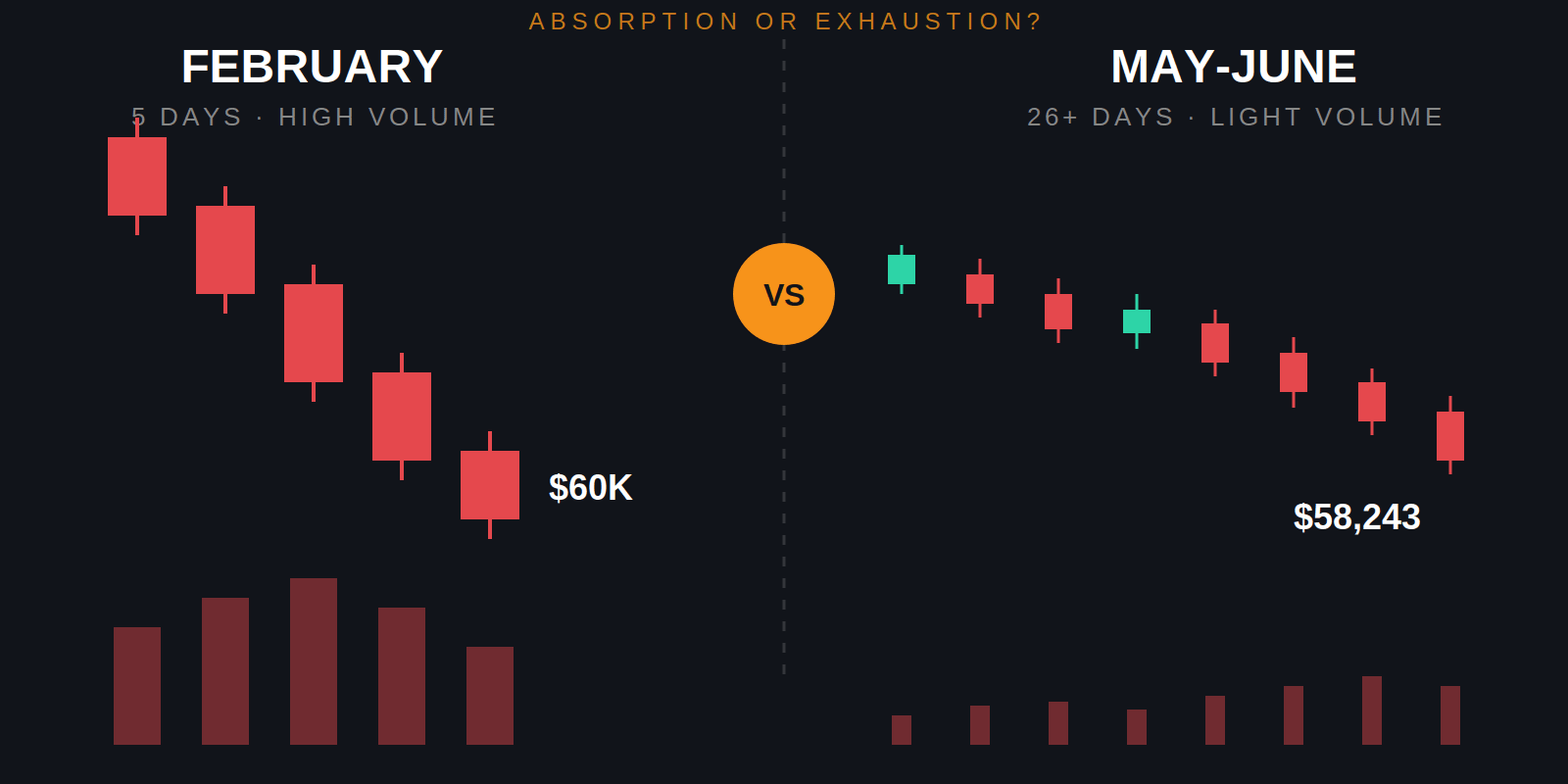
Absorption or Exhaustion: What BTC's Slow Bleed to $58K Is Telling Traders.

By BitBrainers Editorial Bitcoin has now made the trip down to the $60,000 zone twice this year, and the two trips don't look anyth...

Absorption or Exhaustion: What BTC's Slow Bleed to $58K Is Telling Traders.