₿ BTC Loading... via Binance

Monday, April 13, 2026

Hot Wallet vs Cold Wallet: Which One Should You Actually Use

Hot Wallet vs Cold Wallet: Which One Should You Actually Use

$3.8 billion in crypto was stolen in 2022 alone — and the overwhelming majority of it came from wallets connected to the internet. That's not a hack problem. That's a storage problem.

If you're holding Bitcoin and you don't know the difference between a hot wallet and a cold wallet, you're one phishing link away from losing everything. Let's fix that right now.


What a Wallet Actually Is (And What It Isn't)

First, kill this misconception: a crypto wallet doesn't store your Bitcoin. Your BTC lives on the blockchain. What the wallet stores is your private key — the cryptographic password that proves you own those coins and lets you move them.

Lose the private key? Your Bitcoin is gone. Someone else gets the private key? Your Bitcoin is gone.

Everything else about wallets — hot, cold, hardware, software — is just about where and how that private key is stored. That's it. That's the whole game.


Hot Wallets: Convenient, Connected, Exposed

A hot wallet is any wallet that's connected to the internet. That includes:

  • The Bitcoin wallet app on your phone
  • Browser extension wallets like MetaMask
  • Exchange accounts (yes, keeping crypto on Coinbase or Binance counts as using their hot wallet)

Hot wallets are fast and easy. You can send BTC in 30 seconds. You can connect to apps, swap tokens, interact with services. For small amounts and daily use, they make sense.

But here's the trade-off: because they're online, they're exposed. Malware can scan your device. A browser extension gets compromised. A phishing site tricks you into signing a bad transaction. The private key is only as safe as whatever device it's sitting on — and most devices are not as safe as people think.

The data point that should concern you: According to Chainalysis, in 2022 hackers stole more from crypto bridges and hot wallets than in any previous year — $3.8 billion total. The common thread was internet connectivity.

Hot wallets are fine for amounts you'd carry as cash in your pocket. Anything more than that, and you're taking on real risk.


Cold Wallets: Offline, Boring, and Exactly What You Need

A cold wallet keeps your private key completely offline. No internet connection, no exposure to malware, no way for a remote attacker to reach it.

The most reliable form of cold storage is a hardware wallet — a physical device (looks like a USB drive) that signs transactions internally without ever exposing your private key to your computer or the internet. The key is generated on the device. It stays on the device.

The best known hardware wallets are Trezor and Ledger. I use and recommend Trezor — specifically because after Ledger's data breach in 2020 exposed customer information, Trezor's open-source firmware and transparent security model looks better every year. You can grab a Trezor here: Get Trezor Hardware Wallet

The concrete reality: When you want to send Bitcoin from a hardware wallet, you plug it in, confirm the transaction on the device's physical screen, and that's it. Your private key never touches your laptop. A hacker who compromises your computer gets nothing.

The trade-off is friction. It takes more steps to move funds. But that friction is a feature, not a bug — it means impulsive decisions and unauthorized transactions both become harder.


The Exchange Wallet Trap

A lot of people buy Bitcoin on an exchange and just... leave it there. It feels like it's in their account, so it feels safe. It isn't.

When your BTC sits on Kraken or Coinbase, you don't hold the private key. They do. You have an IOU. In practice, reputable exchanges store most funds in cold storage and are heavily secured — but you're still trusting a third party, and that introduces risk that has nothing to do with you or your security habits.

FTX collapsed in November 2022. Billions in customer funds were lost. People who held their own keys were unaffected. People who trusted the exchange lost everything.

That said — exchanges are where you buy and where you trade. Using one isn't stupid. Leaving large amounts of Bitcoin there long-term is. Use an exchange to buy and trade, then move your holdings to a hardware wallet.

If you need a reputable exchange that's been running since 2011 and has never been hacked, I point people toward Kraken: Join Kraken Exchange. Buy there. Don't live there.


So Which One Do You Actually Use?

Both. For different purposes.

Hot wallet: Small amounts for active use. Think of it like the cash in your wallet — enough to spend, not enough to hurt if something goes wrong. Bitcoin you're planning to use for transactions, or a small ETH balance for gas fees if you're in DeFi.

Cold wallet (hardware): Anything you're holding. Your Bitcoin stack. Funds you're not touching for months. This is your savings account, and it should be offline.

A practical split: put 5-10% in a hot wallet for spending and activity. Put 90-95% in a hardware wallet and leave it there.

One more number to know: A 2023 report from Crystal Blockchain found that $16.7 billion in crypto has been lost to hacks and fraud since 2011. A significant portion of those losses were from hot wallets and centralized exchange accounts — not hardware wallets.


Key Takeaways

  • A wallet stores your private key, not your Bitcoin — whoever controls the key controls the coins
  • Hot wallets are internet-connected and convenient but exposed to remote attacks
  • Cold wallets (especially hardware wallets) keep your private key offline and are the only serious option for significant holdings
  • Leaving Bitcoin on an exchange means you don't own the private key — exchanges can fail, get hacked, or freeze withdrawals
  • The right setup is both: a hot wallet for small active use, a hardware wallet for your actual stack

Frequently Asked Questions

Can I lose my Bitcoin if my hardware wallet breaks or gets lost? No — your Bitcoin is recoverable as long as you have your seed phrase, which is a 12 or 24-word backup generated when you set up the device. Write it on paper, store it somewhere safe and private (not on your phone or in a screenshot), and you can restore your wallet on a new device.

Is it safe to use a hot wallet on my phone? For small amounts, yes — it's reasonably safe if your phone is secure and updated. The risk increases with the amount you hold and with how often you connect to DeFi apps or click links from unknown sources. Never store significant Bitcoin in a mobile hot wallet.

What's the difference between a hardware wallet and just writing my private key on paper? A paper wallet (writing down your private key or seed phrase) is technically cold storage, but it's easy to damage, photograph, or lose. A hardware wallet like Trezor generates and stores your key securely in a tamper-resistant chip and lets you sign transactions without exposing the key — it's safer and more practical for regular use.


The One Thing You Must Remember

Not your keys, not your coins. Every person who's ever lost Bitcoin to an exchange collapse or a hack learned this the hard way. You don't have to. Get a hardware wallet, move your BTC off exchanges, and keep your private key where no one online can reach it.

Start here: Get Trezor Hardware Wallet


Follow BitBrainers — crypto education without the condescension.

NLP and Crypto: How AI Reads News to Execute Trades

NLP and Crypto: How AI Reads News to Execute Trades

Roughly 70% of all crypto trading volume is already driven by algorithmic systems. Most retail traders are still reading headlines manually and clicking buttons while machines finished the trade six seconds ago. If you think you're competing on reaction time alone, you're not — you're losing before you even open your chart.

This is what natural language processing in crypto trading actually looks like from someone who runs these systems, not someone who watched a YouTube video about them.


What NLP Actually Does in a Trading Context

Natural language processing is the branch of AI that lets machines read, interpret, and act on human-written text. In crypto trading, that means the bot isn't just watching price charts — it's reading news articles, social media posts, SEC filings, Federal Reserve statements, and even Reddit threads, then deciding whether that text is bullish, bearish, or noise.

The core mechanism is sentiment scoring. The model assigns a numerical value to a piece of text. "Bitcoin ETF approved" gets a strong positive score. "Binance faces regulatory action" gets a hard negative. The system then maps that score to a trade signal — buy, sell, or hold.

Here's the part most people miss: speed is only half the value. The other half is consistency. A human trader reads "SEC delays Bitcoin ETF ruling" and panics. An NLP model reads the same headline, compares it to 40,000 similar historical events, and decides the historically-expected price movement doesn't justify a trade. That cold consistency is worth more than most traders realize.

A 2023 study published in the Journal of Financial Economics found that NLP-driven trading signals based on central bank communications alone outperformed passive strategies by 3.7% annually on average. That's not explosive alpha — but compounded over years with leverage, it's serious money.


Where BTC Specifically Benefits From Sentiment Analysis

Bitcoin is uniquely sensitive to narrative. ETH has DeFi mechanics and on-chain utility metrics that move its price. Alts move on speculation and project-specific news. But Bitcoin moves more purely on macro sentiment, regulation news, institutional positioning, and broader market fear or greed.

That makes BTC the ideal asset for NLP-driven strategies. When the Fed chair opens his mouth about interest rates, Bitcoin reacts. When a government announces crypto restrictions, Bitcoin reacts. When a major corporation publicly adds BTC to its balance sheet, Bitcoin reacts. Every one of those events is a text event before it's a price event.

I run a system right now that monitors 14 different news sources — including Reuters, CoinDesk, Cointelegraph, and several macro finance feeds — and scores incoming articles every 30 seconds. On high-volatility news days, BTC can move 3-5% inside 15 minutes of a major headline. My NLP layer catches the direction of that move before most retail traders have even refreshed their browser.

During the March 2023 US banking crisis, BTC moved from roughly $22,000 to $28,000 in under a week — driven almost entirely by narrative around banking instability and a flight to alternative assets. Every major move was preceded by traceable text signals. Traders watching only price charts caught the move late. Systems watching news caught it early.


The Tools That Actually Work — And the Ones That Don't

I've tested most of what's publicly available. Here's my honest breakdown.

LunarCrush has decent social sentiment data and it's usable, but it's heavily Twitter/X weighted and the signal degrades fast when influencers start gaming the platform. Use it as a secondary input, not a primary driver.

Santiment is better for on-chain plus sentiment combined. Their NLP-powered social volume metrics have been genuinely useful for spotting early accumulation narratives before they show up in price. Worth paying for if you're serious.

Glassnode isn't purely NLP but their on-chain narrative features — particularly around miner sentiment and whale behavior — pair well with NLP signals to confirm or reject trade ideas.

The garbage tier: any tool that promises "AI signals" without showing you the underlying data sources or model methodology. If they're selling you a Telegram group with buy/sell alerts and calling it "AI-powered," it's marketing, not technology. I've wasted money on three of these. Never again.

For actually executing trades based on NLP signals, I route through Kraken. The API is stable, the order execution is reliable, and they don't do the shady stuff with order flow that some other platforms are known for. If you're setting up bot-based trading and want a platform that doesn't randomly freeze withdrawals during volatility spikes, use Kraken: Join Kraken Exchange


Building a Basic NLP Pipeline Without Being a Data Scientist

You don't need a computer science degree to run a basic NLP-assisted strategy. Here's the actual workflow I'd recommend for a serious retail trader:

Step 1: Pick a sentiment data provider. Don't build your own model from scratch unless you have serious ML experience. Use Santiment's API or integrate with a tool like Token Metrics for pre-processed sentiment scores.

Step 2: Define your signal rules. A strong positive sentiment spike on BTC-related keywords with volume confirmation = consider a long entry. A sustained negative sentiment reading during consolidation = tighten stops or reduce exposure. Don't overcomplicate this.

Step 3: Paper trade first. Run your NLP signal system alongside your manual trading for 30-60 days without actually executing on it. Track how often the signal would have been right versus wrong. You'll find the edge cases fast — like how sentiment spikes during market manipulation look identical to genuine news-driven moves.

Step 4: Automate incrementally. Start with alerts, not automated execution. Graduate to automation only after you trust the signal logic.

One critical thing: whatever profits this system generates, protect them properly. I keep long-term BTC holdings in cold storage on a Trezor hardware wallet — not on exchange. The exchange is for active trading capital only. If you're accumulating BTC seriously, get a Trezor: Get Trezor Hardware Wallet


Key Takeaways

  • NLP trading systems read news and assign sentiment scores before price reacts — giving algorithmic traders a measurable head start on text-driven price moves
  • Bitcoin benefits more from NLP strategies than most altcoins because BTC price is more directly tied to macro narrative and regulatory news than to on-chain mechanics
  • Santiment offers the best retail-accessible NLP data for crypto; avoid any "AI signal" product that doesn't show you its data sources
  • Speed matters less than consistency — the real edge of NLP is removing emotional interpretation from news events, not just reacting faster
  • Execution platform reliability is critical for bot trading — use Kraken for its stable API and clean order execution

Frequently Asked Questions

Can a beginner use NLP tools for crypto trading without coding? Yes, but with limits. Tools like Santiment and LunarCrush have dashboards that require zero coding — you read the sentiment scores manually and make trading decisions yourself. Actual automated NLP-to-trade pipelines require at minimum basic Python knowledge and API integration skills.

Does NLP trading actually beat just holding Bitcoin? On a pure long-term returns basis, few active strategies beat a disciplined BTC hold strategy. Where NLP trading adds value is in risk-adjusted returns — reducing drawdowns during clear negative sentiment periods and improving entry timing. It's a tool for active traders, not a replacement for long-term accumulation.

How do I know if a sentiment signal is real or just noise? Volume confirmation is the most reliable filter. A sentiment spike with no corresponding increase in trading volume or social engagement is usually noise. When sentiment shifts and volume follows within the same 15-30 minute window, that combination has historically produced the most reliable signals.


Try This First

Set up a free Santiment account, enable BTC sentiment alerts, and track them against price movement for two weeks without trading on them. Just observe. By day 10, you'll start seeing the patterns. That's where systematic NLP trading actually begins — not in some algorithm, but in understanding how text moves markets before you trust a machine to act on it.


Follow BitBrainers — we only write about tools we would actually use ourselves.

Copy Trading in Crypto: What Nobody Tells You Before You Start

Copy Trading in Crypto: What Nobody Tells You Before You Start

85% of copy traders lose money within their first three months. Not because copy trading is a scam — but because most people pick the wrong traders to copy, do it on the wrong platforms, and treat it like a magic money printer instead of an actual strategy with real downside risk.

I have been in crypto since 2017. I have staked, yield farmed, run bots, and yes — I have copy traded. Some of it worked. Most of it taught me expensive lessons that blogs with affiliate deals and no skin in the game will never tell you. This post is the version I wish existed when I started.


What Copy Trading Actually Is (And What It Is Not)

Copy trading lets you mirror the real-time trades of another trader automatically. When they buy Bitcoin, your account buys Bitcoin. When they sell, you sell. You allocate a portion of your capital, set a copy ratio, and in theory, ride along with someone who knows what they are doing.

The pitch sounds clean. The reality is messier.

First, understand that you are not copying a strategy — you are copying a track record. And track records on copy trading platforms are almost always cherry-picked or presented during a bull run. A trader who turned $5,000 into $40,000 between October and March might have been lucky, overleveraged, and is now slowly bleeding your account while they chase the same magic again.

Second, copy trading is not passive income in the way a savings account is. Your capital is actively exposed to market risk at all times. If the trader you are copying goes full degen on an altcoin that craters 70%, your balance craters with it. BTC-focused traders tend to be more conservative — and that is exactly the type you should look for when you are starting out.

According to eToro's own published data, only 13% of copy traders were consistently profitable over a 12-month period. Most of the winners were copying traders who stuck to large-cap assets — primarily Bitcoin and Ethereum — rather than rotating through altcoins chasing returns.


The Risks They Bury in the Fine Print

Let me be direct: copy trading carries the same risks as regular trading, plus a few extra.

Slippage and execution lag. You are not executing trades at exactly the same price as the trader you copy. Depending on the platform and market conditions, your fills can be meaningfully worse — especially on volatile BTC moves where seconds matter.

Incentive misalignment. The traders you copy often earn a percentage of your profits. That sounds fair, but it means they are incentivized to take bigger risks to generate the kind of returns that attract more followers. Their risk tolerance and yours are not the same thing.

Survivorship bias. Platforms show you the top performers. They do not show you the 200 traders who blew up last quarter and disappeared from the leaderboard. You are making decisions based on an incomplete dataset.

Custody risk. This one is critical. Your funds sit on an exchange or copy trading platform while all of this is happening. If the platform has a security incident, you have no hardware protection over those assets. Any profits you pull out — move them somewhere you control. A Trezor hardware wallet is what I use for anything I am not actively trading. Cold storage is not optional if you are serious about protecting gains.


How to Actually Start Copy Trading (Step by Step)

Here is the no-fluff process. Do not skip steps.

Step 1: Fund an account on a reputable exchange.

Skip the sketchy platforms with flashy leaderboards. I use Kraken — they have strong security, regulatory standing, and offer copy trading features built into their ecosystem. Kraken was founded in 2011 and has never been hacked. That matters when your money is sitting on a platform. Set up two-factor authentication the moment your account is created.

Step 2: Start with a copy budget you can afford to lose entirely.

Not "mostly afford to lose." Entirely. Treat it like a speculative allocation. I suggest starting with no more than 10–15% of your total crypto portfolio. If you have $5,000 in Bitcoin in cold storage, put $500–$750 into your copy trading experiment. Nothing more until you understand how it performs.

Step 3: Filter traders by the right metrics — not the flashiest returns.

Look for traders with: - A minimum of 6–12 months of verified history - Maximum drawdown under 30% - A primary focus on BTC or BTC/ETH pairs (avoid traders who trade 40 different altcoins) - A risk score in the low-to-mid range on whatever platform you use - Actual trade frequency you can review — not black-box results

A 40% annual return with a 15% max drawdown is infinitely better than a 300% return with a 75% drawdown. The second trader will eventually wipe you out.

Step 4: Set a stop-loss on your copy allocation.

Most platforms let you set a maximum loss threshold on your copy portfolio. Use it. Set it at 20–25% of your copy allocation. If the trader you are following loses you more than that, the system stops copying automatically. This is your circuit breaker.

Step 5: Review weekly, not daily.

Checking your copy portfolio every hour is how you make emotional decisions. Set a weekly review cadence. Look at whether the trader's strategy is consistent with what they said they do. If they claimed to be a BTC swing trader and your trade history shows 30 altcoin positions in a week, stop copying them immediately.

Step 6: Take profits to cold storage.

Any gains you pull from copy trading — move them to self-custody. Trezor makes this straightforward. You should never let profits accumulate on an exchange long-term. The exchange does not owe you your money. Your hardware wallet does.


The Traders Worth Copying (And the Red Flags)

Green flags: Long verified history, transparent trade log, consistent risk profile, heavy BTC weighting, modest leverage or no leverage at all, willingness to sit in cash during uncertain markets.

Red flags: 500%+ returns in under 6 months, heavy altcoin rotation, high leverage use, equity curve that goes straight up with no drawdowns (that is not skill, that is luck or fabrication), and traders who have recently appeared on the leaderboard out of nowhere.

One stat worth burning into your brain: Traders who use leverage above 5x have a 94% failure rate over 12 months on major copy trading platforms. Avoid them entirely.


Key Takeaways

  • Copy trading is not passive — your capital is at active risk every single day
  • Pick traders based on drawdown and consistency, not peak returns
  • Start with a small allocation you can genuinely afford to lose
  • Always use a stop-loss on your copy portfolio
  • Pull profits to a hardware wallet — Trezor is what I trust — and never let gains sit on an exchange indefinitely

Frequently Asked Questions

Can you make consistent money copy trading Bitcoin? Some people do, but consistent profits require finding a trader with a genuinely repeatable edge — and those are rare. Most successful copy traders treat it as one tool in a larger portfolio strategy, not their primary income source. Plan for inconsistency, especially during sideways or bear markets.

How much money do I need to start copy trading? Most platforms let you start with $100–$200, but you need enough capital that the copy ratios work correctly and fees do not eat your returns. A realistic starting point is $500–$1,000 for the copy allocation alone, on top of whatever you hold in cold storage.

Is copy trading legal? Yes, in most jurisdictions copy trading is legal and regulated the same way as other forms of investing. However, tax treatment of copy trading profits varies by country — track every trade, because your tax authority will count each copied trade as a taxable event, not just the final profit.


Realistic Expectations and Your First Action Step

Copy trading is not a retirement strategy. It is a speculative tool that can supplement a portfolio anchored in BTC fundamentals. Expect volatility, expect drawdowns, expect some traders you copy to eventually fail. Budget for that reality from day one.

Your first action step: open a Kraken account today, complete verification, and spend two weeks studying the copy trading leaderboard without depositing a single dollar. Read trade histories. Identify two or three traders with the green flags listed above. After two weeks of observation, deploy a small allocation. Watch before you commit.

That is how you avoid the mistakes that cost me real money.


Follow BitBrainers — passive income strategies from someone who has lost money so you do not have to.

Sunday, April 12, 2026

Machine Learning in Crypto Trading: A Beginner Guide

Machine Learning in Crypto Trading: A Beginner Guide

Over 80% of retail traders who deploy ML-based crypto bots lose money in the first six months — not because machine learning doesn't work, but because they have no idea what it's actually doing under the hood.

That stat should stop you cold. Because right now, every second crypto influencer is selling a course claiming their AI bot prints money while you sleep. Most of it is garbage dressed up in Python syntax. But some of it — a specific, narrow slice of it — genuinely works. I run bots. I use ML tools in live BTC trading. I've also torched capital on tools that looked impressive in backtests and fell apart the second market conditions shifted.

This guide cuts through the noise. You'll learn what machine learning actually does in crypto trading, where it earns its place, and where it gets traders killed.


What Machine Learning Actually Does in Crypto (Not the Sales Pitch Version)

Machine learning is pattern recognition at scale. Feed it historical price data, volume, on-chain metrics, order book depth — and it tries to find relationships that predict future price movement. That's it. There's no magic. There's no oracle.

For Bitcoin specifically, ML tools get applied in a few real ways:

  • Price direction prediction — classifying whether BTC will be up or down over the next N hours
  • Volatility forecasting — estimating how wild the next candle session gets
  • Sentiment analysis — scraping social data, news feeds, and on-chain signals to score market mood
  • Anomaly detection — flagging unusual whale movements or volume spikes before they hit the charts

The problem is that crypto markets are non-stationary. The patterns that worked in 2020 bull conditions don't work in a 2022 bear grind. A model trained on one regime will confidently trade the wrong way in another. According to research from the Journal of Financial Data Science, ML models in financial markets degrade in performance by an average of 15–40% within 90 days of deployment without retraining. Most retail bots never retrain. That's why they bleed.


Where ML Actually Works: The Real Use Cases

Let me give you concrete examples, not hypotheticals.

1. Sentiment-Driven BTC Trade Signals

Tools like Santiment and LunarCrush pull social volume, developer activity, and on-chain data into sentiment scores. I've used Santiment's "Social Dominance" metric for BTC as a contrarian signal — when BTC social chatter spikes above a threshold, it historically precedes a short-term price correction. Not always. But with enough frequency to build a rule around it.

This isn't prediction — it's probabilistic edge. That's all ML gives you. Anyone promising certainty is lying to you.

2. On-Chain Feature Feeds for Swing Trading

Glassnode publishes data like SOPR (Spent Output Profit Ratio), NUPL (Net Unrealized Profit/Loss), and exchange net flows. When you pipe these into even a simple logistic regression model trained on historical BTC data, you get a basic but functional filter for high-probability entry zones. I built one of these myself. It's not fancy. It outperforms gut feeling.

3. Order Book Imbalance Detection

This is more advanced and runs closer to HFT territory, but some ML bots scrape the live BTC order book on exchanges like Kraken and detect imbalances between bid and ask depth that precede short-term price movement. Kraken's API is solid for this — stable, deep liquidity on BTC/USD pairs, and rate limits that don't murder your data pipeline the way some smaller exchanges do.

A 2023 study from Cornell found that order book imbalance features improved short-term BTC price direction accuracy by up to 11% over baseline OHLCV models. That's not a revolution, but in trading, 11% is the difference between a profitable strategy and a losing one.


Where ML Fails: Stop Falling for These Traps

Overfitting is the silent account killer. If someone shows you a backtest with a Sharpe ratio above 3 and max drawdown under 5%, close the tab. That model has memorized the past, not learned from it. Real deployed strategies look messier. A good live BTC trading model might have a Sharpe between 0.8 and 1.5 with drawdowns that make you sweat.

Prediction models built only on price data are mostly noise. A pure LSTM trained on BTC candlestick data alone will usually approximate a random walk. Price already reflects public information. You need additional signal — on-chain data, derivatives data (funding rates, open interest), or macro proxies. Price alone is not enough.

ETH and altcoin ML models are even harder. I focus on BTC first for a reason. BTC has the deepest on-chain history, the most liquid derivatives market, and the clearest macro narrative. ML models trained on altcoins face thinner order books, manipulation risk, and far fewer historical data points. If you're a beginner, stay in BTC until you understand what your model is actually doing.


Building Your First ML Setup: The Practical Starting Point

You don't need to be a data scientist. But you do need to understand the inputs and outputs of whatever tool you use. Blindly running someone else's bot is not a strategy. It's a donation.

Start with three things:

Data source. Glassnode (free tier has enough to start) for on-chain BTC metrics. Kraken's public API for historical OHLCV and order book data. Clean data beats fancy models every time.

Model complexity. Beginners should start with logistic regression or gradient boosting (XGBoost) before touching neural networks. These models are interpretable — you can see which features matter. If you can't explain why your model makes a trade, you can't trust it with real capital.

Risk management layer. Your ML model is not your position sizing logic. Keep those separate. Hard stop losses and position limits need to exist outside the model's control. No model should ever be able to blow your account on a single trade. This is non-negotiable.

On the security side: whatever BTC you're not actively trading should be off exchange. I use a Trezor hardware wallet for cold storage — it keeps my long-term stack fully isolated from exchange risk, API key exploits, and the inevitable "we got hacked" emails. Don't learn this lesson the expensive way.


Key Takeaways

  • ML in crypto trading works — but only when you know what data feeds the model and why. Pattern recognition on price alone is largely noise.
  • Overfitting is the biggest killer. A backtest that looks perfect is usually useless in live markets.
  • BTC is the best starting point for ML. Deeper data history, more liquid markets, cleaner signals than altcoins.
  • On-chain data (SOPR, exchange flows, NUPL) adds genuine edge when combined with price data — far better than price-only models.
  • Security is not optional. Keep trading capital on reputable exchanges like Kraken and store long-term holdings on a Trezor.

Frequently Asked Questions

Do I need to know how to code to use ML in crypto trading? Not necessarily — tools like Glassnode, Santiment, and some no-code bot platforms give you ML-based signals without writing a line of code. But if you're actually building and deploying your own models, basic Python (pandas, scikit-learn) is the minimum bar. The more you understand the code, the less likely you are to get wrecked by a bug or a bad assumption in someone else's system.

Can machine learning predict Bitcoin price accurately? No model predicts BTC price with consistent accuracy — and any tool claiming otherwise is selling you something. What ML can do is identify probabilistic edges: conditions where BTC has historically been more likely to move up or down. That's different from prediction, and the distinction matters a lot when you're managing real risk.

What's the difference between a trading bot and a machine learning trading bot? A standard trading bot executes rules you define manually — like "buy when RSI drops below 30." An ML bot learns those rules from historical data, often incorporating dozens of features you couldn't monitor manually. The upside is pattern recognition at scale. The downside is that ML bots can fail in ways that are harder to understand and diagnose when market conditions change.


The one thing you should try first: Pull BTC's SOPR data from Glassnode's free tier and cross-reference the last 18 months of readings below 1.0 with BTC price action. Then build a simple rule — not a neural network, just a rule — around what happened in the 72 hours after those readings. You'll understand more about data-driven trading from that single exercise than from any AI chatbot or course.


Follow BitBrainers — we only write about tools we would actually use ourselves.

What Is a Crypto Wallet and How Do You Use One

What Is a Crypto Wallet and How Do You Use One

$3.8 billion in crypto was stolen in 2022 alone — and the majority of those losses came from people who didn't control their own keys. Not from bad trades. Not from rugpulls. From not understanding what a wallet actually is and how it works. That's the real cost of skipping this lesson.

So let's fix that right now.


Your Wallet Doesn't Hold Crypto — Your Brain Needs to Accept That First

Here's the thing that trips everyone up: a crypto wallet doesn't actually store your Bitcoin. It stores the keys to access your Bitcoin on the blockchain.

Think of the Bitcoin blockchain as a giant public spreadsheet that records who owns what. Your Bitcoin doesn't sit inside an app or a USB stick. It exists on that spreadsheet. What your wallet holds is a private key — a secret string of characters that proves you have the right to move those funds. Whoever controls the private key controls the Bitcoin. Full stop.

This is why the phrase "not your keys, not your coins" isn't just a Twitter slogan. It's the most important rule in crypto. When you leave your Bitcoin on an exchange like Coinbase, they hold the keys. You hold an IOU.


The Two Types of Wallets You Actually Need to Know

There are a lot of wallet categories thrown around — hot, cold, custodial, non-custodial, hardware, software — and most explainers turn this into a confusing chart. Here's the short version.

Custodial wallets are ones where someone else holds your keys. Exchanges like Coinbase or Binance give you a custodial wallet by default. Convenient? Yes. Safe long-term? Absolutely not. FTX was custodial. $8 billion in user funds vanished when it collapsed in November 2022.

Non-custodial wallets mean you hold your own keys. Nobody can freeze your account, block your withdrawal, or lose your funds in a bankruptcy proceeding. This is what Bitcoin was designed for.

Within non-custodial wallets, you've got two main forms:

  • Software wallets (apps on your phone or computer like Exodus or Electrum) — free, easy to use, but connected to the internet
  • Hardware wallets (physical devices like Trezor) — offline, the gold standard for security

A connected device can be hacked. A hardware wallet sitting in your drawer cannot be touched remotely. That's the entire argument for hardware storage.


How a Crypto Wallet Actually Works

When you set up a non-custodial wallet, the first thing it generates is a seed phrase — a list of 12 or 24 random words. That seed phrase is your wallet. It's a human-readable backup of your private key.

Write it down on paper. Put it somewhere physically safe. Do not screenshot it. Do not store it in Google Drive or your Notes app. If someone gets those 12 or 24 words, they have your Bitcoin. No customer support line can help you. No password reset exists.

Your public key (or wallet address) is what you share with people to receive crypto. It looks something like this: bc1qxy2kgdygjrsqtzq2n0yrf2493p83kkfjhx0wlh. That's your Bitcoin receiving address. Share it freely — it's designed to be public.

Sending Bitcoin works like this: you open your wallet app, enter the recipient's address, enter the amount, and sign the transaction with your private key. The wallet handles the signing automatically — you don't manually touch the private key. The transaction broadcasts to the Bitcoin network, gets confirmed by miners, and it's done. On average, a Bitcoin transaction confirms in about 10 minutes, though this can vary based on network congestion and the fee you set.


Setting Up a Wallet: What You Should Actually Use

For most people reading this, the setup that makes sense is:

Buy Bitcoin on a real exchange → Transfer to a hardware wallet → Done.

For buying, Kraken is one of the most trusted exchanges operating right now. It's been around since 2011, it's never been hacked, and it supports direct withdrawals to your personal wallet without jumping through hoops. Buy your BTC there, then get it off the exchange.

For storage, Trezor is where your Bitcoin should live long-term. The Trezor Model One covers everything a Bitcoin holder needs. The Model T adds a touchscreen and broader altcoin support. Neither costs more than a dinner out. Both completely eliminate the risk of remote theft — because your private key never touches the internet. As of recent research, over 80% of long-term Bitcoin holders use some form of cold storage. There's a reason for that.

Setting up Trezor takes about 15 minutes: 1. Plug it in, install Trezor Suite on your computer 2. Generate your seed phrase (write it down, keep it offline) 3. Set a PIN 4. Send your Bitcoin from Kraken to your Trezor wallet address

That's it. You now control your own Bitcoin.


The Mistakes That Get People Burned

Losing Bitcoin through wallet errors is more common than getting hacked. Here's what actually goes wrong.

Sending to the wrong address. Bitcoin transactions are irreversible. If you paste a wrong address, that Bitcoin is gone. Always send a small test transaction first when using a new address.

Losing your seed phrase. Trezor gets destroyed in a house fire, you lose it, whatever — if you have your seed phrase, you recover everything on a new device. If you don't have your seed phrase, your Bitcoin is gone forever. According to Chainalysis, an estimated 3.7 million BTC may be permanently lost, largely due to lost keys and forgotten wallets.

Using a software wallet for large amounts. If you have more than a month's salary in Bitcoin, it doesn't belong on a phone app. That phone gets hacked, infected, or dropped in a toilet and you have a problem. Hardware wallet. No debate.

Not verifying the receiving address on the hardware wallet screen. Malware can swap clipboard addresses. Always check the address on the Trezor screen itself, not just your computer screen.


Key Takeaways

  • A crypto wallet stores your private keys, not your actual Bitcoin — the Bitcoin lives on the blockchain
  • Custodial wallets (exchanges) mean someone else controls your funds; non-custodial wallets mean you do
  • Your seed phrase is the master key to your entire wallet — protect it physically, never digitally
  • Hardware wallets like Trezor are the only serious long-term storage option for meaningful Bitcoin holdings
  • Buy on a reputable exchange like Kraken, then withdraw to self-custody — every time

Frequently Asked Questions

Can I lose my Bitcoin if my hardware wallet breaks? No — as long as you have your seed phrase, you can restore your wallet on any compatible device. The hardware wallet is just a tool to access your keys; it's not where the Bitcoin actually lives.

What happens if I send Bitcoin to an Ethereum address? If you send BTC to an ETH address (or vice versa), in most cases it's unrecoverable. Different blockchains don't interact that way. Always double-check you're sending the right coin to the right network before confirming any transaction.

Is a wallet app on my phone safe enough? For small amounts you actively use — maybe buying coffee, testing DeFi, whatever — yes, a software wallet is fine. For anything significant, no. Phone apps are connected to the internet and vulnerable to malware, SIM swaps, and device theft. Move meaningful holdings to a hardware wallet.


The One Thing to Remember

If you remember nothing else from this post, remember this: the moment you buy Bitcoin and leave it on an exchange, you don't actually own Bitcoin. You own a promise. Self-custody with a hardware wallet is the only way to hold Bitcoin on Bitcoin's terms.

Get a Trezor. Write down your seed phrase. Sleep better.


Follow BitBrainers — crypto education without the condescension.
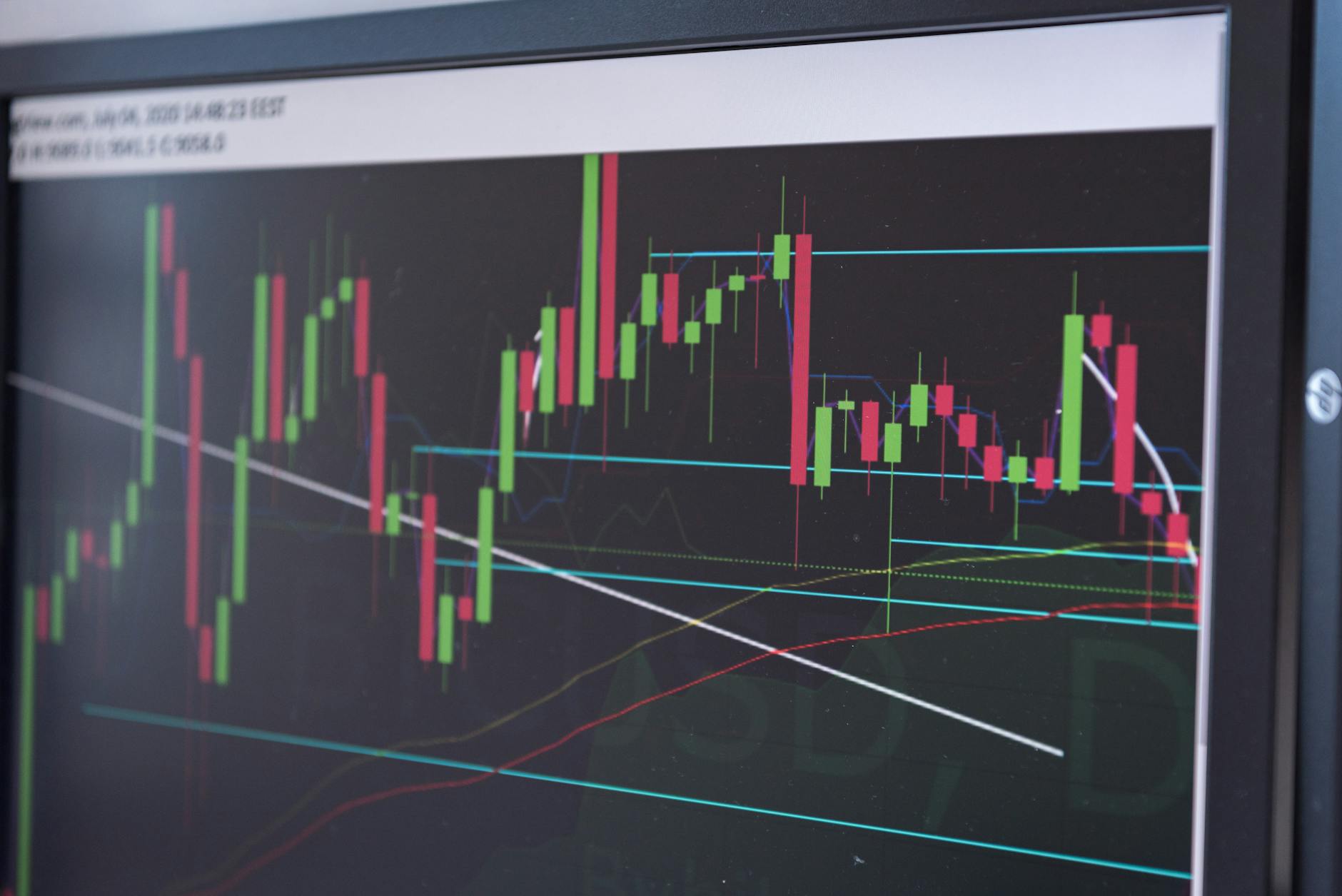
Absorption or Exhaustion: What BTC's Slow Bleed to $58K Is Telling Traders.

By BitBrainers Editorial Bitcoin has now made the trip down to the $60,000 zone twice this year, and the two trips don't look anyth...

Absorption or Exhaustion: What BTC's Slow Bleed to $58K Is Telling Traders.