
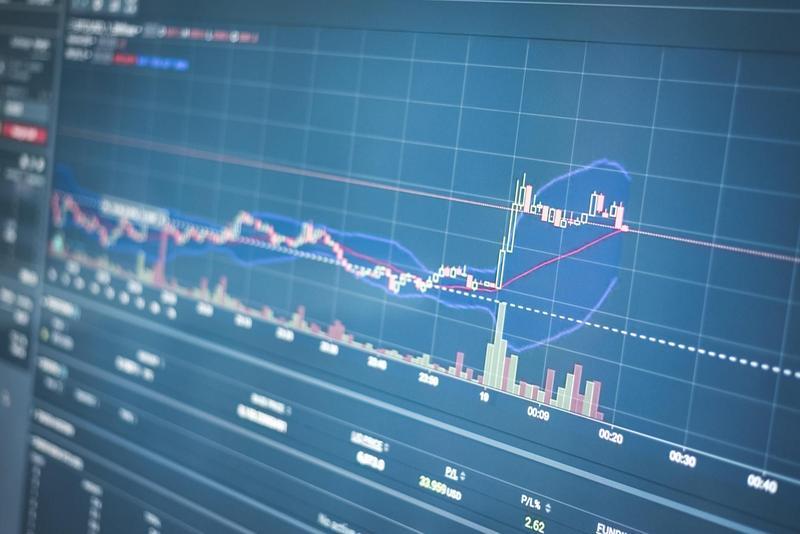
Every time the Federal Open Market Committee meets, Bitcoin moves. Not because crypto traders are suddenly macro economists, but because the entire global risk asset market reprices on Fed language. BTC is sitting at $75,909 today, and understanding why requires you to stop looking at charts and start looking at the building on Constitution Avenue.
The Fed Controls the Tide, Not Just the Waves
The FOMC meets eight times per year. It sets the federal funds rate, which is the baseline borrowing cost for the entire US financial system. When that rate changes, or even when the language around it shifts, money flows differently across every asset class on the planet.
Bitcoin is not exempt from this. Anyone who still believes BTC is completely "uncorrelated" from traditional finance has not been paying attention since 2022. Correlation spikes precisely when it matters most, during liquidity crunches, and that is when being wrong costs you real money.
The Fed controls the cost of money. When money is cheap, risk assets including Bitcoin pump. When money is expensive, traders de-risk and BTC dumps. This is not complicated, but most retail traders ignore it until they are already down 30%.
What the FOMC Actually Decides (And What Most Traders Miss)
People think the FOMC decision is just a number. Rate up, rate down, rate held. That is the surface level read, and it is usually already priced in before the announcement even drops.
What actually moves markets is the language in the statement and the press conference that follows. Jerome Powell can hold rates steady and still crater Bitcoin if he sounds hawkish enough. Conversely, a rate hold paired with dovish forward guidance can send BTC ripping.
The dot plot matters too. This is the Fed's own projection of where rates are headed across the next few years. When those dots shift downward, it signals looser policy ahead. That is rocket fuel for Bitcoin.
The 2022 Case Study That Should Live Rent-Free in Every Bitcoin Trader's Head
Let me give you the example that should have permanently rewired how you think about the Fed and BTC.
In early 2022, Bitcoin was trading above $40,000. Inflation was running hot. The Fed had been signaling rate hikes, but markets were not fully pricing in how aggressive the tightening cycle would become. When Powell pivoted from "transitory inflation" to "we will do whatever it takes," the mask came off.
By November 2022, Bitcoin had crashed to around $15,500. That is a drawdown of over 75% from the January 2022 high of roughly $47,000. Was it all the Fed? No. FTX collapsed that same month. But the macro environment set up by relentless rate hikes created the brittle conditions where a collapse like FTX could metastasize into a full-blown crypto bear market. Cheap money hides leverage. Expensive money exposes it.
The takeaway is not that the Fed caused the crypto crash. The takeaway is that ignoring the macro environment leaves you exposed to second-order effects you never saw coming.
How Bitcoin Typically Behaves Around FOMC Days
Here is the pattern that shows up repeatedly. In the days leading up to an FOMC decision, Bitcoin often goes quiet. Volume compresses. The market is waiting. Traders do not want to be caught on the wrong side of a surprise.
Then the decision drops. If it matches expectations, you often get a brief spike in both directions as algos digest the statement word by word. Real direction comes from the press conference thirty minutes later.
If Powell sounds more dovish than expected, BTC usually rallies sharply within the hour. If he sounds hawkish, even with a rate hold, BTC sells off. This is not a guarantee, but it is a reliable enough tendency that you should have a plan before FOMC day, not during it.
The Rate Cut Narrative and Why Bitcoin Traders Have Been Burned By It
Rate cut expectations have driven Bitcoin narratives for the past two years. Every time a cut looks close, Bitcoin rallies on the anticipation. Every time the Fed delays or sounds less certain, BTC pulls back.
This is where the hype machine gets dangerous. Too many crypto influencers simplified the relationship into "Fed cuts rates, Bitcoin goes to $150k." That is not how markets work. By the time a rate cut is confirmed and consensus, the move is largely priced in. The alpha lives in correctly anticipating the timing and magnitude before it becomes obvious.
We have seen this movie before. Markets were pricing in six rate cuts for 2024. They got one. Anyone who positioned aggressively based on that expectation and ignored the persistent inflation data got punished. The Fed does not care about your Bitcoin bags. It cares about its dual mandate.
Liquidity Is the Real Variable Nobody Wants to Talk About
Here is the contrarian insight that most crypto blogs completely skip over: the federal funds rate is not the most important Fed variable for Bitcoin. Liquidity is.
Specifically, the Fed's balance sheet and the dynamics of reverse repurchase agreements and Treasury General Account balances have a tighter short-term correlation with Bitcoin price than interest rates alone. When the Fed drains liquidity through quantitative tightening, risk assets suffer. When liquidity floods back into the system, BTC tends to front-run the move.
In practical terms, you should be watching the Fed's balance sheet weekly on FRED, the St. Louis Fed's data tool. When the balance sheet starts expanding again, that is a more reliable early signal for Bitcoin than waiting for a rate cut announcement that everyone already knows is coming. Rate cuts are lagging indicators of the policy shift. Balance sheet expansion is where the real signal lives.
Dollar Strength Is Bitcoin's Shadow
When the Fed sounds hawkish and rate cuts look further away, the US Dollar Index (DXY) strengthens. A stronger dollar is almost always bearish for Bitcoin in the short term. Global investors have less incentive to reach for risk when they can park in high-yielding dollar-denominated assets.
Watch DXY on FOMC day as closely as you watch the BTC price chart. If the dollar spikes after the announcement, expect BTC headwinds. If the dollar dumps, BTC almost always gets a tailwind. This relationship is not perfect, but it is consistent enough to factor into your trading decision.
This is macro trading 101, and it applies directly to Bitcoin whether the Bitcoin maximalists want to admit it or not.
What a "Higher for Longer" Environment Actually Means for Your Stack
A higher for longer rate environment means the opportunity cost of holding Bitcoin stays elevated. When you can earn 4-5% risk-free in treasuries, the argument for holding a volatile asset like BTC needs to be stronger. Institutional money is especially sensitive to this.
This does not mean Bitcoin cannot rally during a high-rate environment. The spot ETF approval in early 2024 proved that demand-side factors can override macro headwinds. But it does mean that rallies in a high-rate environment are more fragile and more dependent on specific catalysts.
In a lower-rate environment, the tide lifts all boats. In a higher-rate environment, you need a reason. Bitcoin's reason is increasingly its fixed supply, halving cycle, institutional adoption, and its role as a global settlement layer. Know your thesis or you will panic sell into every FOMC-induced pullback.
How to Actually Position Around FOMC Decisions
Do not try to day trade the FOMC announcement unless you are very experienced and very fast. The first 10 minutes after the decision are dominated by algorithmic trading that executes in milliseconds. You will not win that game.
What you can do is understand the probable scenarios before the decision and size your positions accordingly. If you are bullish Bitcoin medium-term but concerned about a hawkish surprise, reduce your leverage before the announcement. It costs you nothing to be patient.
If you are actively trading, platforms like Kraken give you the tools to set conditional orders so you are not glued to a screen when Powell starts talking. Having your orders preset based on price levels removes the emotional decision-making that kills most retail traders on high-volatility days.
Whatever you decide to do with your trading positions, keep your long-term stack cold and untouchable. A hardware wallet like Trezor means your core Bitcoin is not subject to exchange risk, liquidation cascades, or the temptation to panic sell at the worst possible moment. Separate your trading capital from your conviction stack. Physically.
The Only Thing You Should Actually Do This Week
Stop waiting for the mainstream crypto media to tell you what the FOMC decision means for Bitcoin. By the time they publish their take, the move has already happened.
Instead, go read the actual FOMC statement yourself when it drops, then watch the press conference. You are looking for specific phrases. "Data dependent" means uncertainty and flexibility. "Committed to bringing inflation to 2%" means hawkish bias. "Risks are now two-sided" means they are opening the door to cuts. Learn the language directly, skip the intermediaries.
Then check the Fed's balance sheet on FRED the following Thursday when the weekly data updates. That number will tell you more about where Bitcoin is heading over the next 30 to 60 days than any price prediction from any influencer on the internet.
That is your edge. Use it.
Follow BitBrainers for daily crypto analysis that does not sugarcoat.


No comments:
New comments are not allowed.