On December 30, 2010, a man named Hal Finney posted a message on the Bitcointalk forum. He was not a blogger or an influencer. He was a cryptographer who received the first Bitcoin transaction ever sent, directly from Satoshi Nakamoto. His post described in precise detail how Bitcoin would evolve over the next 15 years. Nobody paid attention.
The post has been sitting in plain sight ever since. What it describes is not a theory. It is a blueprint that is currently executing in real time.
The Post Nobody Read
Finney's argument was straightforward. Bitcoin itself cannot scale to handle every financial transaction on earth. The blockchain is too slow and too final for everyday commerce. What Bitcoin can do, he argued, is serve as the reserve asset for a new class of financial institutions. Those institutions would issue their own digital cash, redeemable for Bitcoin, and settle net transfers between themselves on-chain. Individual transactions between people would eventually become as rare as on-chain Bitcoin purchases were in 2010, which is to say, almost nonexistent.
He called this the "high-powered money" model. Central banks use the same concept today. Physical dollars in circulation are a fraction of total money supply. The base layer settles between institutions. Everything else runs on top.
Finney was describing the Lightning Network, Bitcoin ETFs, and corporate treasury accumulation in a single forum post, fourteen years before any of them existed.
The Institutions Arrived on Schedule
The SEC approved spot Bitcoin ETFs in January 2024. What followed was not gradual. BlackRock's IBIT fund attracted over $50 billion in assets under management in less than one year, making it the fastest-growing ETF launch in financial history. These are not retail investors buying Bitcoin on Coinbase. These are pension funds, sovereign wealth vehicles, and institutional allocators settling exposure through a regulated wrapper, exactly as Finney described.
Corporate treasury accumulation tells the same story with different numbers. Corporate treasuries have added roughly 62,000 BTC in Q1 2026 alone, with institutions buying at approximately 2.8 times the rate at which new coins enter circulation through mining. That ratio is the key data point. Demand from institutional settlement is structurally outpacing new supply.
Strategy holds an estimated 687,410 BTC by early 2026, representing more than 3% of the total 21 million Bitcoin that will ever exist. One company. More than 3% of total supply. That is not a trading position. That is a reserve.
The Number Most People Are Not Tracking
Here is the detail that gets missed in the price discussion. 35 publicly traded companies now hold at least 1,000 BTC each, up from 24 at the end of Q1 2025, according to Fidelity Digital Assets, with those holdings exceeding $116 billion. The distribution matters as much as the total. This is no longer a one-company phenomenon. The model that Strategy pioneered is being replicated across sectors, geographies, and firm sizes.
Over 170 to 190 publicly traded firms held Bitcoin as of late 2025, collectively controlling roughly 5% of the circulating supply. Add ETF holdings, government holdings, and private corporate treasuries and the institutional share of circulating Bitcoin is approaching levels that structurally limit the float available to retail markets.
Finney predicted this explicitly. He wrote that most Bitcoin transactions would occur between banks settling net transfers. Retail transactions on-chain would become rare. That is not a future state. It is the current trajectory.
What Finney Got Right That Saylor Gets Credit For
Michael Saylor is widely credited with inventing the corporate Bitcoin treasury concept. Strategy began accumulating in 2020. The financial press treats this as an original idea. It is not. Finney outlined the same logic in 2010, a decade before Saylor's first purchase. The insight that Bitcoin functions best as a reserve asset held by institutions, rather than a medium of exchange for daily transactions, predates the entire corporate treasury movement by ten years.
This is not a criticism of Saylor. Execution matters more than chronology. But the intellectual foundation was laid by Finney, and crediting the correct source changes how you think about where this is going. Finney was not making a price prediction. He was describing an institutional architecture. That architecture is being built right now, and it has a long way to go.
The Lightning Network Is the Secondary Layer Finney Described
Finney wrote that Bitcoin needed a secondary level of payment systems that is lighter weight and more efficient. He described institutions issuing their own digital cash redeemable for Bitcoin. The Lightning Network is the technical implementation of that secondary layer. Stablecoins backed by Bitcoin are the digital cash Finney described. The on-chain settlement layer processes institutional transfers. Everything else runs above it.
This architecture is not accidental. It is the only way a fixed-supply asset with slow finality can function as the base layer for a global financial system. Finney understood this constraint in 2010. The market is pricing it in today, slowly and incompletely.
The Week's Data Confirms the Direction
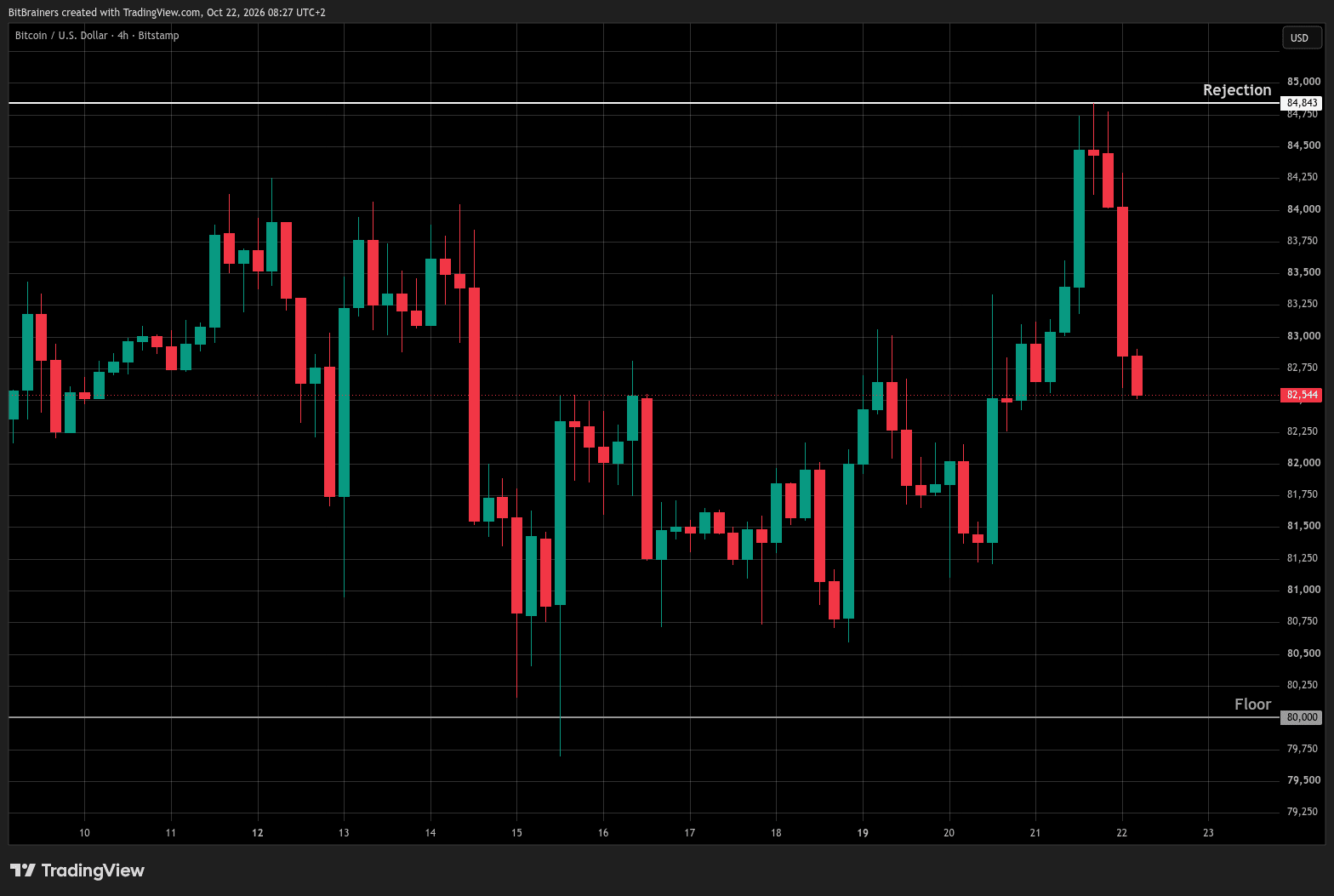
Bitcoin is trading at $77,000 this week with the Fear and Greed Index at 28. Spot ETFs recorded net outflows of over $1 billion for the week of May 11 through 15. The short-term traders are nervous. The institutional accumulators are not. Public companies collectively expanded their Bitcoin holdings throughout Q1 2026, adding tens of thousands of BTC and pushing total corporate treasuries to new record highs near 1.19 to 1.22 million BTC. The institutions are buying the same dip that retail is selling.
That divergence is Finney's model in practice. Institutional settlement layers accumulate through volatility. Retail activity creates the noise. The base layer absorbs it.
The Assumption Worth Reconsidering
Most people reading this post came in believing that institutional Bitcoin adoption is a new phenomenon driven by ETF approval and the Saylor playbook. That assumption is wrong in an important way. The model was described in full in 2010 by the person closest to Bitcoin's creation. What changed in 2024 was not the idea. What changed was regulatory permission and the maturation of custody infrastructure. The intellectual foundation has been public for 15 years.
If Finney was right about the institutional architecture, the second half of his prediction also deserves attention. He wrote that individual on-chain Bitcoin transactions would eventually become as rare as Bitcoin purchases were in 2010. In 2010, almost nobody transacted in Bitcoin. If that endpoint is the destination, the current institutional accumulation phase is still early. The institutions are building the reserves. The settlement layer is not finished yet. If you hold Bitcoin through a hardware wallet like Trezor, you are holding a reserve asset in the architecture Finney described. Whether you trade it on Kraken or hold it long term, understanding what layer you are operating on changes every decision you make.
Disclosure: This post contains affiliate links to Trezor and Kraken. BitBrainers may earn a commission at no extra cost to you. This is not financial advice.