Over 14 months ago, President Trump signed an executive order establishing the U.S. Strategic Bitcoin Reserve. Since then, the government has said very little about what actually exists, how much it holds, or whether it functions at all.
That silence just got a deadline.
Patrick Witt, executive director of the President's Council of Advisors for Digital Assets, stood on stage at Consensus Miami on May 6 and told the audience an announcement on the SBR is coming "in the next few weeks." He had already previewed the same message days earlier at Bitcoin 2026 in Las Vegas. Two conferences, same line. The White House is signaling something is coming. What exactly, nobody knows yet.
What the White House Actually Said
Witt's comments were specific in tone and vague in substance. He confirmed the administration has spent months counting, consolidating, and attempting to secure Bitcoin held across dozens of federal agencies. The work, he said, has been happening "largely out of public view."
That custody work turned out to be more complicated than anyone anticipated. Witt revealed that some cold wallets were discovered stored in desk drawers across various agencies before the White House moved to centralize oversight. This is the world's largest sovereign Bitcoin holder. Desk drawers.
The situation got worse. In January 2026, Bloomberg reported the U.S. Marshals Service was investigating a possible hack of government digital-asset accounts after on-chain investigator ZachXBT claimed a hacker stole more than $60 million from government seizure wallets in late 2025. A separate $24 million theft was traced to October 2024.
Witt cited these incidents directly as the reason centralized custody is not optional. "Custody is unique for digital assets," he said. The government had apparently not figured that out until now.
How Much Bitcoin Does the U.S. Actually Hold?
Witt declined to give a specific number. He estimated federal holdings at somewhere between 198,000 and 328,000 BTC. That is a 130,000 BTC range. At current prices, the uncertainty alone is worth roughly $10 billion. The world's most powerful government cannot tell you within $10 billion how much Bitcoin it holds. That is the state of the Strategic Bitcoin Reserve in May 2026.
For context, China is estimated to hold roughly 190,000 BTC from various seizures, and the United Kingdom holds approximately 61,000 BTC. El Salvador, which adopted Bitcoin as legal tender, holds around 6,174 BTC. None of these countries have announced plans to treat Bitcoin as a formal reserve asset on the scale the U.S. is contemplating.
The Legislation Problem
The executive order that created the SBR has a structural weakness. It can be revoked by any future president. That is why codification through Congress is critical, and it is exactly where the process currently sits.
Two bills are in motion. In the Senate, Wyoming Senator Cynthia Lummis has introduced the BITCOIN Act, which would direct the Treasury to purchase 200,000 BTC per year for five years and hold those coins for a minimum of 20 years. In the House, Representative Nick Begich has introduced the American Reserves Modernization Act. Neither has passed. Neither has a clear timeline.
If the BITCOIN Act passes, the Treasury is estimated to begin its first official Bitcoin purchase in Q4 2026, which would make the United States the first sovereign nation to actively accumulate Bitcoin as a strategic reserve asset. The proposal to acquire 1 million BTC over five years would represent, at current prices, roughly $81 billion in committed purchasing. Whether Congress has the appetite to pass it remains the open question.
Witt was direct about the constraint. "It always needs to be followed up with proper legislation," he said. What he did not say is when that legislation will actually move.
What the Announcement Might Actually Mean
Based on Witt's framing at both conferences, the coming announcement will focus on operational structure and legal footing, not new purchases. The White House will tell the world it has organized its Bitcoin, fixed its custody, and established a legal framework. It will not announce that the U.S. is buying more Bitcoin. Not yet.
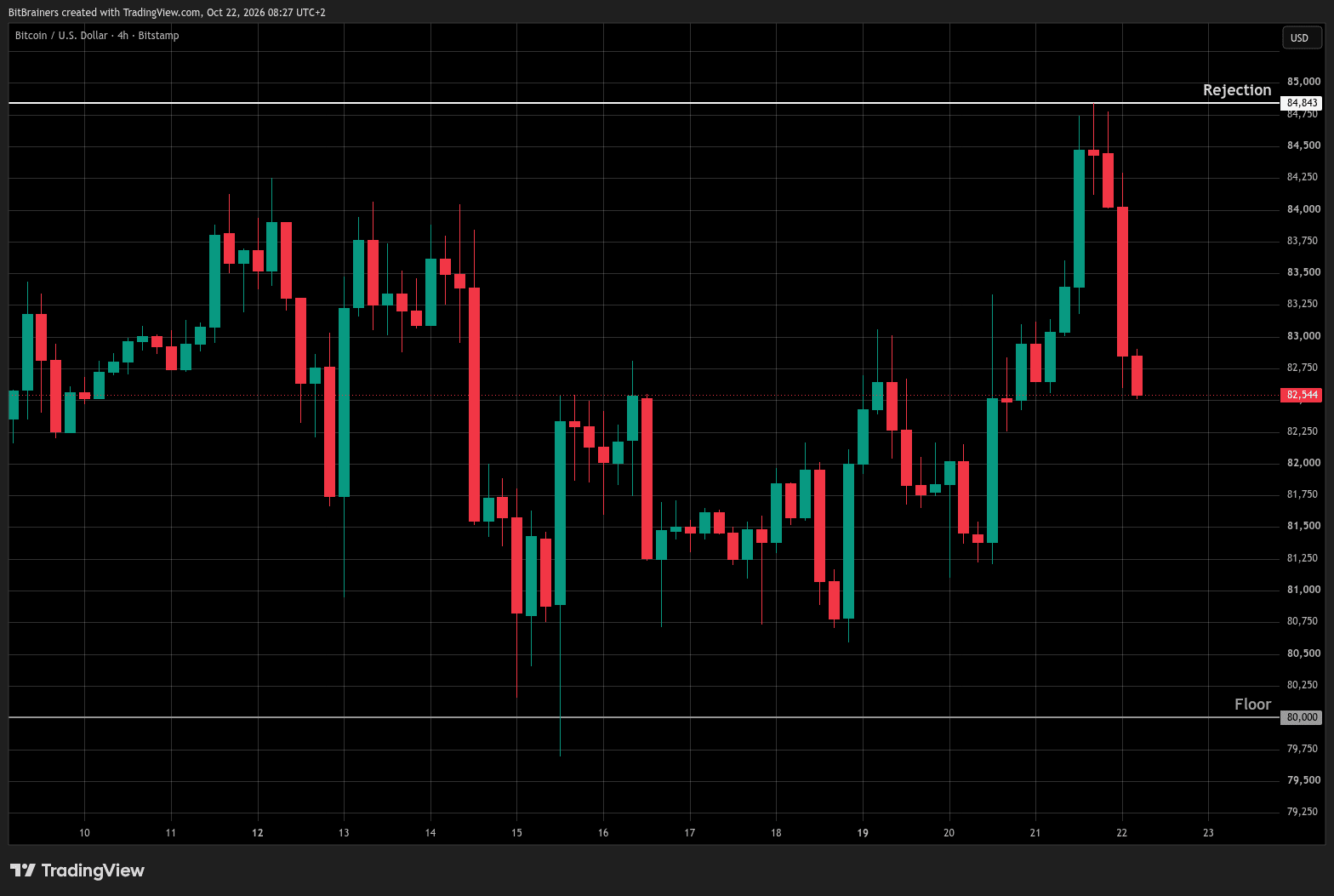
That distinction matters for price. The market has been pricing in a policy catalyst. What it may get is a progress report.
What Individual Holders Should Take From This
The U.S. government storing Bitcoin in desk drawers across federal agencies before a rushed centralization effort is not just a bureaucratic embarrassment. It is a reminder of what self-custody actually means and why it matters even at the institutional level.
If the world's most powerful government cannot manage its own Bitcoin securely without losing tens of millions to hacks and mismanagement, the argument for holding your own keys becomes harder to dismiss. Custody is not a technical detail. It is the whole point.
The broader takeaway from the SBR situation for individual holders is this: sovereign accumulation at scale, even slow and disorganized, reduces the supply available to everyone else. Every Bitcoin a government locks away for 20 years under the BITCOIN Act is one that cannot be sold into the market. The direction of travel is clear regardless of the legislative timeline.
For anyone sitting on exchange balances waiting for a better time to move to cold storage, the SBR story is the case study. Start with a Trezor and get your coins off exchange before the window of easy access narrows further. The government learned this lesson expensively. You do not have to.
Why This Still Matters
The SBR announcement, whatever form it takes, is the most significant Bitcoin policy event of 2026. A credible custody framework from the U.S. government removes a genuine risk, the risk that seized assets get sold or mismanaged, and replaces it with the implicit signal that Washington treats Bitcoin as a long-term strategic asset.
That signal, even without new purchases, has weight. Every sovereign wealth fund, every central bank, every institutional allocator watching from the sidelines reads the same thing: the U.S. is not selling.
The announcement Witt promised is now overdue. Bitcoin is trading near $78,000. Congress is slow. The desk drawers have been emptied.
The reserve exists. Probably. The announcement is coming. Supposedly.
Sources: CoinDesk, TheStreet, Bitcoin.com