
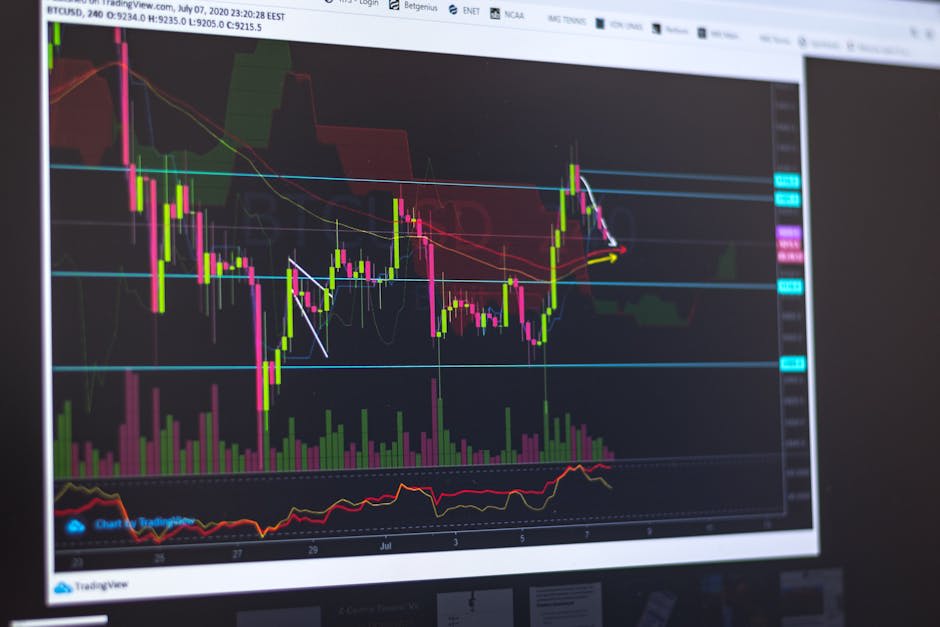
Most traders running AI signal tools right now are paying for a polished chart overlay on top of the same lagging indicators their grandfather used. That is the uncomfortable starting point for this entire conversation.
I run bots. I use AI tools in my own stack. I have tested more signal services than I can list without embarrassing some of the people who recommended them. So when I tell you that most AI trading signals are overpriced noise generators with a machine learning badge stapled on, I am not being cynical. I am describing what I have seen happen to real money.
Let us get into it.
The Signal Industry Exists Because Retail Traders Do Not Want to Do the Work
There are hundreds of AI signal platforms actively marketing to crypto traders right now. Most of them are built on one simple premise: retail traders want certainty, and certainty sells better than probability. The product is not the signal. The product is the feeling that someone or something smarter than you has already figured this out.
This is why the marketing always shows you the wins. Green arrows on clean charts. Screenshots of trades that worked. Nobody shows you the 3am alert that fired during low liquidity and got you filled at a terrible price.
What AI Actually Does Well in Crypto Markets
Automated sentiment analysis is the one genuine edge most retail traders are not using properly. Tools that scrape on-chain data, social volume, and order book depth in near-real-time can identify shifts in market structure faster than any human sitting at a screen. That is a real, documented capability, not a marketing claim.
Pattern recognition across multiple timeframes also works when it is implemented without overfitting. If a model has been trained on enough BTC market cycles, it can flag historical confluence zones with meaningful accuracy. The key word there is confluence. A single signal from a single model means almost nothing.
Where AI legitimately earns its place is in execution speed and removing emotional bias from predefined rules. A bot will not second-guess a stop loss at 2am. It will not hold a losing position because you are convinced the market is wrong. That mechanical discipline is worth more than most traders admit.
Where AI Signals Break Down and Break Your Portfolio
AI models trained on historical BTC data from low-volatility periods will completely collapse during black swan events. The model has never seen the specific liquidity conditions of a flash crash triggered by a macro shock it was not trained on. It has seen patterns that look similar, and it will act on them confidently, which is a problem.
Most people do not know this: the majority of retail-facing AI signal platforms use the same underlying API feeds from the same three or four data providers. When those feeds lag during high-volume moments, every platform built on them lags together. You are not getting independent signals. You are getting synchronized noise from a shared data bottleneck.
Overfitting is also rampant and almost impossible for a non-developer to detect. A model that performs perfectly on backtested BTC data from the past two years tells you exactly one thing: it is very good at explaining what already happened. That is not a trading edge. That is a history lesson.
The Current Market Makes This Worse, Not Better
BTC is sitting at $76,559 as of May 19, 2026. That price level has been grinding sideways with significant intraday volatility and thinner order books than you would expect at this range. In the past week, multiple short squeeze events have fired off within hours of each other, which is exactly the kind of chaotic, low-consensus environment where AI signal tools trained on trending markets produce their worst results.
Rangebound markets with sharp wicks in both directions expose the core weakness of most signal systems. They are built to identify trends. When there is no trend, they generate signal noise. Traders who trusted alerts blindly during this past week's price action got chopped up in both directions.
The Contrarian Truth Nobody Else in Crypto Media Will Tell You
Here is the insight that most crypto content buries under layers of affiliate product promotion: the traders who profit from AI tools are almost never the ones buying signals. They are the ones selling signal subscriptions. The real monetization of AI in crypto right now is not alpha generation. It is content monetization through communities built around AI signal branding.
The tools that actually generate consistent edge in this market are proprietary, not publicly sold, and operated by people with serious engineering backgrounds and direct exchange API connections. If someone is selling you access to their alpha in a $49 monthly subscription, ask yourself why. If the tool actually worked that well, the person running it would be trading it, not selling it.
How to Use AI Tools Without Getting Burned
Use AI as a filter, not a trigger. Run a signal tool to flag potential setups, then validate manually using order book data, funding rates, and on-chain flow before you act. Never hand full execution authority to a model you did not build and cannot audit.
Layer your tools. Sentiment analysis from one source, price action confirmation from another, and volume analysis from a third gives you a genuine probabilistic edge. Single-source signals, no matter how slick the UI, are a single point of failure.
Set hard rules around when your bots are allowed to trade. During major macro events, earnings season for tech stocks, or Fed announcements, you should either reduce your bot's position sizing dramatically or shut it off entirely. BTC has a documented correlation with risk assets during macro stress events, and most retail signal tools are not built to account for cross-market correlation in real time.
Execution Quality Matters More Than Signal Quality
You can have a genuinely good signal and still lose money if your exchange fills you poorly. Slippage, liquidity, and execution speed are the unsexy mechanics that separate profitable bot trading from theoretical profitable bot trading. This is why serious algo traders care deeply about where they execute.
If you are running automated strategies or just want a platform that handles serious order flow without drama, Kraken is the exchange I actually use. Deep liquidity, a solid API, and none of the reliability issues I have experienced on other platforms during high-volatility events.
The Security Side of Automated Trading Gets Ignored Until It Is Too Late
Running AI tools means API keys, hot wallets, and bots with live access to your funds. The attack surface is large. If you are keeping significant holdings connected to an automated system, you need to think seriously about how your cold storage is structured.
The BTC you are not actively trading should never sit in an exchange wallet or a software wallet connected to the internet. A hardware wallet like Trezor keeps your long-term stack completely isolated from the risk surface that automated trading creates. That separation between your trading capital and your cold storage is non-negotiable if you take security seriously.
Assume You Came In Here Believing AI Signals Are Either Scams or Secrets
That binary is wrong and it is holding you back. Some AI tools provide genuine utility in specific, narrow functions. Sentiment analysis and execution automation are real. Full-stack AI signal trading with no human oversight is mostly fiction, or it is so capital-intensive and engineering-heavy that it is inaccessible to anyone reading this post.
The honest evaluation framework is this: if a tool removes one specific manual task from your workflow and does it more accurately or faster than you can, it is worth testing. If it promises to replace your judgment entirely, it is selling you something. Judgment, context, and market understanding are not replicable by a model trained on public data.
The One Thing You Should Try First
Before you pay for any AI signal platform, spend two weeks running a sentiment analysis tool on BTC social volume and on-chain data alongside your own manual analysis. Compare where the tool flags divergence versus where you would have spotted it. That exercise alone will tell you whether AI assistance adds anything to your actual process, or whether you are just shopping for a permission slip to make trades you were already going to make.
Disclosure: This post contains affiliate links to Trezor and Kraken. BitBrainers may earn a commission at no extra cost to you. This is not financial advice.
BitBrainers. We check the facts so you don't have to.


No comments:
Post a Comment