Something quiet is happening in financial markets right now. Not in the price charts. Not in the headlines. In the plumbing underneath the system, specifically the movement of capital out of Asia and into hard, borderless, portable assets like Bitcoin.
This is not a prediction. The signals are already live.
Asian Investors Have Been Burned by Their Own Markets Before
Japan, South Korea, and Taiwan are three of the most financially sophisticated retail investor bases in the world. They have also watched their domestic markets eat them alive through currency devaluation, geopolitical tension, and central bank policy that punishes savers. Japanese investors in particular have lived through decades of yield suppression from the Bank of Japan, a policy framework that makes holding yen a guaranteed slow bleed.
When domestic assets fail to preserve purchasing power, capital moves. It moved into US equities for years. It moved into real estate. Now, with BTC sitting at $77,792 as of May 22, 2026, and global macro uncertainty at elevated levels, the question is whether it is moving into crypto in a meaningful way.
The answer appears to be yes, and the evidence is in the order flow, not the news.
South Korea Runs One of the Most Active Retail Crypto Markets on Earth
South Korea is not a small player here. Seoul has hosted some of the highest Bitcoin trading volume relative to GDP of any country in the world, a fact that has been documented consistently since at least 2017. The so-called Kimchi Premium, where BTC trades at a higher price on Korean exchanges than global benchmarks, has historically appeared when domestic Korean retail demand surges.
That premium has been observed again in recent weeks. It does not always appear for benign reasons. Sometimes it signals panic buying. Sometimes it signals capital flight dressed up as speculation. Either way, the direction of flow tells you something real about how Korean retail investors currently feel about holding Korean won-denominated assets.
Upbit and Bithumb, the two dominant Korean exchanges, continue to process trading volumes that rival several tier-one global platforms. That is not a coincidence. That is infrastructure built for a population that treats crypto as a serious capital allocation tool, not a curiosity.
The Yen Is the Canary in the Coal Mine for Bitcoin Demand
Japan's monetary situation is one of the most important macro signals for crypto traders globally, and almost no one outside of macro desks talks about it seriously. The Bank of Japan has been walking a tightrope between decades of ultra-loose policy and the pressure to normalize rates as inflation finally showed up in the Japanese economy.
When the yen weakens, Japanese investors holding yen-denominated assets watch their real purchasing power erode in real time. That creates a strong behavioral incentive to diversify into assets outside the yen system. Gold has historically captured some of this flow. Bitcoin, increasingly, is capturing more of it.
Japanese retail investors are not naive. They have watched the yen depreciate substantially over the past several years. They also live in a country where the government formally recognized Bitcoin as legal tender for exchange purposes back in 2017, making it one of the earliest regulated crypto environments globally. The infrastructure for Japanese capital to enter Bitcoin is mature, legal, and well-understood.
Most People Do Not Know This About Chinese Capital and Crypto
Here is something most crypto blogs miss entirely. China banned crypto trading domestically. But Chinese capital does not stop moving because of a government ban. It reroutes.
Hong Kong has been positioning itself as a regulated crypto hub since at least 2023, explicitly creating a legal framework to attract institutional and retail crypto activity. This matters because Hong Kong functions as a pressure valve for mainland Chinese capital. Wealthy mainland Chinese nationals have used Hong Kong as a routing mechanism for capital movement for decades. The new crypto licensing regime in Hong Kong did not happen by accident. It happened because demand exists and the city made a strategic choice to capture it.
Over-the-counter Bitcoin desks in Hong Kong continue to operate at scale. Stablecoin volumes in Asia remain enormous, and stablecoin inflows into exchanges often precede Bitcoin buying. That pipeline from mainland China through Hong Kong and into crypto assets is active. It is not visible on a standard price chart but it shows up in OTC order flow and stablecoin issuance data.
The Taiwan Strait Creates a Structural Demand for Portable Wealth
Taiwan deserves its own section and almost never gets one in crypto analysis. Taiwan sits in one of the most geopolitically exposed positions of any advanced economy. The ongoing tension around the Taiwan Strait has not resolved. It has simply become background noise that markets price in inconsistently.
Taiwanese businesspeople and high-net-worth individuals understand this risk in a way that Western traders do not. When you live under genuine geopolitical uncertainty, portable, borderless, seizure-resistant assets have real utility beyond speculation. Bitcoin at $77,792 is not just a risk-on trade for a Taiwanese investor thinking about capital preservation. It is potentially a survival asset.
This is the contrarian insight: most Western traders frame Asian capital rotation into crypto as a macro trade driven by yield differentials and currency weakness. Some of it is. But a meaningful portion of it is driven by genuine political risk assessment. These are investors who have thought seriously about scenarios where traditional financial infrastructure becomes unreliable or inaccessible. Bitcoin solves a specific problem for them that no US equity ETF can solve.
The Current Market Is Reflecting This Flow in Subtle Ways
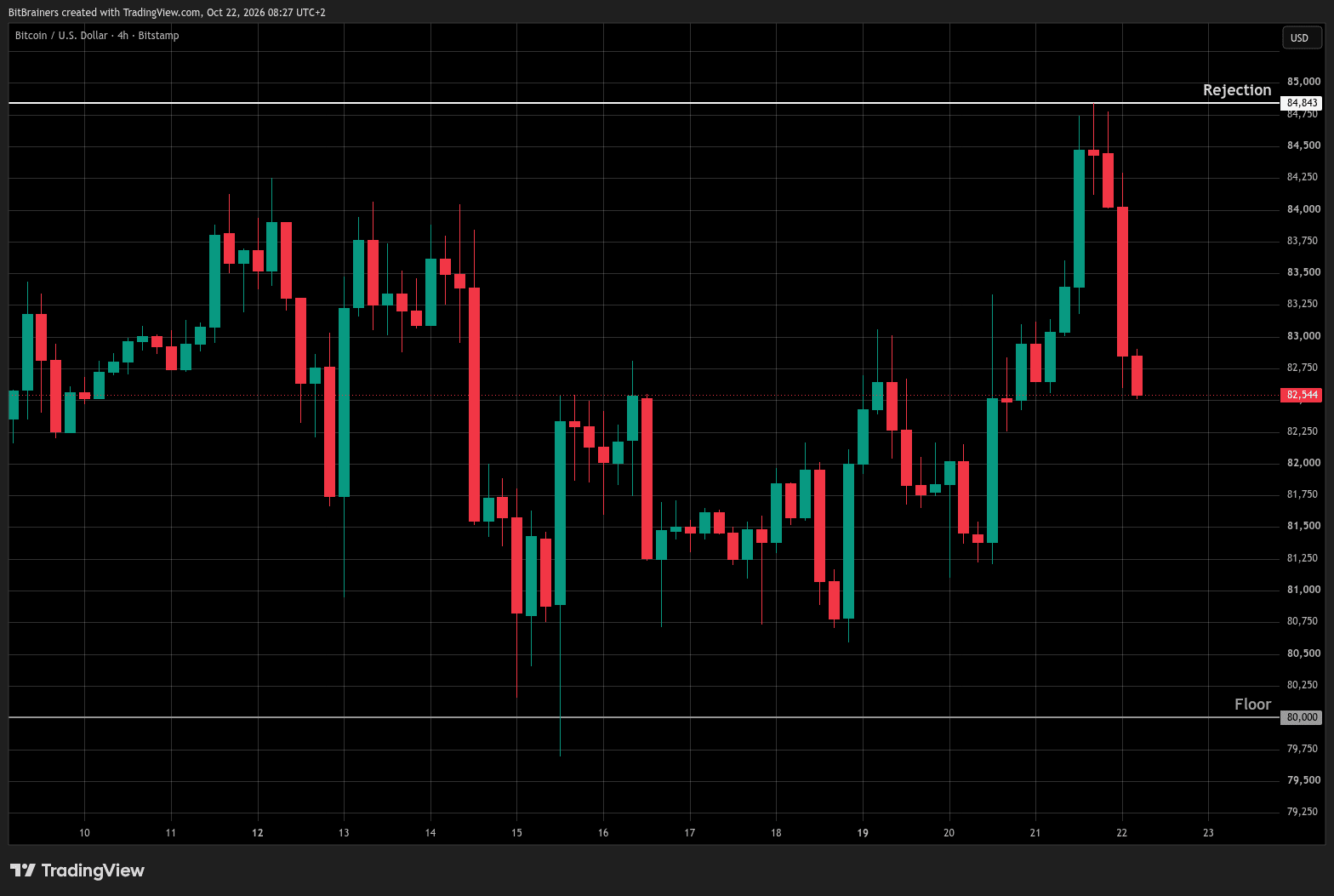
In the past 7 days, BTC has held support above $76,000 multiple times despite macro headwinds from the US dollar and bond market volatility. That kind of demand-side resilience at these levels does not come from one type of buyer. It suggests multiple buyer pools absorbing selling pressure from different time zones and motivations.
Asian market hours, roughly 1:00 AM to 8:00 AM UTC, have shown notable bid support during periods when US-based traders are offline. This is not guaranteed confirmation of Asian capital rotation. But it is consistent with it.
The Grayscale Bitcoin Trust and spot Bitcoin ETF flows have been dominated by US institutional demand. What is harder to measure is the direct exchange flow from Korean, Japanese, and Hong Kong-based platforms directly into on-chain Bitcoin wallets. That flow bypasses the ETF wrapper entirely and does not show up in the institutional allocation data that US finance media focuses on.
Holding Your Own Keys Matters More When Capital Is Moving Across Borders
If you are watching this rotation and positioning accordingly, the security question becomes critical. Cross-border capital movement into crypto means assets that need to be held securely and privately. Exchange-held assets are one risk vector. Self-custody removes it.
A hardware wallet like the Trezor is not a nice-to-have in this environment. It is the difference between actually owning your Bitcoin and having a claim on someone else's ledger entry. For capital that has rotated out of a national financial system for specific reasons, the last thing you want is counterparty risk with a centralized exchange.
For actual trading and liquidity, Kraken is one of the longer-running platforms with a track record that dates back to when most crypto projects did not exist yet. Liquidity matters when you are trying to execute at meaningful size.
The Assumption You Brought Into This Post Is Probably Wrong
Most traders reading this assumed that if Asian capital rotation were happening at scale, Bitcoin would be trading significantly higher. The logic seems clean. More buyers equals higher price. But capital rotation does not work like a light switch. It works like a tide.
The capital moving from Asia into Bitcoin right now may be exactly what is holding BTC at $77,792 rather than $60,000. It may not be the catalyst for the next leg up. It may be the structural floor that everyone will only recognize in retrospect. Rotation provides support before it provides moonshots. The people who understand that hold through the quiet accumulation phase instead of waiting for the obvious signal that arrives after the move is already done.
Watch the Kimchi Premium on Korean exchanges and the stablecoin issuance data out of Hong Kong. When both start running together, the quiet rotation becomes loud. That is your real signal to pay attention to, not the next US CPI print.
Disclosure: This post contains affiliate links to Trezor and Kraken. BitBrainers may earn a commission at no extra cost to you. This is not financial advice.
BitBrainers. Follow the data, not the noise.