Two of the world's most sophisticated institutional investors looked at the same Bitcoin ETF in the same quarter and made opposite decisions. Harvard Management Company, which oversees a $57 billion endowment, cut its BlackRock IBIT position by 43% and fully exited its $86.8 million Ethereum ETF stake. Abu Dhabi's Mubadala Investment Company raised its IBIT position by 16% to roughly $566 million. Both moves are in SEC 13F filings. Both are verifiable. They cannot both be right.
The divergence is the story. Not the price. Not the macro. The fact that two institutions with more analytical firepower than most sovereign governments looked at Bitcoin in Q1 2026 and drew opposite conclusions tells you something important about where this market actually is.
What Harvard Actually Did and Why It Matters
Harvard Management Company began buying IBIT shares in Q2 2025. At its peak in Q3 2025, Harvard held $442 million in Bitcoin ETF exposure, making IBIT its single largest disclosed public equity holding. Then it started selling. It cut 21% in Q4 2025. It cut another 43% in Q1 2026, reducing the position to 3,044,612 shares worth roughly $117 million as of March 31. It fully exited its $86.8 million Ethereum ETF position in the same quarter, one quarter after buying it.
IBIT no longer ranks among Harvard's top holdings. TSMC, Alphabet, Microsoft, and the SPDR Gold Trust now rank ahead of it. The shift signals a deliberate rotation away from crypto and toward traditional assets. That is not a neutral observation. Harvard's endowment does not make casual allocation decisions. Every move is deliberate and committee-approved.
The timing matters. Harvard was selling Bitcoin ETF shares while Bitcoin was declining from its $126,000 peak toward the $60,000 low hit in February 2026. That looks like reactive selling, not strategic repositioning. A $442 million position cut to $117 million during a drawdown is not a thesis change. It is a loss management decision.
What Mubadala Did Instead
Mubadala Investment Company is Abu Dhabi's sovereign wealth vehicle. It manages assets estimated at over $300 billion. In the same quarter that Harvard was selling, Mubadala raised its IBIT stake by 16% to approximately $566 million. That is not a small position. It is a commitment that dwarfs what Harvard held at its peak.
Mubadala did not stumble into Bitcoin. Sovereign wealth funds run multi-decade investment horizons. They are not managing quarterly performance reviews. A 16% increase in a $566 million Bitcoin ETF position during a drawdown quarter is a signal that the institution believes the current price is a buying opportunity, not a reason to reduce.
The contrast is stark. Harvard entered crypto aggressively, hit volatility, and retreated. Mubadala entered quietly and added during the same volatility. One of those approaches has historically worked better in Bitcoin markets.
Dartmouth, Goldman Sachs, and the Broader Institutional Split
Harvard and Mubadala are not the only institutions moving in opposite directions. Dartmouth College bought a Solana ETF position in Q1 2026, expanding its crypto exposure while Harvard was cutting. Goldman Sachs cut altcoin ETF exposure after its Q1 filing, signaling a similar defensive posture to Harvard's. Intesa Sanpaolo, Italy's largest bank, raised its crypto holdings to $235 million in Q1, adding Bitcoin, Ether, and XRP exposure while nearly exiting Solana entirely.
The institutional crypto market is not a monolith. It is fracturing along two distinct lines. On one side are institutions treating crypto as a tactical trade that gets cut when volatility spikes. On the other side are sovereign wealth funds and long-duration capital treating Bitcoin as a structural reserve asset that gets added during drawdowns. The second group has a longer time horizon and, historically, a better track record in this asset class.
The Detail Most Coverage Is Missing
Harvard's 13F filing shows public equity holdings only. Public equities are a small fraction of a $57 billion endowment. Harvard almost certainly has Bitcoin exposure through other vehicles, including direct holdings, private funds, or venture positions in crypto infrastructure companies, that do not appear in any 13F filing. Cutting the ETF position does not mean Harvard is exiting crypto. It means Harvard is reducing its most visible and easily tradeable crypto exposure during a period of market stress.
That is a meaningful distinction. An endowment manager who believes in Bitcoin long-term but needs to manage quarterly drawdown optics will cut the ETF first and keep the harder-to-value private positions. The 13F is a partial picture. Reading it as a full crypto exit is a mistake that most coverage is making.
Why Sovereign Wealth Funds Have a Structural Advantage Here
University endowments operate under specific constraints that sovereign wealth funds do not. Harvard's endowment must fund university operations annually, meaning it cannot hold illiquid or highly volatile positions without managing drawdown risk carefully. When Bitcoin fell from $126,000 to $76,000, that is a 40% drawdown on a position that was once $442 million. For a fund with annual spending obligations, that kind of volatility triggers mandatory de-risking regardless of the long-term thesis.
Mubadala has no such constraint. A sovereign wealth fund with a 20-year horizon can hold through a 40% drawdown without consequences. The ability to hold is the structural advantage. Bitcoin has rewarded holders and punished traders in every cycle since 2013. The institutions that treat it like a sovereign reserve asset are structurally positioned to outperform the ones treating it like a high-beta equity allocation.
What This Week's Price Action Confirms
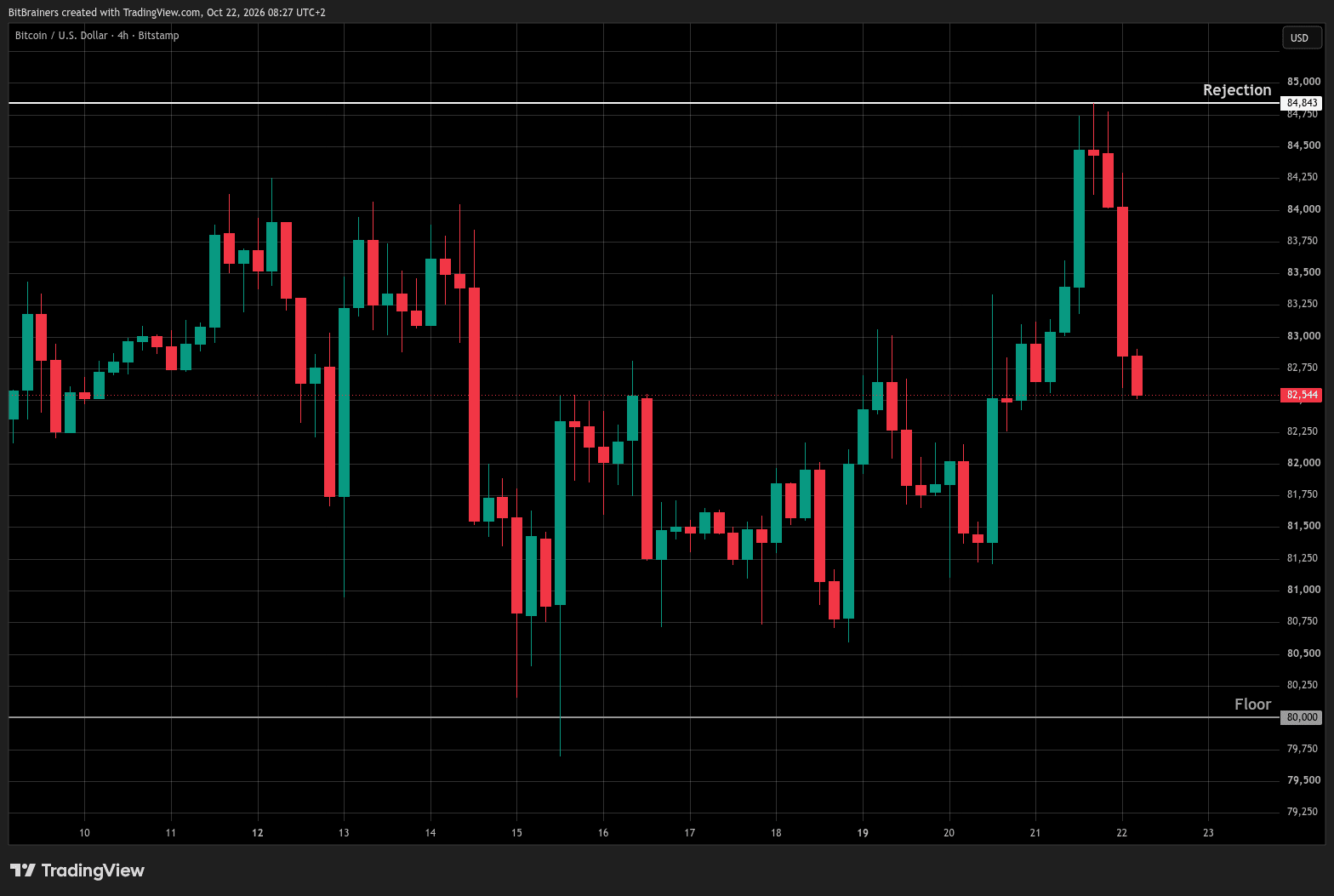
Bitcoin is trading near $77,199 as of May 19, 2026, with the Fear and Greed Index at 25, deep in Extreme Fear territory. US spot Bitcoin ETFs posted $1 billion in net outflows for the week of May 11 through 15, snapping six consecutive weeks of net inflows. Monday alone saw $648.6 million in outflows. The retail and tactical institutional money is leaving. The long-duration sovereign capital is adding.
That divergence has a historical precedent. Every Bitcoin bear market has featured exactly this pattern. Short-duration capital exits during drawdowns. Long-duration capital accumulates. The cycle resolves when the short-duration sellers run out of supply to sell and the long-duration buyers absorb it. The only question is how long that process takes.
The Assumption Worth Reconsidering
Most readers arrived here thinking that Harvard selling Bitcoin is a bearish signal and Mubadala buying is a bullish one. The reality is more nuanced. Harvard selling is a liquidity management decision constrained by its operating model. Mubadala buying is a long-duration conviction trade unconstrained by quarterly reporting pressure. The bearish signal is not Harvard's exit. The bearish signal is that the market needed a $1 billion ETF outflow week to find a floor near $76,000. The bullish signal is that sovereign capital from Abu Dhabi is still adding at these prices. Both can be true simultaneously. The question is which signal has a longer shelf life. If you hold Bitcoin through a Trezor hardware wallet or trade it on Kraken, you are operating with the same time horizon as Mubadala, not Harvard. Whether that patience pays off depends entirely on which institution read this market correctly.
Sources: SEC EDGAR 13F filings Q1 2026, CoinDesk, Bitcoin.com
Disclosure: This post contains affiliate links to Trezor and Kraken. BitBrainers may earn a commission at no extra cost to you. This is not financial advice.