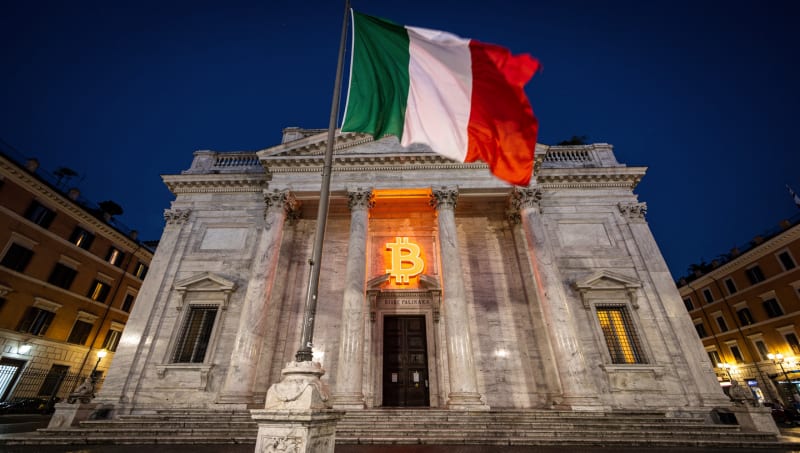
Something interesting happened on May 27, 2026, and most people are missing the real story inside it.
Banca Sella, one of Italy's largest private banks, became the first Italian financial institution to receive authorization to offer crypto services under MiCA. On the same day, the EU's cash payment ban above €10,000 came back into the news cycle alongside its mandate for identity verification on Bitcoin transactions starting 2027.
One institution is moving toward crypto. The regulation that governs that institution is moving to track every transaction above a threshold. The regulators and the institutions are not reading the same memo. Or maybe they are, and that is actually the more unsettling possibility.
What Banca Sella Actually Did
Banca Sella has completed the notification process required by MiCA and can now launch services focused primarily on the custody and transfer of digital assets. The launch is expected by the end of 2026 and will target selected client groups, including corporate and institutional customers, according to CoinDesk.
This is not a retail product yet. Banca Sella is not about to let 1.4 million Italian retail customers buy Bitcoin through their banking app tomorrow. The initial rollout targets corporate and institutional clients through a custody and transfer framework built on Chainalysis compliance infrastructure and Fireblocks technology. The retail rollout will come later. The infrastructure is being built now.
The bank joins about 20 major European banks already offering crypto services under MiCA and is a founding member of the Qivalis stablecoin initiative and EU tokenization projects aimed at strengthening the bloc's financial autonomy.
Why This Actually Matters
The significance here is not that Italian retail investors suddenly have crypto access. It is that a regulated, supervised bank has now formally integrated crypto custody into its core infrastructure under the European regulatory framework.
Under MiCA, credit institutions can enter certain crypto-asset services through a notification process with their national regulator, a lighter path than the full licensing required for non-bank entities. Banca Sella's completion of this process positions it ahead of other Italian banks that may still be working through the same steps, according to The Crypto Times.
This is infrastructure being built quietly while the retail narrative stays focused on price. When the retail rollout eventually comes, the rails will already be there. That is how every financial product transitions from institutional to retail. It starts with corporate custody desks and ends with a button in a banking app.
Italy's largest bank, Intesa Sanpaolo, is also relevant context here. Intesa now holds over €200 million in Bitcoin and other crypto after opening a spot Bitcoin desk in January 2025, according to Bitcoin Magazine. Italy is not a crypto-skeptical country in its banking sector. It is moving faster than most of Europe and doing it quietly.
The EU Contradiction
Here is where the story gets interesting. The same regulatory framework that gave Banca Sella the green light to offer crypto custody is the framework that will require identity verification on every Bitcoin transaction above a certain threshold starting 2027.
The EU is simultaneously building crypto infrastructure and building crypto surveillance. Those two things are not contradictory in the mind of a regulator. They are complementary. The goal is not to stop crypto. The goal is to bring crypto inside the system under conditions the regulators control.
MiCA is not a crypto-friendly regulation in the libertarian sense of the word. It is a framework that allows regulated institutions to offer crypto services while ensuring those services meet the same surveillance and compliance standards as traditional finance. Banca Sella getting approved under MiCA is not a victory for financial freedom. It is a victory for regulated crypto custody within a system that is becoming more surveilled, not less. The two things happened on the same day. That is not a coincidence.
What This Means for Bitcoin Specifically
Bitcoin was not built to be a product in a bank's corporate custody portfolio. It was built so you do not need the bank at all. The Banca Sella announcement is adoption in one sense and co-option in another.
The retail investor who buys Bitcoin through Banca Sella's platform will not hold their own keys. They will not run their own node. They will own exposure to Bitcoin price through a custodial product operated by a bank that reports every transaction to regulators. That is very different from self-custodied Bitcoin held in a hardware wallet that no bank can access and no regulator can freeze.
Both things are true at the same time. The adoption is real. The ideology is compromised. The price goes up either way. The question for Bitcoin holders is not whether they approve of this path. It is whether they understand the difference between owning Bitcoin and owning exposure to Bitcoin through a regulated custodian.
The Bigger Picture
Banca Sella is also a founding member of Qivalis, a consortium of 37 European banks building a MiCA-compliant euro-denominated stablecoin. The consortium includes ING, UniCredit, CaixaBank, KBC, Danske Bank, DekaBank, SEB, and Raiffeisen Bank International, headquartered in Amsterdam and led by former Coinbase Germany CEO Jan-Oliver Sell.
Thirty-seven European banks are building a euro stablecoin together. The largest banks on the continent are building the infrastructure to move value on blockchain rails under full regulatory oversight. This is not the crypto revolution that 2013-era Bitcoin maximalists envisioned. But it is the crypto infrastructure that 2026-era institutional finance is building.
The regulators and the institutions are moving together on this. The cash ban and the ID requirements are not obstacles to that project. They are features of it. Europe is building a fully surveilled financial system that happens to run on blockchain rails. Bitcoin exists inside that system as a permitted asset with required identity verification. And outside that system as a self-custodied asset that the system cannot touch. The choice of which version you hold is still yours to make.
On The Radar This Week
The questions this story is raising that have not been answered yet.
- When will Banca Sella extend its crypto services from corporate clients to retail customers?
- How many of the remaining Italian banks will complete their MiCA notifications before year end?
- Will the EU's transaction ID requirement create a two-tier Bitcoin market between custodial and self-custodied coins?
- Does the Qivalis euro stablecoin compete with or complement Bitcoin as a settlement layer?
- How does Intesa Sanpaolo's €200 million Bitcoin position change as Italian banking infrastructure for crypto matures?
Disclosure: This post contains affiliate links to Trezor and Kraken. BitBrainers may earn a commission at no extra cost to you. This is not financial advice.
Sources
CoinDesk. Banca Sella Gets Green Light to Provide Crypto Services to Customers, First in Italy
The Crypto Times. Italy's Banca Sella Becomes First MiCA Regulated Crypto Bank
Bitcoin Magazine. Banca Sella Becomes First Italian Bank Licensed For Bitcoin And Crypto Services Under MiCA
BitBrainers. We check the facts so you don't have to.