ADA is now trading at price levels not seen in five years. Not five months. Five years. Let that sit for a second before you decide whether this is a buying opportunity or a warning sign written in neon.
This Is Not a Dip, This Is a Structural Collapse in Progress
When a major Layer 1 blockchain retraces to price levels from five years ago, you are not looking at a temporary correction. You are looking at a market that has voted, loudly, on what it thinks this project is worth relative to its competition.
ADA has been one of the most talked-about altcoins in crypto for years. It has had passionate communities, high-profile academic credentials, a founder who never shuts up, and development timelines that kept getting extended. What it has not had, consistently, is adoption that matches the narrative.
Five-year lows mean anyone who bought ADA in 2021, 2022, 2023, or 2024 is sitting on losses. That is not a small cohort of traders. That is an enormous amount of stranded capital.
Hoskinson Is Not Sugarcoating It and That Tells You Something
Charles Hoskinson, the founder of Cardano, is now publicly warning that a wave of failures is coming in the crypto space. Paraphrasing his public statements: the market is heading into a period where projects that have not delivered real utility will face collapse, and not everyone survives the next phase.
When a project founder starts warning about failures, one of two things is happening. Either they are trying to distance Cardano from weaker competitors to make ADA look like the survivor. Or they genuinely see what the numbers are already showing. Possibly both are true at the same time.
Founders do not usually talk like this during bull runs. They talk like this when they are watching the charts and deciding they need to get ahead of the story.
The Altcoin Graveyard Is Getting More Crowded Every Cycle
Here is what most crypto blogs miss entirely: the five-year low on ADA is not just a Cardano story. It is a preview of what happens to altcoins that build large communities but fail to generate sticky on-chain economic activity.
Look at the pattern across cycles. Projects that peaked in 2021 and never developed serious DeFi volume, real-world asset infrastructure, or developer ecosystems strong enough to attract independent builders are now back at square one. Some are below square one.
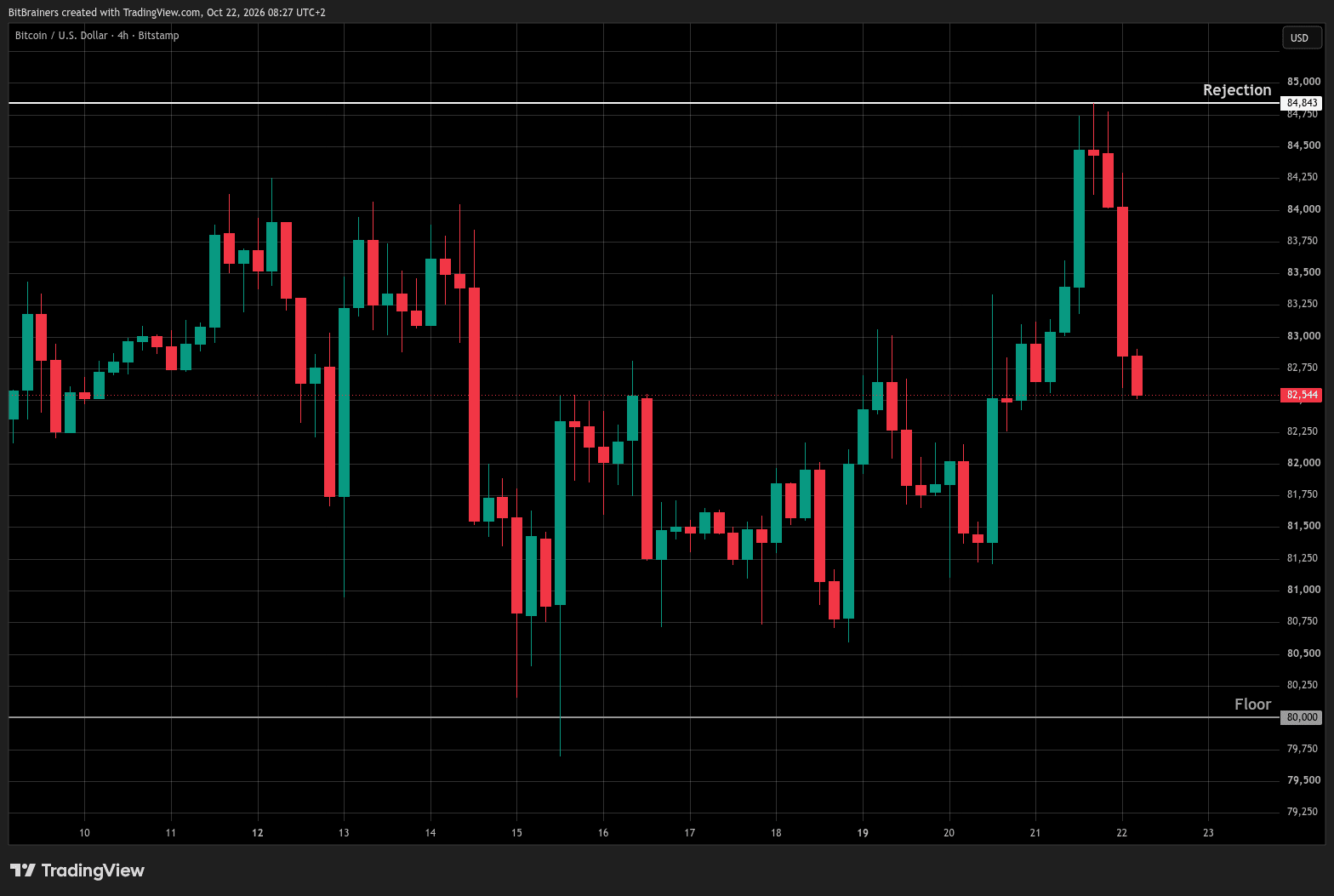
The brutal truth is that most of these projects were valued on promise and narrative during the last bull run. Bitcoin at $64,376 today is holding levels that reflect genuine institutional interest, spot ETF inflows, and a macro narrative around digital scarcity. ADA at five-year lows is reflecting something very different: a market that has stopped paying a premium for roadmaps.
Smart Contract Competition Has Changed the Game Permanently
Here is the insider angle that does not get enough coverage. When Cardano launched its smart contract functionality, it entered a market where Ethereum had years of ecosystem depth, Solana was already eating DeFi lunch, and Base was beginning to absorb retail developer activity at low cost.
Cardano's smart contract architecture uses a different programming model than most chains. That means existing Ethereum or Solana developers cannot just port their projects over without learning a new system. The network effect of developer tooling, libraries, auditing firms, and protocol integrations is a moat that most people massively underestimate.
This is not about which chain has the better technology on paper. It is about which chain already has the infrastructure where real money is sitting and where new projects want to launch. Right now, ADA is not that chain for the majority of builders.
The Difference Between a Dead Cat Bounce and a Real Bottom
At this point, a lot of retail traders are running the same mental calculation. Five-year low means cheap. Cheap means opportunity. This logic has destroyed more accounts than leverage trading ever has.
Price alone tells you nothing without context. ADA being cheap in USD terms only matters if there is a reason for a sustained reversal. What would that reason look like? Actual developer activity growth, real DeFi TVL increases, institutional positioning through regulated products, or a macro environment where altcoins broadly catch a bid because Bitcoin breaks higher and capital rotates.
Watch the Bitcoin dominance chart before you watch ADA price. When Bitcoin dominance is climbing, capital is contracting back into BTC and away from alts. When dominance starts rolling over and Bitcoin is still holding strong price levels, that is when altcoin setups become worth examining.
Right now, BTC is at $64,376. That price is not screaming altcoin season. It is sitting in a range that historically precedes either a major breakout or a cooling off period. Neither of those scenarios is obviously great for ADA right now.
Cardano's Real Problem Is the Expectation Gap
Here is the contrarian take that almost nobody will say out loud. Cardano's biggest problem is not the technology, the competition, or even the price. It is the expectation gap created by years of overcommunication from its leadership and community.
When you spend years telling the market that your peer-reviewed, methodically developed blockchain will eventually win because it is built correctly, you create an expectation that patience will be rewarded. Markets do not reward patience. Markets reward results. When the results do not match the ambition over multiple cycles, the market reprices permanently.
Hoskinson warning about a wave of failures might actually be good positioning for Cardano long-term. If weaker projects collapse and Cardano survives, that is a relative win. But surviving is not the same as thriving, and the price right now is reflecting exactly that distinction.
If You Are Holding ADA, Here Is What Actually Matters
Altcoin bags at five-year lows are not fun. But panic selling at the bottom is also a mistake with a long history in this space. The question is not whether to hold or sell on emotion. The question is whether the thesis that made you buy has materially changed.
If you bought ADA because you believed in the long-term technical development and you still see that happening, your thesis is not necessarily broken just because price is down. If you bought because you thought it would outperform BTC in the near term, the chart is telling you that thesis has not played out.
Whatever you are holding in ADA or any altcoin right now, make sure the keys are in your control and not on an exchange you do not fully trust. A hardware wallet like a Trezor keeps your assets under your direct custody regardless of what happens to any platform. Cold storage during a period of potential project failures is not optional. It is basic risk management.
If you are actively trading this volatility, use a reputable exchange with proper regulatory standing. Kraken has been operating since 2011 and is one of the more trusted names in regulated crypto trading. You can check it out at Kraken if you are not already set up somewhere solid.
Most People Came Here Thinking This Was a Buy Signal. It Might Not Be.
The assumption most readers bring to a post about a five-year low is that the price has to bounce. Extreme lows look like contrarian opportunities. But crypto has shown us repeatedly that five-year lows can become ten-year lows. Projects do not automatically bounce just because they look historically cheap. Some of them never recover. The ones that do are usually the ones where something fundamental changes on-chain, not just sentiment.
The one thing to watch right now: Bitcoin dominance. If BTC dominance breaks above recent resistance and keeps climbing, the altcoin bleed is not over. Watch that number before you make any decision about ADA or any other Layer 1 sitting at multi-year lows.
Sources
Decrypt. Cardano Slumps to 5-Year Low Price as Charles Hoskinson Warns of 'Wave of Failures'
On The Radar This Week
Bitcoin is clinging to support around $64,274, but the real line in the sand is $65,000. A confirmed breakdown opens the door to $62,500, and with ETF outflows hitting $2.30 billion in May, the largest monthly exit of 2026, there is no institutional cushion waiting to catch it.
The Bank of Japan rate decision on June 15 to 16 is the macro event most traders are sleeping on. Markets are pricing a 64% probability of a hike to 1.0%, and USD/JPY movement the evening of June 14 Belgrade time will likely telegraph the outcome before the formal announcement. Yen strength from a hike tightens global liquidity, and crypto feels that squeeze fast.
The CLARITY Act is moving toward a Senate vote this summer, which gives the regulatory picture a rare near-term catalyst with an actual date attached. Meanwhile the tokenized Treasury market crossing $1.5 billion AUM shows where institutional capital is quietly parking itself while altcoins like ADA bleed to five-year lows. Watch which projects survive this window and which ones Hoskinson's warning turns out to be about.
Disclosure: This post contains affiliate links to Trezor and Kraken. BitBrainers may earn a commission at no extra cost to you. This is not financial advice.
— BitBrainers Editorial