Chun Wang, co-founder of F2Pool, one of the longest-running and most influential Bitcoin mining pools on the planet, is set to lead the first SpaceX crewed mission to Mars. That sentence alone should stop you mid-scroll. Not because of the space angle. Because of what it means for Bitcoin's network security when a single person controls that much hashrate and leaves Earth.
This is not a feel-good story about crypto going interstellar. This is a structural question that every serious BTC holder needs to sit with right now.
F2Pool Is Not a Small Player You Can Dismiss
F2Pool has been one of the dominant forces in Bitcoin mining for years. According to the CoinDesk report published May 22, Chun Wang controls approximately 11% of Bitcoin's total hashrate through F2Pool. That is not a rounding error. That is a meaningful slice of the computational power that secures every block, every transaction, every sat you hold.
To put that in context, Bitcoin's security model depends on no single entity controlling the network. The moment any actor approaches or exceeds 51%, the theoretical attack surface opens up. 11% is well below that threshold on its own, but it is far from irrelevant. It is the kind of number that starts conversations in mining circles.
The Mars Mission Is Real and the Timeline Is Not Vague
This is not a hypothetical. SpaceX is moving forward with crewed Mars missions, and Chun Wang is confirmed to lead the first one. The CoinDesk report from May 22 lays this out directly. We are talking about one of the most operationally significant figures in Bitcoin's mining ecosystem voluntarily removing himself from Earth-based operations to lead humanity's first crewed Mars mission.
Wang is not a passive investor in F2Pool. He is a co-founder with direct influence over how that mining pool operates, how fees are structured, and how hashrate decisions get made. When someone at that level exits the operational picture, the downstream effects on pool governance are not trivial.
What Actually Happens to Hashrate When Its Controller Leaves
Here is what most people skip past. Mining pools do not operate themselves. There are humans making decisions about fee structures, block template selection, transaction filtering, and emergency protocol responses. F2Pool has existing management and infrastructure, so the pool does not vanish. But leadership transitions in mining pools have historically created instability.
When Bitmain went through its internal power struggle between Jihan Wu and Micree Zhan, hashrate distribution across the network shifted noticeably. Pools associated with each faction saw fluctuations. Client miners, the farms pointing their rigs at F2Pool, watch governance closely. Uncertainty at the top creates exactly the kind of environment where large mining operations start diversifying their hashrate across multiple pools.
If even a fraction of that 11% redistributes to other pools over the next 6 to 12 months, it changes the competitive balance at the top of the hashrate leaderboard. Watch Foundry USA, AntPool, and ViaBTC. They will be the immediate beneficiaries of any F2Pool client migration.
Most People Do Not Know This About Pool Leadership and Block Selection
Here is the insider knowledge that rarely makes it into mainstream crypto coverage. Mining pool operators have discretion over which transactions get included in blocks and in what order. This is called block template construction, and it gives pool leadership real, non-trivial influence over the mempool experience for everyday users.
Pools can choose to deprioritize certain transaction types, apply fee thresholds that differ from the broader market, and in some cases comply with jurisdiction-specific transaction filtering. The person at the top of a pool's leadership structure sets the tone for these decisions. When that person is physically on Mars with a communication delay measured in minutes, the question of who is making real-time block template decisions becomes operationally significant for a network that produces a block roughly every 10 minutes.
The Decentralization Narrative Just Got More Complicated
Bitcoin maximalists love to point at the protocol's decentralization as its greatest strength. And they are right about the protocol. But the mining layer is a different story. The concentration of hashrate among a handful of large pools has been a known concern for years, and it never fully went away.
Right now, with BTC sitting at $75,589 as of May 23, the mining economics are real. Miners are generating meaningful revenue. That revenue is concentrated among the biggest pools. F2Pool controlling 11% of hashrate is not an accident. It is the result of years of operational scale-building, competitive fee structures, and client acquisition. Replacing that institutional knowledge when leadership exits to Mars is not a weekend project.
Interplanetary Communication Delay Is Not a Metaphor, It Is a Technical Problem
The speed-of-light communication delay between Earth and Mars ranges from roughly 3 minutes to over 20 minutes depending on orbital positioning. Bitcoin blocks get found every 10 minutes on average. If something goes wrong with F2Pool's infrastructure, a critical governance decision needs to be made, or a rapid response to a network event is required, Chun Wang will not be the one making that call in real time.
This is the part of the story that the hype coverage buries under excitement about SpaceX and crypto going to space. The operational reality is that the most connected, most hands-on figure at one of Bitcoin's largest pools will have a communication latency that makes real-time decision-making impossible. Whoever takes operational control of F2Pool on Earth becomes extraordinarily important to Bitcoin's mining layer, and right now almost nobody is asking who that person is.
The Price Reaction to This News Tells You Something About Market Maturity
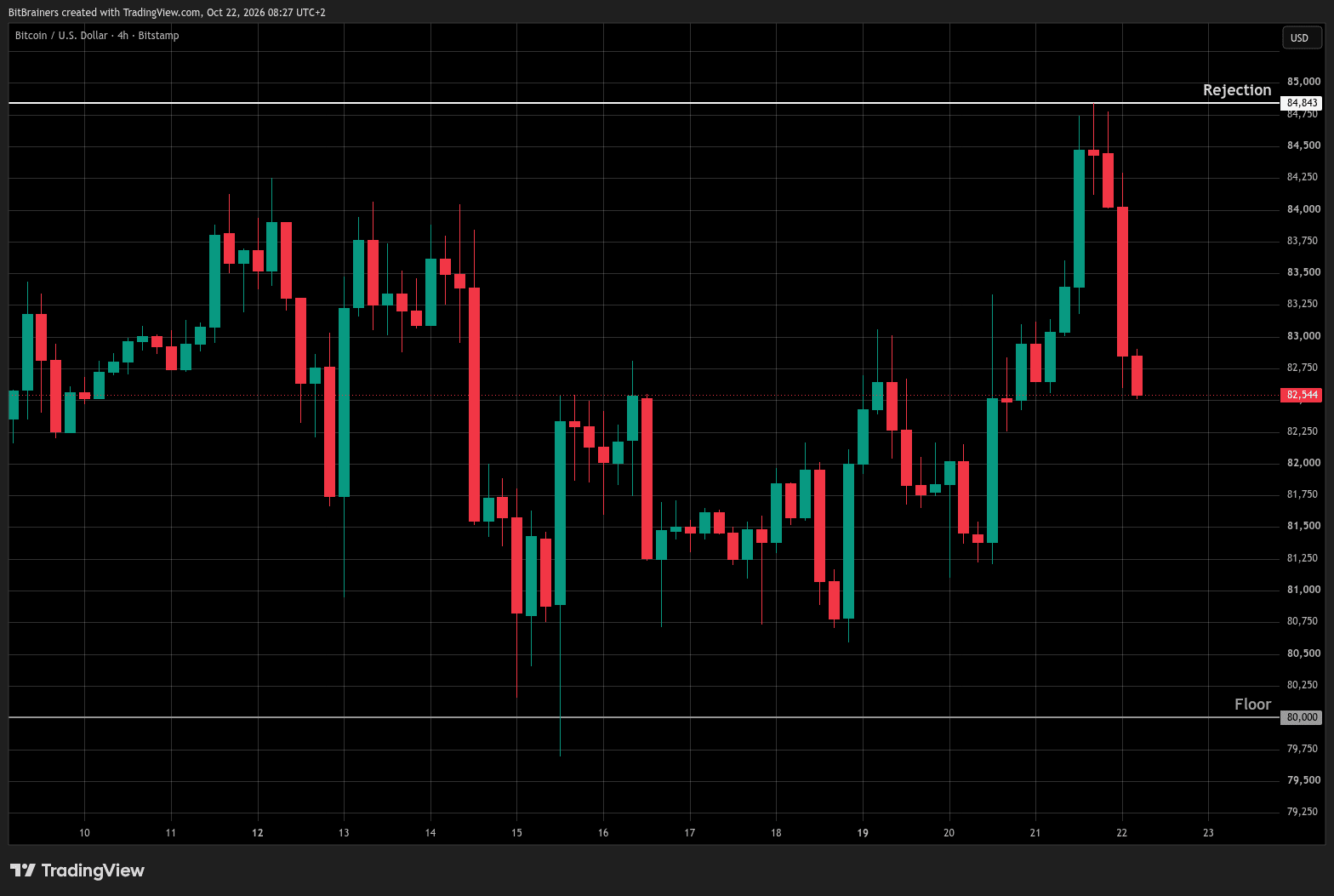
BTC is trading at $75,589 today and the market has not dramatically repriced on this news. That is either a sign of maturity or a sign that traders have not fully processed the implications. In earlier cycles, anything involving a major mining pool's leadership would have moved price. The market's current composure might reflect confidence in Bitcoin's resilience, or it might reflect the fact that most retail participants simply do not track hashrate distribution closely enough to know why this matters.
Institutional participants almost certainly noticed. Mining-focused funds and hashrate derivatives desks will be running scenarios on F2Pool client retention right now. Retail is catching up slowly, if at all.
The Contrarian Take Nobody Wants to Hear
Most coverage of this story frames it as a triumph. Crypto reaching Mars, Bitcoin's global reach, etc. But the contrarian read is this: The Mars mission highlights just how person-dependent Bitcoin's mining layer still is at the pool level. The protocol is decentralized. The mining infrastructure that runs it is not. It is concentrated, it is human-operated, and it is vulnerable to exactly the kind of key-person risk that a single-point-of-failure departure to Mars exposes.
If you hold significant BTC, this is a moment to think about what you actually trust. You trust the protocol. Fine. But you are also trusting a mining ecosystem where 11% of the securing hashrate is connected to one individual's operational presence on Earth. That tension is real and it does not get resolved by excitement about SpaceX.
What You Should Actually Watch Right Now
Do not watch the Mars mission coverage. Watch F2Pool's hashrate share over the next 90 days. CoinWarz and BTC.com both track pool distribution in near real time. If F2Pool's share starts declining from that 11% figure as client miners redistribute to Foundry or AntPool, that tells you the market is pricing in leadership transition risk before it shows up in any headline.
If you are holding BTC through this period, make sure your custody is sorted. A hardware wallet like Trezor keeps your keys entirely off any exchange infrastructure, which matters when network-level governance questions are unresolved. And if you are actively trading the volatility that mining news like this can create, Kraken gives you the liquidity depth to move without getting slipped on size.
The assumption you walked in with is probably that this story is bullish because crypto is going interplanetary. Challenge that. The actual story is about what happens to 11% of Bitcoin's hashrate security when its most influential controller is physically unreachable. That is worth watching a lot more carefully than the launch date.
Disclosure: This post contains affiliate links to Trezor and Kraken. BitBrainers may earn a commission at no extra cost to you. This is not financial advice.
Sources
CoinDesk. F2Pool founder who controls 11% of bitcoin's hashrate to lead first SpaceX mission to Mars
BitBrainers. Follow the data, not the noise.