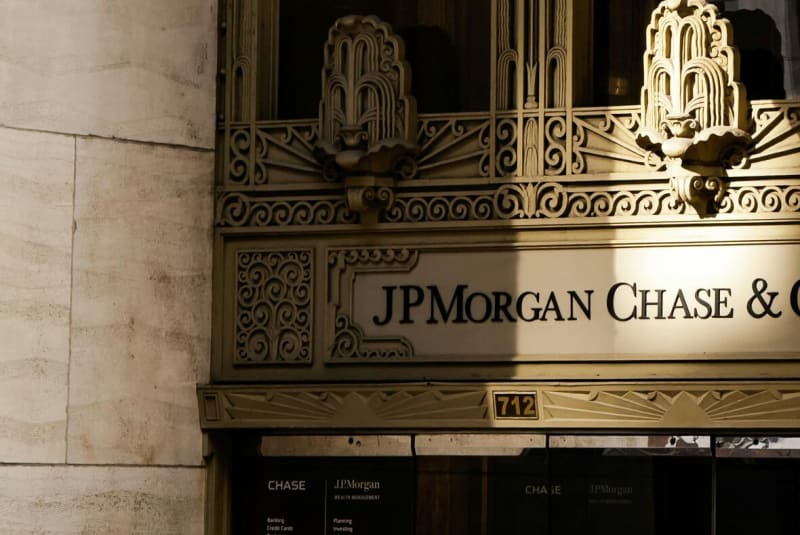
Jamie Dimon, the CEO of JPMorgan Chase, one of the largest banks on the planet by assets, just publicly lit into Coinbase's Brian Armstrong and announced he intends to fight the Clarity Act. Not negotiate. Not lobby quietly. Fight. That word choice matters.
This is not two executives disagreeing over regulatory nuance. This is a 150-year-old financial empire watching its business model get threatened in real time, and the man at the top dropping the pretense of diplomacy.
The Clarity Act Threatens the Bank Fee Machine, Not Crypto Ideology
The Clarity Act is the legislation currently moving through Washington that would create a defined regulatory framework for digital assets, including stablecoins and crypto securities classification. For crypto, clarity is the whole game. Without it, exchanges operate in legal grey zones, institutional money stays cautious, and builders keep relocating offshore.
For JPMorgan, clarity is a different kind of threat. If stablecoins get a legal foundation, and if crypto-native payment rails get legitimized, then the fees JPMorgan charges for cross-border transfers, currency conversion, and settlement services start looking like a legacy tax. Dimon is not fighting for consumers here. He is fighting for margin.
Brian Armstrong, Coinbase's CEO, has been one of the loudest voices pushing for exactly this kind of regulatory framework. Coinbase went through years of SEC pressure, fought it publicly, and positioned itself as the compliant, American-facing exchange willing to work within rules it helped shape. That is the part Dimon appears to find infuriating.
Dimon Has Said Before That He Does Not Hate Blockchain, Just Bitcoin
This is worth keeping in mind as context. Dimon has repeatedly positioned JPMorgan as pro-blockchain, just skeptical of decentralized assets. JPMorgan built its own JPM Coin for internal settlements. It runs Onyx, its blockchain division. So the bank is not anti-crypto technology. It is anti-disintermediation.
That distinction tells you everything. A blockchain that JPMorgan controls is useful infrastructure. A stablecoin issued by Circle, backed by reserves, and transferable without a bank account cuts JPMorgan out of the equation entirely. Dimon's opposition is commercial, not philosophical, and the attack on Armstrong makes more sense once you see it through that lens.
Armstrong, for his part, has framed Coinbase's mission around financial access and US crypto leadership. Those are arguments that play well with both sides of the aisle in Washington right now, which is probably why Dimon is choosing the confrontational route rather than letting the legislation quietly die in committee.
Most People Do Not Know This: The Stablecoin Bill and the Clarity Act Are Two Separate Fights
Here is something buried in the coverage that almost every surface-level take misses. The stablecoin legislation and the broader Clarity Act are two distinct pieces of legislation moving on parallel tracks in Washington. The stablecoin bill deals with who can issue dollar-pegged tokens and under what reserve requirements. The Clarity Act goes further, attempting to define when a digital asset is a commodity versus a security.
Dimon's stated opposition to the Clarity Act is significant because it signals that JPMorgan is not just worried about stablecoins replacing wire transfers. The bank is concerned about the broader legitimization of crypto markets. If digital assets get a clean legal framework, it becomes much harder for the SEC to maintain the ambiguity that has historically kept institutional capital on the sidelines and kept banks as the default on-ramp.
That legal grey zone has been JPMorgan's silent ally for years. Dimon attacking the Clarity Act is the bank trying to preserve it.
The Timing Is Not Accidental, Washington Is Moving Fast
As of May 30, 2026, the stablecoin and crypto clarity debates in Washington are not theoretical. They are live legislative fights with real momentum, and the crypto industry is better organized politically than it has ever been. Coinbase's lobbying arm, Stand With Crypto, has built a voter base that both parties are paying attention to heading into electoral cycles.
Dimon choosing this moment to publicly blast Armstrong is a pressure play. It is designed to signal to lawmakers that the banking sector is watching and is prepared to push back hard. JPMorgan has enormous lobbying power and deep relationships in Washington. When the CEO of that institution goes public with opposition, Senate and House banking committee members take note.
Bitcoin is sitting at $73,548 today. The market is not panicking about this fight. In fact, BTC holding that level while regulatory warfare heats up in DC is a signal that the market views legislative clarity as a net positive, even if the path there is messy.
Armstrong Is Playing a Different Game Than Dimon Gives Him Credit For
Dimon's public criticism implies Armstrong is naive or reckless. That reading misses what Coinbase actually built. Coinbase went public on Nasdaq in 2021. It operates under more regulatory scrutiny than almost any crypto company on earth. It has compliance teams, legal teams, and a Washington presence that took years and hundreds of millions of dollars to construct.
Armstrong is not some ETH-maximalist idealist working out of a warehouse. He runs a publicly traded company with institutional shareholders, quarterly earnings calls, and a vested interest in getting regulation right because getting it wrong means Coinbase's stock goes to zero. Dimon knows this. The public criticism is not about Armstrong being wrong. It is about Armstrong being effective.
The Clarity Act, if it passes with the provisions Coinbase has advocated for, would legitimize Coinbase's entire business model while putting new compliance costs on smaller players. It would entrench Coinbase as the regulated, trusted exchange in the US market. That is a competitive advantage, and Dimon sees it clearly.
Kraken Is Watching This Fight Very Closely
For traders and long-term holders watching this play out, the regulatory outcome shapes which exchanges survive and thrive in the US market. Kraken, which has been building its compliant US presence for years, has skin in this game too. A clear legal framework helps every legitimate exchange compete without the constant threat of enforcement action wiping out their customer base overnight.
If you are actively trading through US-regulated platforms, the Clarity Act passing in anything close to its current form is a structural positive for exchange stability. It does not eliminate risk, but it removes the existential legal ambiguity that has made US crypto exchange relationships feel temporary.
The Contrarian Read: Dimon Losing This Fight Would Be Bullish for TradFi Crypto Products
Here is the take most crypto blogs will not touch. If JPMorgan fails to kill or neuter the Clarity Act, and stablecoins get a real legal foundation, Dimon will not fold. JPMorgan will adapt, and adapt fast. The bank has the technology already built through Onyx and JPM Coin. A regulated stablecoin environment is one where JPMorgan could launch its own consumer-facing stablecoin product and leverage its brand trust to capture massive market share.
Dimon fighting the Clarity Act now does not mean JPMorgan sits out a post-Clarity world. It means he wants the terms changed before the bill passes. The bank wants a version that lets it compete without giving Coinbase or Circle a first-mover advantage baked into law. Opposition is a negotiating tactic.
Your Hardware Wallet Does Not Care Who Wins in Washington
While regulators, banks, and exchanges fight over who controls the rails, BTC on a Trezor hardware wallet belongs to nobody but you. No exchange, no regulatory framework, and no Jamie Dimon can touch self-custodied Bitcoin. That is not an ideological statement. It is a practical one. Custody risk is real, and regulatory outcomes can freeze exchange accounts even when you have done nothing wrong.
The safest position in a regulatory war is one where your assets are not held by any party in the fight.
The Assumption You Walked In With Is Probably Wrong
Most readers come to this story assuming it is a battle between crypto freedom and banking tradition, a clean narrative of innovation versus incumbents. That framing flatters everyone in crypto and villainizes Dimon too easily. The reality is messier. Coinbase wants regulation because regulation protects Coinbase's competitive position. JPMorgan wants to fight the bill because a clear legal framework removes the ambiguity JPMorgan has benefited from. Both sides are acting in their own interest. The winner of this fight will not be decided by who has better arguments. It will be decided by who has more votes in Washington and who is still standing when the lobbying money runs out.
Watch the Senate Banking Committee votes on the Clarity Act over the next 60 days. That is your real signal. If the bill advances with stablecoin provisions intact, the market will price in a structural shift for crypto exchanges and DeFi infrastructure. If it stalls or gets gutted, expect the grey zone to persist and enforcement action to remain the default regulatory tool.
Disclosure: This post contains affiliate links to Trezor and Kraken. BitBrainers may earn a commission at no extra cost to you. This is not financial advice.
Sources
The Block. JPMorgan CEO Jamie Dimon blasts Coinbase's Brian Armstrong, plans to fight Clarity Act
BitBrainers. We check the facts so you don't have to.