Mark Cuban just confirmed he sold most of his Bitcoin. The crypto community reacted with the usual noise. But the real story is not about the sale. It is about what the sale reveals: Cuban was never a Bitcoiner. He was an allocator who borrowed the narrative.
There is a difference. And that difference matters more than the price move that follows.
A Bitcoiner Has a Thesis That Does Not Depend on Short-Term Performance
Real Bitcoin conviction is not built on correlation studies or inflation hedge models. It is built on fixed supply, censorship resistance, permissionless settlement, and the belief that a neutral monetary network outside government control has long-term structural value.
None of those properties require a good quarter to justify holding. None of them break when Bitcoin sells off alongside equities during a risk-off event. They are structural, not cyclical.
Cuban's thesis was cyclical. He wanted a hedge. He wanted something that would move independently of his other assets. When it did not behave that way, he had no deeper reason to stay. That is not a Bitcoiner. That is a portfolio manager who ran an experiment and closed the position when the hypothesis failed.
The Digital Gold Narrative Was Engineered for Institutional Adoption, Not Born From Bitcoin's Nature
The store-of-value framing that Cuban and others used did not emerge organically from Bitcoin's market behavior. It was a deliberate rebranding that gained traction around 2020 when institutional access became easier.
Before that, Bitcoin was described primarily as censorship-resistant money and a payments network. The digital gold narrative took over because it gave compliance departments a defensible mental model. Saying "we bought digital gold" clears a boardroom faster than "we bought a volatile asymmetric bet on a decentralized monetary protocol."
Cuban bought a marketing narrative. Millions of retail traders bought the same one. The difference is Cuban had enough capital to exit publicly and enough media access to explain himself. Most retail holders just quietly sold at a loss and moved on.
He Enjoyed the Community Until the Community Stopped Being Useful
This is the part that stings. Cuban was happy to absorb the credibility that came with being seen as a Bitcoiner. The community gave him that freely. He appeared on podcasts, made bullish comments, let people assume he was a true believer.
When the thesis broke, he did not quietly rebalance. He went public with a critique that framed Bitcoin as a failed hedge instrument. The same community that gave him credibility is now the audience for a narrative that serves his exit.
A Bitcoiner who changes their mind typically goes quiet or updates their thesis. Cuban used the exit as content. That tells you everything about what his relationship with Bitcoin actually was.
Bitcoin at $77,555 Right Now Does Not Care
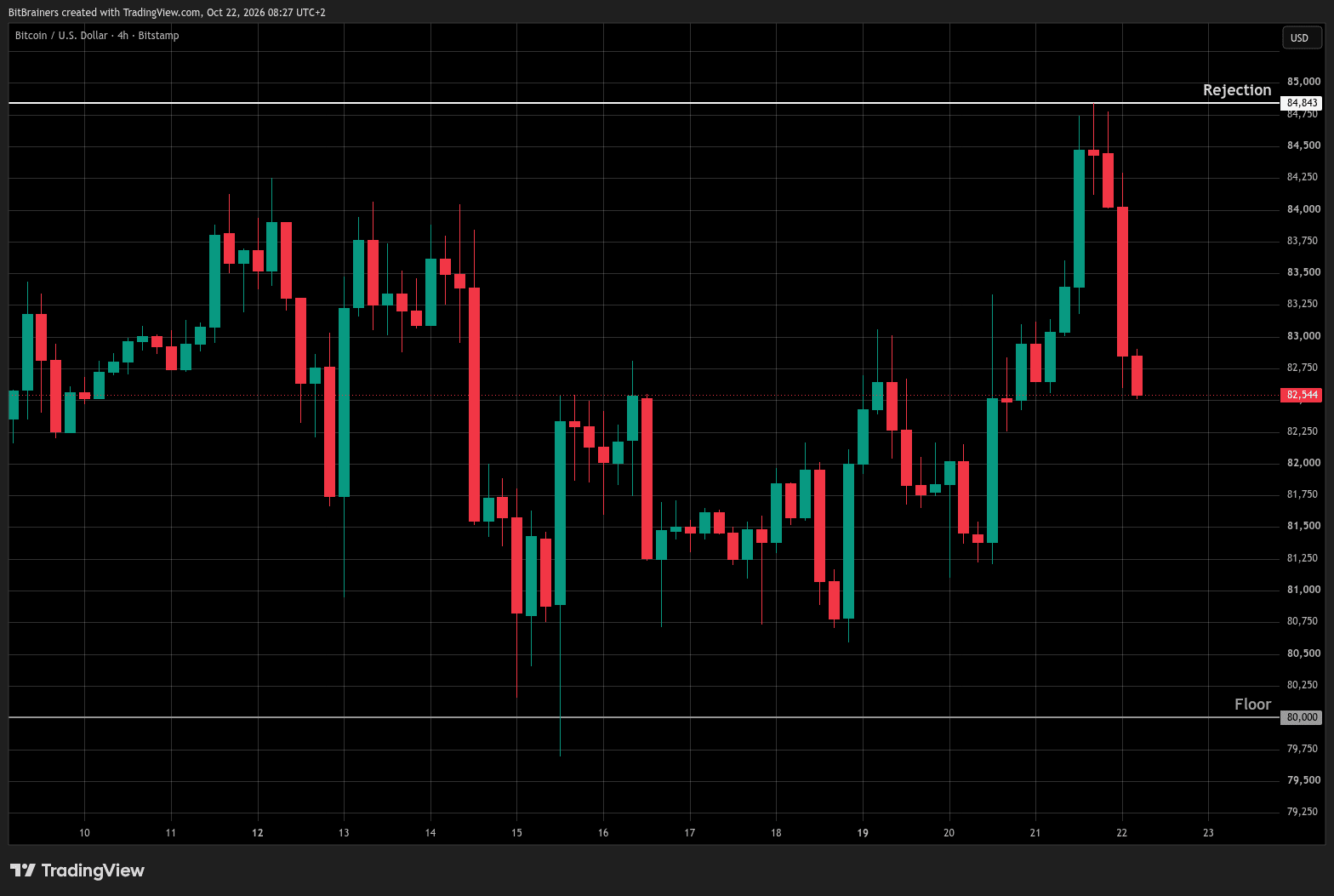
As of May 22, 2026, BTC is sitting at $77,555. Not a capitulation number. Not an euphoric peak. A consolidation range where conviction holders accumulate and thesis-driven allocators exit.
Cuban's sale does not move this number in any meaningful direction. His stack, relative to daily BTC volume, is noise. What matters is what long-term holders are doing at this range. On-chain data consistently shows that during these consolidation periods, coins move from weak hands to strong ones. Cuban just participated in that transfer from the selling side.
The Pattern Is Consistent Across Macro Names Who Tried Bitcoin
Paul Tudor Jones. Stanley Druckenmiller. Raoul Pal. Each came in with a macro framework. Each applied traditional hedging logic to an asset that operates on completely different principles. Some updated their thesis and stayed. Others went quiet. Cuban went public with an exit narrative.
The pattern is not that these are bad investors. They are exceptional at what they do. The pattern is that Bitcoin does not fit neatly into traditional portfolio theory, and the people who approach it purely through that lens will eventually find a moment where the fit breaks. Cuban found his moment during geopolitical volatility that did not produce the uncorrelated returns he expected.
Shallow Conviction Exits at the First Sign of Thesis Stress
This is the actual lesson. Not that Bitcoin failed Cuban. Not that Cuban was foolish. The lesson is that the depth of your conviction determines how you behave when your original reason for holding gets stress-tested.
If you hold Bitcoin because you believe in fixed supply and sovereign money, a correlation study is irrelevant to your thesis. Your thesis is not about short-term hedge behavior. It is about a 10-plus year structural shift in how value is stored and transferred globally.
Cuban never held that thesis. He held a different one. It broke. He left. That is entirely rational given what he believed. It just was not Bitcoiner behavior, because he was never really one.
What You Should Actually Watch
Ignore the Cuban noise. Watch what conviction holders do at this price range. Watch on-chain accumulation addresses. Watch whether long-term holder supply continues to increase or starts to drop. Watch whether the next macro shock produces a different correlation pattern than previous ones as institutional infrastructure matures.
Those are the signals worth your attention. A billionaire closing a thesis-driven allocation is portfolio management news, not Bitcoin news.
If you are holding BTC on fundamentals and you use a Trezor hardware wallet to keep your keys off exchanges, Cuban's exit changes nothing about your position. If you are on Kraken actively trading around this range, the Cuban story is background noise compared to the actual order flow data you should be watching.
Cuban was never in your trade. His exit is not your signal.
The Broader Pattern This Exposes
Cuban's exit matters not because of the BTC he sold, but because of what it reveals about how many people currently holding Bitcoin are holding it for reasons that do not survive a prolonged correlation event or a macro drawdown.
The digital gold narrative brought a wave of macro-driven allocators into Bitcoin between 2020 and 2024. Many of them entered with the same hedging thesis Cuban used. Some updated their views as they spent more time with the underlying properties of Bitcoin. Others, like Cuban, are waiting for the right moment to exit cleanly.
The honest question for any Bitcoin holder right now is not what Cuban is doing. It is what thesis you personally hold, and whether that thesis would still make sense if Bitcoin dropped 50% tomorrow. If the answer is no, then your conviction is closer to Cuban's than you might want to admit. That is not a criticism. It is useful information about your actual risk tolerance versus the one you tell yourself you have.
The people who have held through multiple 80% drawdowns were not holding a hedge thesis. They were holding something closer to a philosophical position about money, sovereignty, and long-term value transfer. That kind of conviction does not exit because of one bad correlation quarter.
Cuban was never in that camp. Now he has confirmed it publicly. The Bitcoin being handed from his side of the trade to conviction holders at this range will sit in cold storage for a decade. That is how these transfers typically end.
Disclosure: This post contains affiliate links to Trezor and Kraken. BitBrainers may earn a commission at no extra cost to you. This is not financial advice.
Sources
Decrypt. Mark Cuban Says He Sold Most of His Bitcoin