₿ BTC Loading... via Binance

Thursday, April 2, 2026

Glassnode AI Alerts: How to Track Whales Before They Move

Glassnode AI Alerts: How to Track Whales Before They Move

90% of retail traders react to whale moves. About 3% anticipate them. The other 7% are using Glassnode and still getting it wrong.

That last group is who this post is for.

Glassnode is not a magic box. It is an on-chain data platform that gives you signals most traders ignore because they either don't understand them or don't have the patience to act on them. I've been running automated setups since 2019, and Glassnode's alert system — especially paired with their AI-assisted metric dashboards — is one of the few tools that has consistently earned its seat in my workflow.

Let me show you how I actually use it.


What Glassnode AI Alerts Actually Do

Glassnode lets you set threshold-based alerts on hundreds of on-chain metrics. The "AI" layer here isn't some chatbot spitting out trade calls. It's pattern recognition layered on top of metrics like:

  • Exchange Net Position Change — BTC flowing into or out of exchanges in size
  • Whale Transaction Count (>1000 BTC) — large wallet activity spiking above baseline
  • Long-Term Holder Supply — when LTHs start moving coins after months of dormancy
  • Realized Price Divergence — when spot price breaks meaningfully from realized cap

These aren't theoretical signals. When exchange outflows for BTC spike hard and whale transaction count follows, that combination has historically preceded major price moves — both up and down. The direction depends on context, which is why you need more than one alert.


The Setup I Actually Run

I keep it simple on purpose. Here are the three alert combinations I monitor for Bitcoin specifically:

Alert Stack 1: Accumulation Signal - BTC Exchange Net Flow crosses below -10,000 BTC over 24h - Long-Term Holder Supply increases for 3 consecutive days - SOPR (Spent Output Profit Ratio) drops below 1

When all three fire within the same 72-hour window, historically that's a zone where smart money is quietly stacking. I use this as a cue to scale into BTC positions on Kraken rather than waiting for a "confirmation" candle that comes 15% later.

Alert Stack 2: Distribution Warning - Exchange inflows spike above +15,000 BTC over 48h - Whale transaction count increases >30% above 30-day average - Funding rates across perp markets flip aggressively positive

This is the "someone big is selling into your excitement" setup. ETH and majors tend to follow BTC here within 24–48 hours. I don't short aggressively off this alone, but I tighten stops and reduce leverage.

Alert Stack 3: Dormant Coins Wake Up - Mean Coin Age drops sharply (coins that haven't moved in 1–3 years start moving) - Binary CDD (Coin Days Destroyed) spikes - Realized cap velocity increases

Old coins moving is serious. This is either a whale preparing a large sale or a long-dormant wallet coming back online for unknown reasons. Either way, it's a red flag on short-term price stability.


What Glassnode Gets Wrong

The platform oversells the "AI" branding. Most of what they call AI is statistical modeling and anomaly detection — useful, but not some next-gen intelligence. The UI is also slow, especially on the alert configuration side.

The bigger issue: most users set alerts and then ignore the context. A whale transaction spike during a bull run accumulation phase reads completely differently than the same spike after a 40% rally. Glassnode gives you the data. You still have to think.

Also, the free tier is nearly useless for this kind of work. You need at least the Advanced plan to access the metrics that matter for whale tracking. That's a real cost, and it only makes sense if you're trading size or running bots that can act on the signals quickly.


Pairing This With Actual Execution

Data without execution is just expensive entertainment. When my alert stacks fire, I execute on Kraken — the API is reliable, fees are competitive, and I've had zero issues with fills during volatile conditions. That matters when you're trying to act on a signal before it's priced in.

For long-term BTC holdings that come out of active trading rotation, everything goes cold to a Trezor. On-chain data showing whale accumulation doesn't do you any good if your coins are sitting on an exchange during a black swan event.


The One Thing You Should Try First

Set up a single Glassnode alert for BTC Exchange Net Flow dropping below -5,000 BTC in a 24-hour window. Watch it for 30 days. Note where price was when it fired and where it was 72 hours later.

Do that before anything else. You'll start to understand the rhythm of how large players actually move — and you'll stop chasing price.


Building an Alert Stack That Does Not Overwhelm You

The failure mode with Glassnode is setting too many alerts and then ignoring all of them because your phone never stops buzzing.

The discipline is choosing three to five metrics that are directly relevant to your specific trading approach and ignoring everything else the platform offers, at least initially. If you are a Bitcoin swing trader focused on four hour entries, your alert stack should be narrow and specific. Exchange net position change crossing a threshold that historically precedes volatility. Long term holder supply moving after months of dormancy. Funding rates on perpetual futures diverging from spot price direction.

Those three signals together give you a coherent picture. Exchange flows tell you whether supply is moving toward selling pressure. Long term holder behavior tells you whether conviction holders are starting to distribute. Funding rates tell you how leveraged the market is in the direction you are considering trading.

When all three align, you have a high confidence context for a trade decision. When they conflict, you wait. That is the entire framework and it requires exactly three alerts to implement.

The temptation is to add more. Realized price divergence. SOPR. MVRV ratio. All of these are legitimate metrics with real predictive value. They are also additional signals that will sometimes conflict with your primary three and create decision paralysis rather than clarity. Add them only after you have traded consistently with your core stack for at least two full market cycles and understand intuitively what each one is telling you.

Glassnode is one of the few tools that genuinely rewards patience and depth over breadth. The traders getting the most from it are not the ones with the most alerts configured. They are the ones who have spent months understanding why three specific metrics matter for their specific approach and built a workflow around acting on those signals consistently.


Follow BitBrainers — we only write about tools we would actually use ourselves.

What Is DeFi and Why Does It Matter for Your Money

What Is DeFi and Why Does It Matter for Your Money

Over $50 billion sits locked in DeFi protocols right now. Your bank pays you 0.5% interest. DeFi protocols have paid anywhere from 5% to 20%+ on the same assets. That gap is not an accident — it's the entire point.

Banks Are Middlemen. DeFi Cuts Them Out.

Traditional finance runs on trust. You trust your bank to hold your money, process your loans, and pay you interest. In exchange, they take a massive cut, gatekeep who qualifies, and operate during business hours in select countries.

DeFi — short for Decentralized Finance — removes the middleman entirely. It's a set of financial tools built on blockchains (primarily Ethereum, though Bitcoin is increasingly part of the picture) that let you lend, borrow, trade, and earn yield without a bank or broker touching your funds.

No account approval. No business hours. No head office in Manhattan skimming the profits.

How It Actually Works

Smart contracts run DeFi. These are pieces of code that execute automatically when conditions are met — no human in the loop.

Here's a real example: Aave is a DeFi lending protocol. You deposit ETH or stablecoins like USDC. The protocol automatically lends those funds to borrowers and pays you interest — all enforced by code, not a compliance department. In 2021, during peak DeFi season, lenders were earning 8–15% APY on stablecoins. Your Chase savings account was paying 0.01%.

Uniswap is another real example. It's a decentralized exchange where you trade tokens directly from your wallet. No sign-up. No KYC. No withdrawal limits. Just connect your wallet and swap.

Bitcoin's Role in DeFi

Bitcoin doesn't run smart contracts natively — that's Ethereum's turf. But Bitcoin still enters DeFi through wrapped Bitcoin (WBTC), which is BTC represented as a token on Ethereum. You lock real BTC, receive WBTC, and deploy it in DeFi protocols to earn yield on your Bitcoin holdings.

It's not perfect — WBTC involves trusting a custodian to hold the real BTC. But it shows DeFi isn't just an altcoin playground. Bitcoin capital flows there because the yields are real.

The Risks Are Real Too

DeFi has made people rich. It has also wiped people out.

Smart contract bugs have led to hundreds of millions in hacks. The 2022 Ronin Bridge hack alone lost $625 million. Rug pulls happen when anonymous developers drain liquidity and vanish. Stablecoin depegs — like UST in 2022 — have vaporized billions overnight.

This is not a space where ignorance is safe.

You Control the Keys — Or You Should

DeFi only gives you the freedom it promises if you actually hold your own assets. The second you move funds onto a centralized exchange and leave them there, you're back in the old system — trusting someone else with your money.

If you're moving serious capital into DeFi, your assets need to live in a self-custody wallet, not on a platform. A hardware wallet like Trezor keeps your private keys offline and out of reach of hackers, even if your computer gets compromised. That's not optional advice — that's the baseline for anyone participating in DeFi properly.

Getting Started Without Getting Wrecked

Start by getting your hands on actual crypto first. Kraken is one of the most reliable centralized exchanges to buy Bitcoin or ETH — low fees, strong security track record, and straightforward to use. From there, move funds to your own wallet and explore DeFi protocols from a position of actual ownership.

Don't go in with money you can't lose. Start small. Understand what you're interacting with before you deposit.

The One Thing to Remember

DeFi isn't a get-rich-quick scheme and it isn't magic — it's a parallel financial system that rewards people who understand it and punishes those who don't. The opportunity is real. So is the risk. Know which one you're walking into.

The Risks That DeFi Maximalists Skip Over

The yield numbers are real. The risks are equally real and most DeFi content buries them in footnotes.

Smart contract risk is the most fundamental. DeFi protocols are code. Code has bugs. When a bug exists in a smart contract holding hundreds of millions of dollars, attackers find it. The Ronin bridge hack in 2022 drained $625 million. The Wormhole exploit took $320 million in a single transaction. Euler Finance lost $197 million in March 2023. These are not edge cases. They are the predictable consequence of deploying complex financial logic in adversarial environments where the code is public and the incentive to find vulnerabilities is enormous.

Audited protocols are safer than unaudited ones but not safe. Every protocol listed above was audited. Audits reduce risk. They do not eliminate it.

Impermanent loss is the second risk that catches liquidity providers off guard. When you deposit two assets into a liquidity pool and their prices diverge significantly, you end up with less value than if you had simply held both assets separately. The pool rebalances automatically, which means you end up holding more of the asset that fell and less of the asset that rose. The trading fees you earn may or may not compensate for that loss depending on the pool's volume and the degree of price divergence.

Regulatory risk is the third layer. DeFi operates in a legal grey area in most jurisdictions. The GENIUS Act in the US restricted stablecoin yields. The CLARITY Act is still working through the Senate. MiCA in Europe creates compliance requirements that some DeFi protocols with identifiable issuers will need to navigate. The regulatory environment is moving toward more oversight, not less.

Where to Start if You Want to Try DeFi

Start with the most battle-tested protocols and the simplest strategies. Lending stablecoins on Aave on Ethereum mainnet is the lowest-risk entry point. The protocol has been live since 2020, survived multiple market crashes, and processes billions in daily volume. The yield on USDC fluctuates between 3% and 8% depending on borrowing demand. You are not exposed to impermanent loss because you are lending a single asset rather than providing liquidity to a trading pair.

Buy USDC through Kraken, withdraw to a self-custody wallet, and deposit into Aave only what you are comfortable losing entirely in a worst-case smart contract exploit. That last condition is not a disclaimer. It is the actual risk management framework for anyone participating in DeFi with serious intent.

Keep the majority of your crypto in Bitcoin in cold storage on a Trezor. DeFi is a satellite strategy for yield on assets you are already holding, not a replacement for the base layer of self-custody Bitcoin.

BitBrainers. We check the facts so you don't have to.

Staking vs Yield Farming: Which One Actually Pays More

Staking vs Yield Farming: Which One Actually Pays More

Most passive crypto income is a lie dressed up in APY numbers nobody ever actually collects.

There. Someone had to say it.

I have been chasing passive income in crypto since 2017. I have staked, farmed, provided liquidity, and watched three different DeFi protocols rug or collapse mid-cycle. The honest truth most blogs skip: the headline yield is almost never the real yield. Once you factor in token price decay, gas fees, impermanent loss, and the tax headache at the end of the year — most people would have done better just holding Bitcoin.

But some strategies do work. Let me break down what actually pays.


Staking: The Boring One That Often Wins

Staking means locking up a proof-of-stake asset to help validate the network. You earn rewards for participating. That is the whole thing.

Bitcoin does not stake. BTC runs on proof-of-work. If someone is offering you "Bitcoin staking," they are lending your coins out or wrapping them in something else entirely. That is a different risk category. Know what you own.

Ethereum is the primary staking asset most serious players use. Native ETH staking through a validator earns roughly 3–4% annually right now. Not exciting. But it is protocol-level yield — you are not trusting a third party with your coins in the same way you trust a yield farm.

Liquid staking through platforms like Lido or Rocket Pool gives you flexibility without running your own validator node. You get stETH or rETH back, which you can use elsewhere. Convenient, but you are adding smart contract risk on top of staking risk.

How to start staking ETH: 1. Get ETH on a reputable exchange — I use Kraken because their staking interface is straightforward and they have earned my trust over years of use 2. Decide: exchange staking (simplest, slightly centralized) or liquid staking protocol (more control, more complexity) 3. If you go liquid staking, move your ETH off the exchange first and connect your wallet to Lido or Rocket Pool 4. Stake, track rewards weekly, and actually calculate your real APY after gas costs

Staking smaller proof-of-stake alts like SOL or ADA can push yields higher — sometimes 6–8% — but the underlying asset is more volatile. A 7% yield means nothing if the token drops 40%.


Yield Farming: Higher Numbers, Higher Reality Check

Yield farming means providing liquidity to decentralized exchanges or lending protocols in exchange for fees and token rewards.

The APYs look insane. Triple digits sometimes. That is the trap.

Here is what those numbers hide:

Impermanent loss — when you provide a token pair to a liquidity pool and the prices diverge, you end up with less than if you had just held both assets. It is not a fee. It is structural. It happens constantly.

Token inflation — most of the rewards are paid in a governance token that is being minted specifically to pay you. You are often getting paid in something that is simultaneously losing value.

Smart contract risk — one exploit and your liquidity is gone. This has happened to me personally. It is not hypothetical.

How to actually start yield farming (if you still want to): 1. Start with established protocols only — Uniswap, Aave, Curve. Not the new thing with 900% APY 2. Stick to stablecoin pairs if you want to minimize impermanent loss (USDC/USDT pools, for example) 3. Calculate real yield: total fees earned minus gas costs minus any token reward decay 4. Never farm with more than you can completely afford to lose. I mean that literally.


Which One Actually Pays More?

Yield farming can pay more — but rarely does after you account for everything.

Staking wins on consistency, simplicity, and survivability. The yield is lower but it is real. You are not fighting impermanent loss or hoping a governance token holds value.

If you are primarily a Bitcoin holder, neither of these applies to your core stack directly. Your BTC should sit cold and untouched. A Trezor hardware wallet keeps your Bitcoin offline and away from every smart contract risk, exchange hack, and protocol collapse I have described above. That is not optional advice — that is the foundation everything else sits on.


The Question Nobody Asks: What Happens During a Bear Market?

Every staking and yield farming comparison assumes you are operating in a functioning market. Bear markets stress-test everything differently.

During a prolonged downturn, staking rewards look increasingly unattractive. If ETH drops 60% over 18 months, your 4% annual staking yield did not protect you — it softened the blow slightly while the underlying asset bled. That is still better than nothing, but it reframes the entire conversation. You are not earning 4% on your investment. You are earning 4% on a moving target.

Yield farming in a bear market is worse. Liquidity dries up. Trading volume drops, which means fee income drops. The governance tokens used to pay farming rewards collapse in price. Many protocols shut down entirely when their token price falls below the threshold needed to incentivize participation.

What actually holds up: stablecoin lending on battle-tested protocols. Lending USDC on Aave during a bear market still pays 3–6% because demand for borrowing stablecoins does not disappear — leveraged traders need them to maintain positions. That yield is denominated in dollars, not in a token that is simultaneously losing value.

The honest framework: use staking for your long-term crypto holdings and accept the yield as a bonus, not a strategy. Use stablecoin lending if you want predictable dollar-denominated returns. Avoid high-APY yield farming unless you are actively managing positions and genuinely understand every risk layer involved.

The people who built real passive income in crypto did it by staying alive through multiple cycles, not by chasing the highest number on a dashboard

Realistic Expectations

Staking ETH will get you 3–5% annually in a good environment. Yield farming stablecoin pairs on Curve might get you 5–8% with active management. Neither is retirement money on its own. Both beat leaving assets idle on a centralized exchange.

The real passive income is compounding small, consistent returns over multiple cycles without blowing up your stack.

First action step: If you hold ETH and have not staked it, open Kraken today, check their current staking rate, and move a small position. See how it actually works before you commit serious capital.


Follow BitBrainers — passive income strategies from someone who has lost money so you do not have to.

5 Ways to Earn Passive Income With Crypto That Actually Work

5 Ways to Earn Passive Income With Crypto That Actually Work

90% of people who chase crypto passive income end up making less than a savings account. I have watched it happen dozens of times — including to myself. The YouTube gurus push APYs that evaporate in a week. The protocols collapse. The "set it and forget it" strategy turns into a full-time job managing a disaster.

But some strategies do work. I have run all five of these myself. Here is what actually puts money in your pocket.


1. Staking Ethereum (ETH) Directly

This is the most boring one on the list. That is why it works.

Since the Merge, ETH staking pays somewhere between 3–5% annually. Not life-changing, but consistent and backed by the largest smart contract network in existence.

How to start: 1. Buy ETH on a solid exchange like Kraken — they offer native ETH staking with no lockup drama 2. If you have 32 ETH, run your own validator node 3. If you do not, use Kraken's staking service or liquid staking via Lido (stETH)

Risk: Validator slashing if you run your own node incorrectly. Smart contract risk with Lido. ETH price volatility eats your yield during bear markets.


2. Providing Liquidity on Established DEXs

Not every DEX. Specifically Uniswap v3 on Ethereum or Aerodrome on Base for lower fees.

Liquidity provision pays trading fees. On high-volume pairs, that adds up. The catch is impermanent loss — if the two tokens you deposit diverge in price, you end up with less value than if you had just held them.

How to start: 1. Pick a stable pair like USDC/ETH or USDC/USDT to reduce impermanent loss exposure 2. Connect your wallet to Uniswap 3. Set a price range (v3 requires this) — wider range means less management, lower yield 4. Monitor weekly. Rebalance if the price moves outside your range

Risk: Smart contract exploits, impermanent loss, gas fees eating small positions alive. Do not bother with under $2,000 in capital — fees will destroy your returns.


3. Lending Stablecoins on Aave

If you want yield without crypto price exposure, lend stablecoins. Aave on Ethereum or Polygon pays 4–8% on USDC and USDT depending on market demand.

How to start: 1. Buy USDC on Kraken and withdraw to your wallet 2. Go to Aave and supply your stablecoins 3. Watch your interest accrue in real time

Risk: Aave has been audited repeatedly and survived multiple market crashes. That said, smart contract risk is never zero. Do not put in money you cannot afford to lose entirely.


4. Running a Bitcoin Node + Lightning Network

This one takes setup time but costs almost nothing once running. You route Bitcoin payments through Lightning and collect tiny fees per transaction.

Returns are modest — think 1–3% annually on your channel liquidity — but it is genuinely passive once configured and it strengthens the Bitcoin network.

How to start: 1. Get a Raspberry Pi or use a spare computer 2. Install Umbrel — it bundles Bitcoin Core and LND into a simple dashboard 3. Open Lightning channels with well-connected nodes (use 1ML.com to find them) 4. Fund channels and let traffic route through you

Risk: Channel management takes occasional attention. Funds in channels are exposed if a counterparty force-closes maliciously. Keep amounts reasonable until you understand the mechanics.


5. HODLing in Cold Storage and Lending Yield-Bearing Assets

The simplest strategy that most people overcomplicate — hold appreciating assets securely and let on-chain yield stack on top.

Wrapped Bitcoin (wBTC) or stETH can sit in lending protocols generating yield while you wait for the long-term price appreciation. But the hard part is keeping those assets safe.

How to start: 1. Buy BTC or ETH on Kraken 2. Move long-term holdings off exchange immediately to a hardware wallet — I use and recommend a Trezor for this. It is the one piece of hardware worth every cent 3. For yield, bridge a portion to DeFi via wBTC or stETH and deposit into Aave 4. Keep the majority in cold storage, untouched

Risk: Bridge hacks are real. Never put more than you can lose into any bridge. Cold storage is only secure if you back up your seed phrase offline and never photograph it.


Realistic Expectations

None of these strategies replace an income. Even at 8% APY on $10,000, you are making $800 a year before gas fees and taxes. The real money comes from holding appreciating assets while yield stacks — not from chasing 300% APYs that rug in a month.

Your first action step: Open a Kraken account today, buy $500 in ETH, and stake it. Watch how the yield actually behaves over 90 days before you commit more capital.

That is how you build instincts. Not by reading. By doing.


One Thing Most Passive Income Guides Skip

There is a tax problem nobody talks about until April.

In most jurisdictions, staking rewards are taxed as ordinary income at the moment you receive them, not when you sell. That means if ETH drops 40% after you receive your staking rewards, you still owe tax on the price at receipt. Same with liquidity pool fees.

Before you deploy capital into any of these strategies, know your country's treatment of DeFi income. The difference between treating yields as capital gains versus income can cut your net return in half.

Two practical steps before you start:

First, connect your wallet to a tax tracking tool like Koinly or CoinTracker from day one. Retroactively reconstructing DeFi transactions is a nightmare. Start clean.

Second, keep a portion of your yield liquid in stablecoins specifically to cover the tax liability. A common mistake is reinvesting everything and then having no liquidity when the tax bill arrives.

The strategies above work. The math holds up. But passive income in crypto has one more layer than passive income in a savings account, and that layer is called tax compliance. Handle it early and it stays manageable. Ignore it and it becomes expensive.

Start small, track everything, and let compounding do the work.


Follow BitBrainers — passive income strategies from someone who has lost money so you do not have to.

Monday, March 30, 2026

Top Crypto Mistakes Beginners Make

Top Crypto Mistakes Beginners Make

Cryptocurrency offers extraordinary opportunities — but it also comes with a steep learning curve. Every day, new investors enter the market full of enthusiasm, only to lose money through entirely preventable errors. Whether you're just getting started or have made your first few trades, understanding these common pitfalls could be the difference between building wealth and watching it disappear.

Here are the most critical mistakes beginners make in crypto — and exactly what to do instead.


1. Investing More Than You Can Afford to Lose

This is the cardinal rule of crypto investing, and it's broken constantly. The volatility in cryptocurrency markets is unlike anything in traditional finance. Bitcoin alone has experienced drops of 50% or more multiple times throughout its history.

What to do instead: Treat crypto as a high-risk asset class. Allocate only a portion of your investment portfolio — many financial advisors suggest no more than 5–10% — to digital assets. Never invest rent money, emergency funds, or borrowed capital.


2. Falling for FOMO (Fear of Missing Out)

Social media is flooded with stories of overnight millionaires. When a coin starts surging, beginners rush in at peak prices, driven by emotion rather than research. This is one of the fastest ways to buy high and sell low.

What to do instead: Develop an investment thesis before buying anything. Ask yourself: What problem does this project solve? Who is building it? What is the market potential? Decisions grounded in research hold up far better than decisions made in a panic.


3. Neglecting Wallet Security

Many beginners leave their crypto sitting on exchanges without understanding the risks. Exchanges can be hacked, frozen, or — in rare but devastating cases — collapse entirely, as history has proven more than once.

What to do instead: For long-term holdings, transfer your assets to a hardware wallet (also called cold storage). Never share your private keys or seed phrase with anyone, and store your recovery phrase offline in a secure location. In crypto, the phrase "not your keys, not your coins" is a fundamental truth.


4. Skipping Research and Trusting Hype

New coins launch constantly, and many are built on nothing more than clever marketing and social media buzz. Beginners often buy into projects based on celebrity endorsements or viral posts without understanding what they're actually purchasing.

What to do instead: Always read the whitepaper. Research the founding team's credentials, check whether the project has a working product, and look at the tokenomics — how the coin is distributed and what controls inflation. Use reputable sources like CoinGecko, Messari, and official project documentation.


5. Ignoring Tax Obligations

Cryptocurrency is taxable in most jurisdictions, and this catches many beginners completely off guard. Every trade, sale, or conversion between coins can be a taxable event — not just when you cash out to fiat currency.

What to do instead: Keep detailed records of every transaction from day one. Use crypto tax software such as Koinly or CoinTracker to organize your activity, and consult with a tax professional who understands digital assets. Proactive record-keeping saves significant stress and potential penalties later.


6. Trying to Time the Market

Beginners frequently attempt to predict market bottoms and peaks, executing perfectly timed trades. Even experienced traders with sophisticated tools rarely succeed at this consistently.

What to do instead: Consider a Dollar-Cost Averaging (DCA) strategy, where you invest a fixed amount at regular intervals regardless of price. This approach removes emotion from the equation, reduces the impact of volatility, and builds your position steadily over time.


7. Diversifying Too Widely (or Not at All)

Some beginners throw everything into a single coin, often Bitcoin or whatever is trending. Others go to the opposite extreme and spread capital across dozens of altcoins, making it impossible to monitor or manage their portfolio effectively.

What to do instead: Build a focused, intentional portfolio. Start with established assets like Bitcoin and Ethereum, then selectively add exposure to projects you have genuinely researched. Quality over quantity is a principle that pays off in crypto.


Final Thoughts

The crypto market rewards patience, discipline, and continuous learning. Mistakes in this space can be costly, but they are largely avoidable when you approach investing with a clear strategy and a healthy respect for risk.

Ready to take your crypto knowledge to the next level? Subscribe to our newsletter for weekly insights, market analysis, and practical guides designed to help you invest smarter — not harder. Your financial future is worth the effort.

The Mistakes That Cost the Most Money

The mistakes in most beginner guides are real but the ordering is wrong. The ones that get the most attention are rarely the ones that cause the most financial damage.

Leaving coins on exchanges is the mistake that has cost crypto investors more money than almost any other single error. FTX collapsed in November 2022 and approximately one million customers lost access to funds they thought were safe on a regulated, audited, well-funded exchange. Celsius froze withdrawals in June 2022. Voyager filed for bankruptcy the same month. BlockFi followed in November 2022. In each case, customers who left coins on the platform had no recourse because they did not actually own the coins. They owned an IOU from a company that turned out to be insolvent.

The fix is a hardware wallet. A Trezor costs less than two restaurant dinners and gives you complete ownership of your Bitcoin. The private keys never leave the device. No exchange collapse, no hack, no regulatory seizure can touch coins in cold storage. This is not optional security advice for advanced users. It is the baseline for anyone holding an amount of crypto they would be genuinely upset to lose.

Ignoring fees until they become a problem is the second expensive mistake. Trading fees, withdrawal fees, network gas fees, and spread costs accumulate silently and can consume 10 to 20 percent of a small portfolio's value within the first year of active trading. Most beginners do not track these costs and therefore do not realize how much they are paying. Use a fee-transparent exchange like Kraken where the fee structure is published clearly, and account for fees in every trade calculation before you enter.

Not writing down your seed phrase offline is the mistake that causes permanent, unrecoverable loss. A hardware wallet generates a 12 or 24 word seed phrase when you set it up. That phrase is the master key to every coin the wallet holds. If the device is lost, damaged, or destroyed, the seed phrase is the only way to recover access. If the seed phrase is stored only on a phone, a computer, or a cloud service, a hack or hardware failure can destroy it. Write the seed phrase on paper, store it somewhere physically secure, and never photograph it or store it digitally. The coins are only as safe as the seed phrase.

Every mistake on this list is preventable. None of them require advanced knowledge. They require the discipline to do the basics correctly before you do anything else.

BitBrainers. We check the facts so you don't have to.

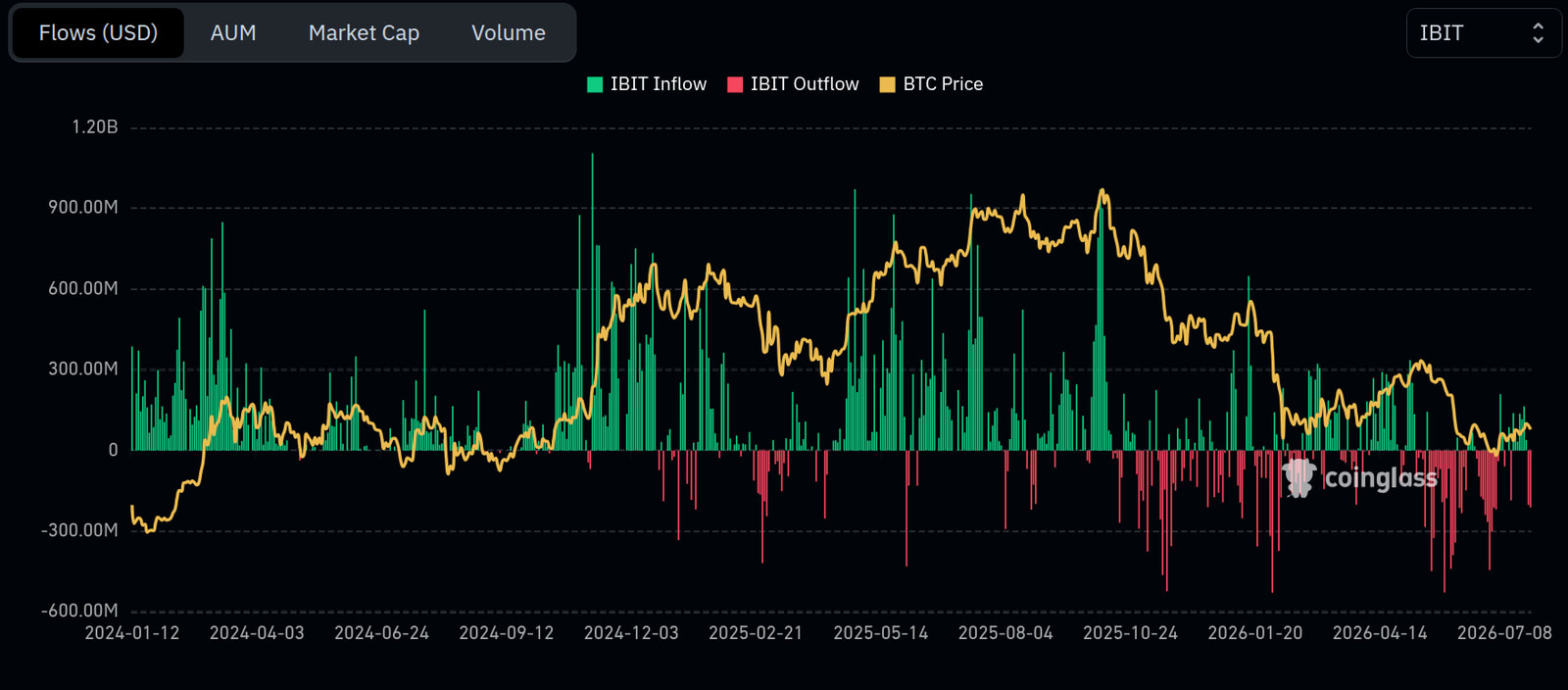
Why Bitcoin ETF Inflows Stopped: Oil, Iran, and the CLARITY Act.

By BitBrainers Editorial Seven straight days of Bitcoin ETF inflows. Nearly $1 billion pulled in. Then July 24 happened and $225.2 mi...

Why Bitcoin ETF Inflows Stopped: Oil, Iran, and the CLARITY Act.