There are roughly 19.8 million Bitcoin in circulation. A significant chunk of that has not moved in over a year. A new report from Ledn puts a number on what that frozen capital represents, and that number is $1 trillion. That is not a rounding error. That is an economy-sized pile of BTC sitting completely outside the productive financial system, and most of the industry is too busy chasing memecoins to notice.
This Is Not About Lost Coins, It Is About Deliberate Inaction
Everyone always talks about lost Bitcoin. Wallets with forgotten passwords, early miners who deleted their hard drives, coins that vanished into the ether before custody even existed as a concept. That story has been told to death.
This is different. The Ledn report is pointing at Bitcoin that is actively held, deliberately kept, and still producing nothing. Holders know they have it. They just have no practical, low-friction way to put it to work without selling it. That distinction matters enormously for where this market is heading.
Think about what that means structurally. You have a base asset with a fixed supply, a growing number of long-term holders who refuse to sell, and a capital market that cannot access that liquidity. That is a bottleneck, not a feature.
Long-Term Holders Are the Backbone of a Broken Liquidity System
The Bitcoin thesis has always leaned hard on scarcity. Diamond hands, HODL culture, 21 million hard cap. That narrative is not wrong, but it has a side effect nobody talks about at conferences: it creates a system where the most committed participants are also the most financially paralyzed.
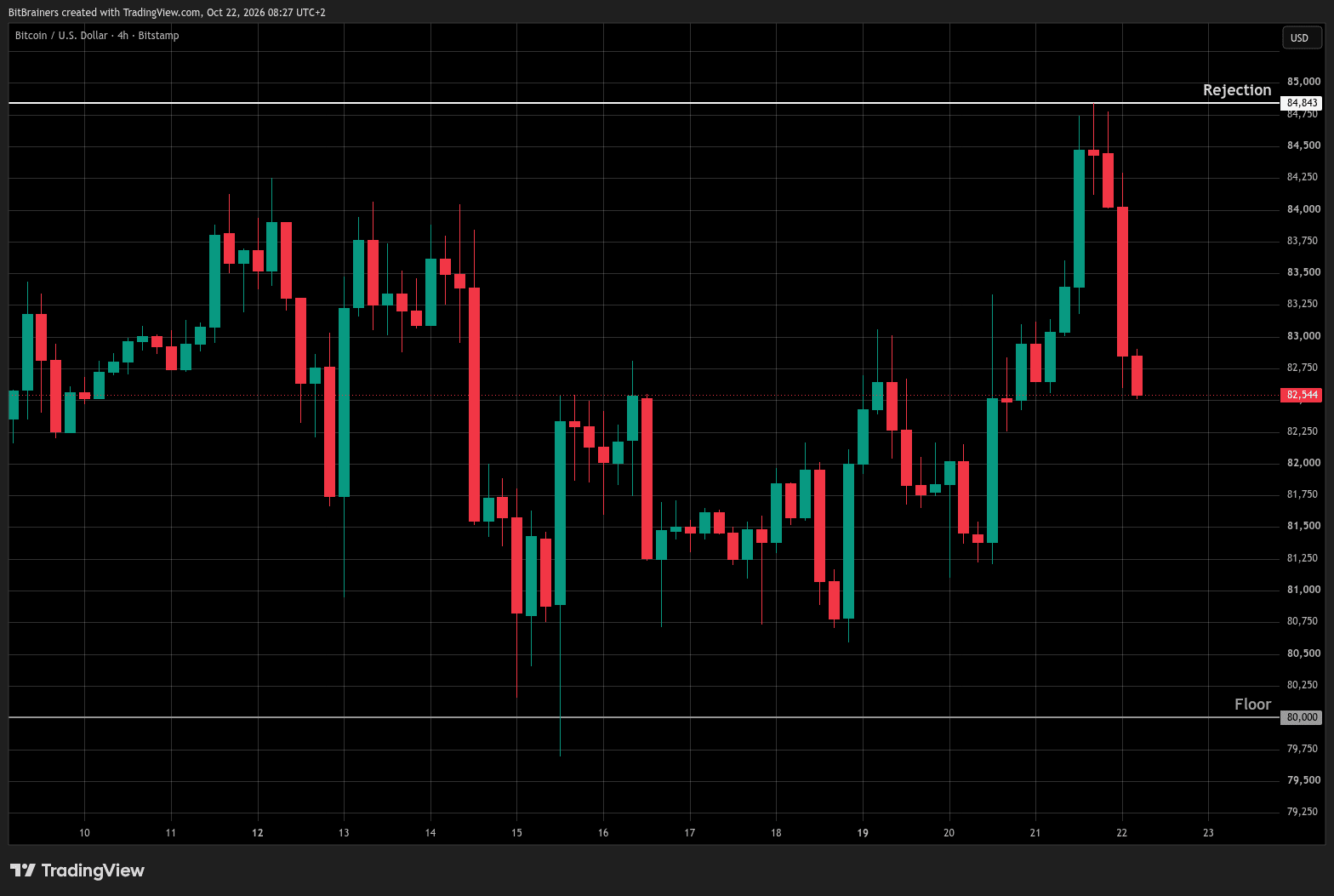
A long-term holder sitting on 5 BTC at $76,605 today has roughly $383,000 in value. That is real money. But if they need capital for a business, a property, or a market opportunity, their only real option under the current system is to sell. Selling triggers a taxable event. It breaks the position. It defeats the entire long-term thesis they built their strategy around.
So they sit. They hold. And $1 trillion in aggregate does the same.
Bitcoin-Backed Credit Exists and Almost Nobody Is Using It Properly
Here is the part most people do not know. Bitcoin-backed lending has been available for years through platforms like Ledn, and the infrastructure to unlock this capital without selling already exists. The problem is not technological. The problem is trust, access, and the catastrophic blowups that torched this sector in previous cycles.
Celsius collapsed. BlockFi collapsed. Voyager collapsed. When those platforms imploded, they took billions in customer deposits with them. The psychological damage from those failures set Bitcoin-backed credit back by years. Retail holders saw what happened and swore off the entire concept, even though the underlying idea of using BTC as collateral is sound.
The market essentially threw out the model because of execution failures, not because the concept was flawed. A surgeon killing a patient through negligence does not mean surgery should be banned. It means you need better surgeons.
The Report Is Ledn's, and Their Incentive Is Worth Acknowledging
Ledn is a lending platform. They published this report. That context matters. When a company whose revenue depends on people using Bitcoin as collateral publishes a report saying there is $1 trillion of untapped Bitcoin collateral waiting to be used, you read it with one eyebrow raised.
That does not make the data wrong. The analysis of dormant Bitcoin supply is grounded in on-chain realities that any blockchain explorer will confirm. But you should understand the origin of the thesis. Ledn wants borrowers. This report is also marketing.
The actual insight inside it is still valid. The framing around their specific solution is where you apply the skepticism filter.
Institutional Entry Is the Real Catalyst Nobody Is Pricing In
The $1 trillion figure becomes meaningful when you add one variable: institutional credit infrastructure. Right now, most of that locked Bitcoin lives with retail and mid-sized holders who have limited access to sophisticated lending products. Institutions have been building those rails.
Spot Bitcoin ETFs pulled in billions in inflows since approval, proving that institutional demand for BTC exposure is not theoretical. But ETFs are passive. They park capital. They do not unlock it. The next frontier is institutional-grade Bitcoin credit, where large holders can post BTC as collateral and access dollar liquidity at scale without touching their stack.
When that infrastructure matures, the liquidity dynamics of the entire Bitcoin market change. Supply on exchanges could tighten further while demand from credit markets grows. That is a setup worth watching, not one worth ignoring because it sounds boring.
The Tax Problem Is the Actual Hidden Barrier
This is where the institutional narrative and the retail reality diverge completely. Institutions have tax structuring tools. They have treasury teams, CFOs, and lawyers who can build around a sale event. A retail holder with 3 BTC does not have that.
For most individual Bitcoin holders, selling even a portion of their stack to access liquidity means realizing a capital gain, reporting it, and handing over a cut to the government. In the United States, depending on your income bracket and how long you have held, that number stings. Borrowing against BTC avoids that trigger entirely, which is exactly why the credit model is compelling for the retail holder sitting on unrealized gains.
The tax advantage of borrowing over selling is not a technicality. For long-term holders, it is often the entire point.
The Contrarian Read Is That This Unlocking Could Be Net Bearish Short-Term
Everyone framing this story is doing it through the lens of bullish liquidity injection. More capital deployed, more market activity, stronger Bitcoin ecosystem. The bull case is obvious and it is being repeated everywhere.
Here is the read most people are skipping. If Bitcoin-backed credit becomes widely accessible, some of that newly unlocked capital will flow directly into speculative assets. Leveraged positions. Altcoins. High-risk bets funded by BTC collateral. When those positions go wrong, which they will because leverage always finds a way to go wrong, lenders liquidate the collateral. That means forced BTC selling at the worst possible moments.
The history of crypto credit cycles is a history of collateral cascades. More liquidity infrastructure does not automatically mean more stability. Sometimes it means more synchronized, faster-moving crashes when sentiment turns.
Security Becomes Non-Negotiable the Moment Your BTC Has Financial Utility
If you are thinking about using Bitcoin as collateral, or even just thinking more seriously about the value sitting in your wallet, custody is no longer an afterthought. It is the foundation of everything. A hardware wallet like a Trezor is not optional infrastructure for anyone holding meaningful value. It is the baseline.
Counterparty risk in lending is already a risk you are taking on. Adding exchange or software wallet exposure on top of that is compounding risks you do not need to take. Keep your stack on hardware until the moment it moves for a specific purpose, and know exactly why it is moving.
What You Should Actually Do with This Information Right Now
Watch the Bitcoin-backed credit sector over the next two quarters. Not to dive in blindly, but to track which platforms are gaining traction, which are building conservative loan-to-value structures, and which are replicating the reckless leverage models that destroyed the sector in previous cycles.
If you are actively trading and managing liquidity across exchanges, Kraken gives you a regulated, established venue to operate from. Understanding the difference between a trading account and a lending account matters more now than it did even six months ago.
The assumption most readers brought into this post is that locked Bitcoin is just a neutral fact of the market, a background condition that does not really change anything. That assumption is worth challenging hard. Locked capital is not neutral. It is a constraint that shapes price discovery, market depth, and credit access across the entire ecosystem. The moment that constraint starts loosening through maturing infrastructure, the market structure shifts. Whether that shift is bullish or volatile depends entirely on how the credit architecture is built and who oversees it.
Disclosure: This post contains affiliate links to Trezor and Kraken. BitBrainers may earn a commission at no extra cost to you. This is not financial advice.
Sources
CoinDesk. A massive $1 trillion hidden market is waiting to be unlocked in bitcoin, says new report
BitBrainers. No hype. No fluff. Just crypto that matters.