A protocol called Uniswap processed billions in trading volume last year with zero employees making trade decisions. No CFO approved the liquidity pools. No board voted on fee structures. A set of smart contracts did it all, governed loosely by token holders who voted asynchronously from their wallets. That is not a startup experiment. That is a functioning economic entity that outcompeted licensed brokerages on trade execution speed.
Most people in crypto still frame DAOs as governance experiments or niche DeFi toys. They are wrong. The real story is structural. The autonomous corporation is not coming. It is already operating, and the next five years will determine whether legacy business structures adapt or get hollowed out from underneath.
The Traditional Corporation Has a Design Flaw That DAOs Were Built to Exploit
Every corporation runs on trust delegation. Shareholders trust a board, the board trusts executives, executives trust managers. Each layer adds friction, cost, and the possibility of misalignment. This structure made sense when coordination required physical proximity and legal enforcement. It makes far less sense when code can enforce rules without asking permission from anyone.
Bitcoin proved the concept first. The Bitcoin network has no HR department, no legal team, and no CEO. It has processed trillions in value since its launch using a consensus mechanism and open-source code. That is the original autonomous corporation, and it has never missed payroll because it has never had payroll.
The DAO model takes Bitcoin's coordination logic and applies it to commercial activity. Treasury management, revenue distribution, hiring decisions, and product direction all happen through on-chain votes or automated contract execution. The question is no longer whether this works. The question is how fast it scales.
MakerDAO Proves This Is Not Theoretical
MakerDAO governs DAI, a decentralized stablecoin that has maintained its peg through market crashes, regulatory pressure, and extreme volatility. MKR token holders vote on collateral types, stability fees, and risk parameters. There is no risk committee sitting in a Manhattan office. There is code and economic incentive.
In recent governance activity, MakerDAO's community has been actively restructuring itself into what it calls SubDAOs, smaller autonomous units that handle specific functions like lending and real-world asset integration. This is organizational theory happening in real time on a blockchain. They are not copying corporate structure. They are building something new with no historical template.
MakerDAO also holds US Treasury bonds as collateral through legal entities it controls. That bridge between on-chain governance and off-chain legal reality is where the most interesting development is happening right now.
Most People Do Not Know This About How DAO Treasuries Actually Work
Here is something most crypto blogs skip entirely. The largest DAOs are not just holding ETH or BTC in their treasuries. They are incorporating in jurisdictions like Wyoming, Marshall Islands, and Cayman Islands using DAO LLC structures. These legal wrappers give them the ability to sign contracts, own property, and hire contractors while keeping governance on-chain.
Wyoming passed its DAO LLC law in 2021. The Marshall Islands recognized DAOs as legal entities. These are not theoretical frameworks sitting in a whitepaper. They are functioning legal structures that let a smart contract control a bank account. When that bank account holds Bitcoin custody and the smart contract determines withdrawal conditions, you have an autonomous treasury with legal standing. Most retail investors have never heard of this layer and that is exactly where institutional money is now paying close attention.
Bitcoin Sits at the Center of This Architecture Whether It Wants To or Not
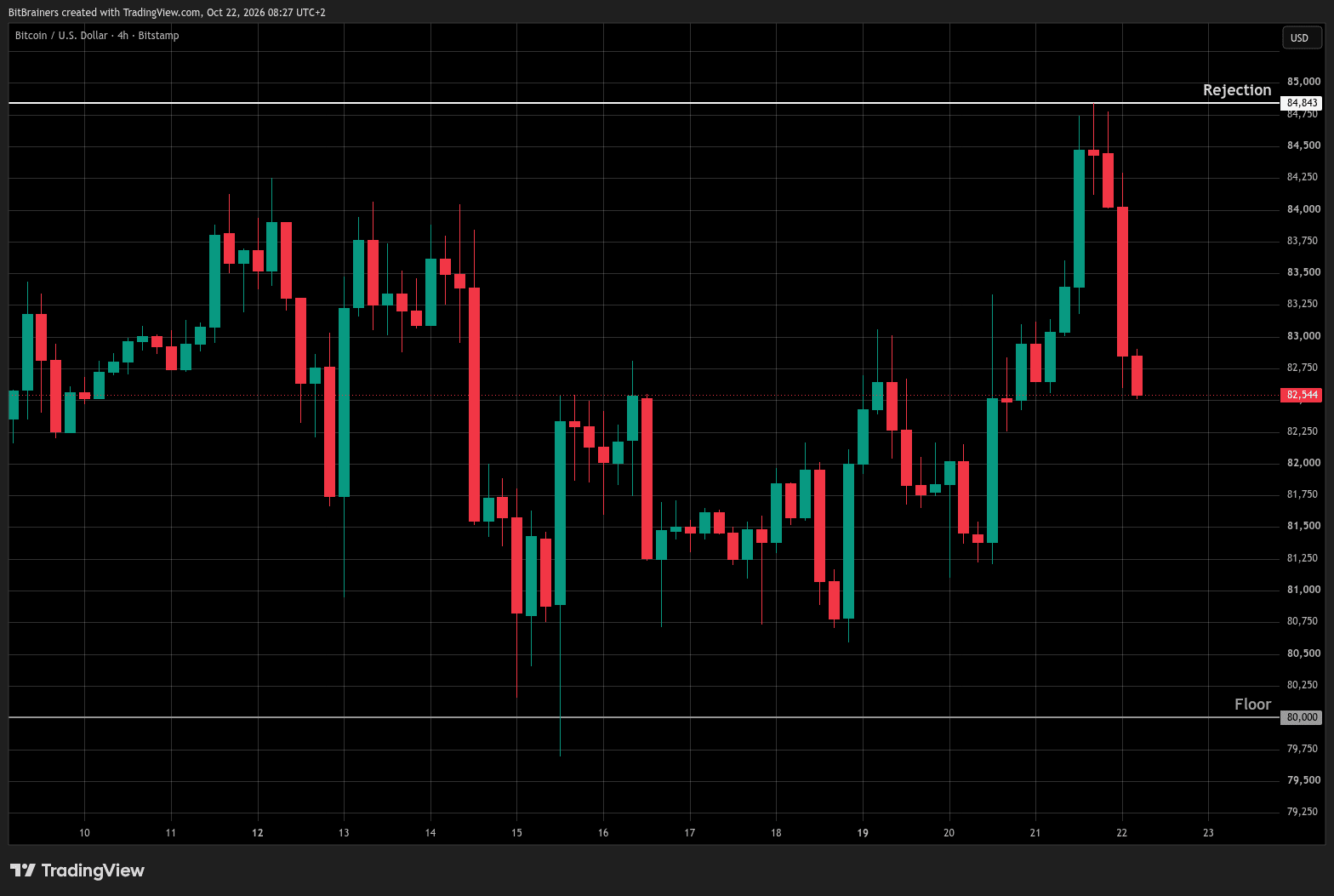
Bitcoin's role in the autonomous corporation model is not as a governance token. It is as reserve asset and neutral settlement layer. DAOs that want credible treasuries increasingly hold BTC alongside their native tokens. BTC at $77,071 today represents a globally liquid, politically neutral store of value that no single DAO governance vote can inflate or confiscate.
The practical implication is significant. As autonomous corporations grow, they need treasury diversification that does not introduce governance conflict. You cannot hold a competitor's governance token as your primary reserve. BTC solves that. It carries no voting rights, no team treasury, and no upgrade controversy that could manipulate its price through internal decisions.
Several DeFi protocols have already moved portions of their treasuries into BTC through on-chain wrapping mechanisms. This is not a coincidence. It reflects a maturing understanding of what sound treasury management looks like when humans are removed from the signing authority.
If you are building or participating in a DAO structure and holding significant BTC, custody becomes a serious operational concern. A hardware wallet like Trezor provides cold storage that keeps treasury assets offline and out of reach from smart contract exploits or front-end hacks. Self-custody is not optional at institutional scale. It is the baseline.
The Contrarian Take Nobody Wants to Hear About DAO Governance
Here is what almost every pro-DAO analysis gets wrong. Token-based governance does not eliminate power concentration. It relocates it. In practice, the top token holders in most major DAOs control voting outcomes by a wide margin. A16z, Paradigm, and a handful of whales effectively hold veto power over Uniswap governance proposals. That is not decentralization. That is shareholder capitalism with better UX.
The next wave of autonomous corporations will need to solve this more honestly. Conviction voting, quadratic voting, and time-locked delegation are being tested right now by protocols like Gitcoin and Optimism. These mechanisms try to give smaller participants proportional influence. Whether they succeed at scale is still an open question, but the experimentation is serious and technically grounded, not just theoretical.
The insight here is that the legal and governance shell of an autonomous corporation matters as much as the code. Bad governance design produces a DAO that behaves like a poorly run company. Good governance design produces something that genuinely outperforms centralized structures on speed, transparency, and alignment.
What Is Happening Right Now in This Space in the Past Week
Ethereum's development community has been pushing forward with discussions around account abstraction and smart contract wallets, specifically how they interface with on-chain governance systems. This directly affects how autonomous corporations execute decisions. When a governance vote passes, the execution needs to be trustless and fast. The infrastructure for that is being actively refined at the protocol level, not just the application layer.
This matters because autonomous corporations are only as reliable as the base layer they run on. Bitcoin provides the reserve layer. Ethereum and its L2 networks currently provide the execution layer for most DAO logic. That architecture is being hardened in real time.
For traders who want exposure to the infrastructure enabling this shift, Kraken offers access to both BTC and the ETH and governance tokens that sit within this ecosystem. Understanding which protocols are building real governance infrastructure versus speculative hype is the analytical edge most retail participants lack.
The Timeline Is Closer Than Traditional Business Analysis Admits
By 2028, expect the first autonomous corporation to pass $1 billion in annual revenue with no traditional executive team. The pieces are already assembled. Legal wrappers exist. Treasury management tools exist. On-chain payroll through protocols like Superfluid is already running. The bottleneck is not technology. It is regulatory clarity and talent willing to operate inside these structures full-time.
Regulatory pressure in the US has slowed DAO formation domestically, but it has simultaneously accelerated it in Dubai, Singapore, Switzerland, and the Marshall Islands. Capital and talent move to where the rules allow experimentation. The US is watching this happen while debating terminology.
The businesses that will be disrupted first are the ones with the highest coordination overhead and lowest product differentiation. That includes financial intermediaries, certain legal services, and content licensing platforms. Every business whose core function is gatekeeping access to a market is vulnerable to a smart contract that removes the gate entirely.
The Assumption You Walked In With Is Probably Wrong
Most readers assume the autonomous corporation is a crypto-native phenomenon that will remain marginal. The actual trajectory suggests otherwise. The same logic that made Bitcoin a viable monetary network without a central bank applies to any coordination problem where trust is the primary cost. That includes supply chains, insurance pools, creative royalty distribution, and venture capital allocation. Uniswap did not start as a threat to Nasdaq. It started as a weekend project. That pattern repeats.
The companies not taking DAO governance seriously right now are in the same position as banks that dismissed internet banking as a hobbyist experiment. The structure is already working at scale. The question is only which industries it reaches next and how fast.
What You Should Do Starting This Week
Start reading DAO governance forums, not just price charts. Uniswap, MakerDAO, and Arbitrum DAO publish all governance proposals publicly. Understanding how these decisions get made gives you a structural edge that most market participants do not have.
Hold BTC as your benchmark position and treat it as the reserve layer it actually functions as within this ecosystem. Keep that position in proper cold storage using Trezor so you control the keys regardless of what happens at the application layer above it. If you want to trade or accumulate through a regulated platform with deep liquidity, Kraken is the exchange worth using.
Learn what a DAO LLC actually is and how Wyoming and Marshall Islands structures work. This is not obscure. It is the legal foundation of the next generation of corporations. Understanding it now puts you five years ahead of the analysts who will be writing explainers about it in 2030.
Disclosure: This post contains affiliate links to Trezor and Kraken. BitBrainers may earn a commission at no extra cost to you. This is not financial advice.
BitBrainers. Because most crypto content is garbage.