Near-daily exploits. That is what DeFi protocols are dealing with right now, and it is the single biggest reason the traditional finance giants still will not touch the blockchain the way they should.
This is not a fringe problem. This is not a "crypto bro getting rugpulled" story. This is Wall Street's actual, documented, boardroom-level blocker. The banks have the capital. They have the lawyers. They have the lobbyists. What they do not have is a credible answer to what happens when an AI-powered attacker starts probing their on-chain positions at 3am on a Sunday while their risk team is asleep.
CoinDesk published a piece on May 28, 2026 laying this out clearly. DeFi vulnerabilities are the biggest institutional blocker to TradFi adoption, as exploits are hitting protocols at a near-daily pace. Read that again. Not weekly. Not monthly. Daily.
The Exploit Cadence Is Not a Bug in the System, It Is a Feature of Immaturity
DeFi protocols are software. Software has vulnerabilities. That is not controversial. What is controversial is the pace at which attackers are finding and exploiting those vulnerabilities in 2026, and how AI has turbocharged that process.
Traditional bug discovery used to take time. Attackers needed skilled developers, deep protocol knowledge, and hours of manual review. Now AI tools can scan smart contract code, identify logic flaws, model attack vectors, and simulate outcomes faster than any human audit team can respond.
The asymmetry is brutal. A protocol might take 18 months to build, pass 3 audits, and launch with $500 million in TVL. An AI-assisted attacker can identify a previously undetected vulnerability in days or hours.
Big Banks Are Not Scared of Crypto, They Are Scared of Uncontrollable Loss Events
Here is where most crypto Twitter analysis gets it wrong. The narrative has always been that banks hate crypto because it threatens their business model. That is partly true. But the more immediate blocker in 2026 is operational risk.
Banks have compliance departments, regulators breathing down their necks, and fiduciary obligations to shareholders. A traditional finance institution cannot absorb an exploit-driven loss event without triggering regulatory scrutiny, shareholder lawsuits, and reputational damage that takes years to repair.
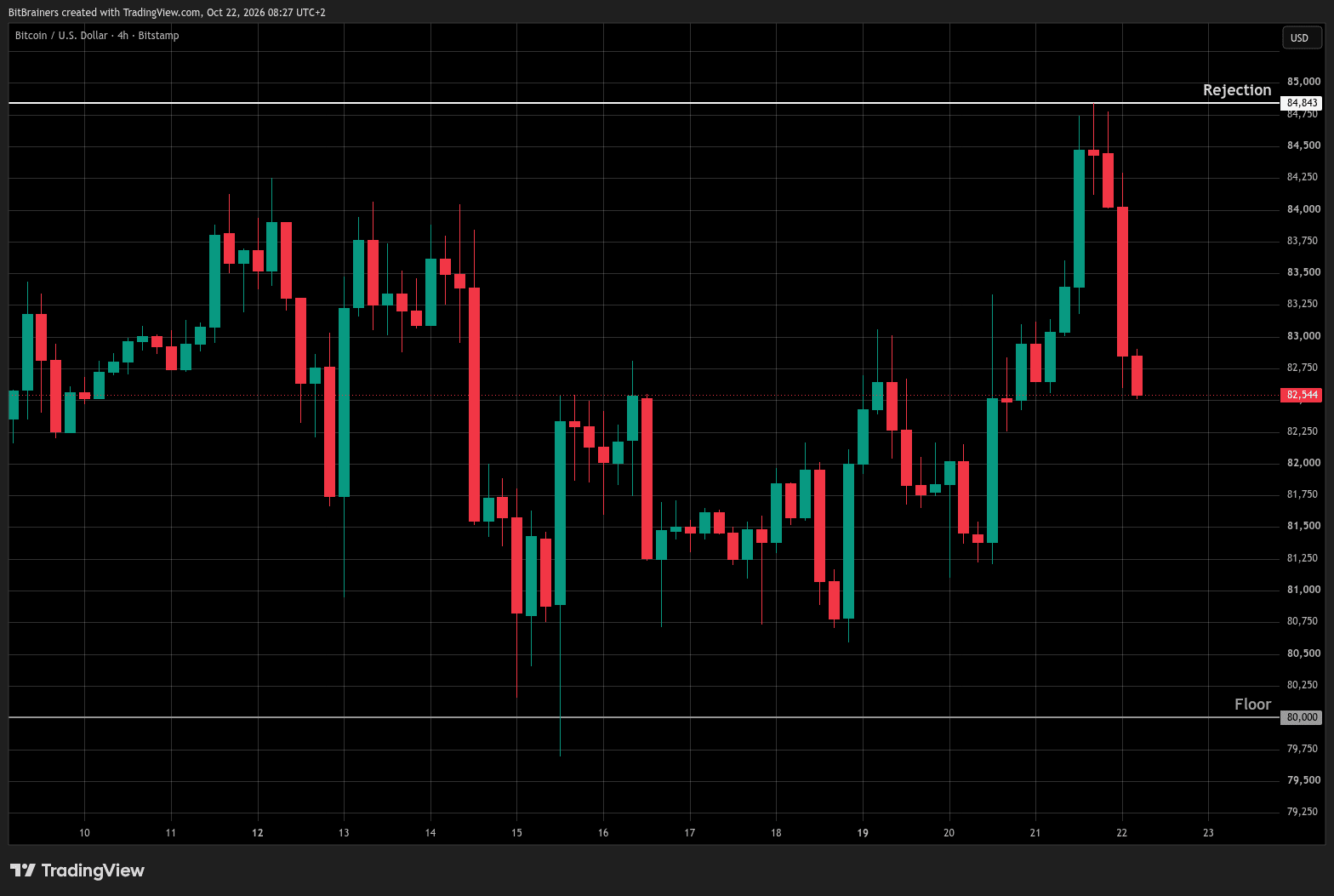
Bitcoin, sitting at $73,842 today, is actually less of a concern to institutional risk departments than DeFi protocols. BTC's on-chain mechanics are relatively simple and battle-tested. It is the complex, composable DeFi layer where AI hackers find their playground.
The Audit Industry Has Already Failed to Keep Up With AI Attackers
Security firm CertiK, one of the most cited names in smart contract auditing, has been tracking these exploits closely. The data they have been feeding into public discourse points to a clear pattern: audits are necessary but not sufficient anymore.
An audit is a snapshot in time. It reflects the protocol's code on the day the auditors reviewed it. The moment a team pushes a new upgrade, integrates a new oracle, or adds a liquidity pool, the audit is partially obsolete. AI attackers do not care about your audit certificate.
CertiK's involvement in the conversation around DeFi vulnerabilities is worth watching because they sit at the intersection of the problem and the attempted solution. When even the companies trying to fix security acknowledge near-daily exploit rates, you know the baseline is bad.
Most People Do Not Know That Flash Loan Attacks Are Now Largely AI-Orchestrated
This is the insider detail most crypto blogs skim over. Flash loans, which allow uncollateralized borrowing within a single transaction block, were already a dangerous attack vector before AI got involved. The attack sequence required sophisticated understanding of multiple protocol interactions simultaneously.
Now AI models can map entire DeFi ecosystems, identify composability weaknesses across 5 or 6 protocols at once, and construct multi-step flash loan attack sequences that no human would design manually in a reasonable timeframe. The complexity ceiling has been removed.
When you hear about a protocol getting drained and the post-mortem says "complex multi-protocol attack vector," that is often what happened. It is not necessarily one genius developer. It is increasingly an AI model running optimization loops against your liquidity.
The Contrarian Take: Wall Street Staying Out Is Actually Protecting BTC's Price Structure Right Now
Everyone in crypto frames institutional adoption as universally bullish. More institutions in equals higher prices, end of story. But that framework ignores what kind of institutions and what kind of exposure they would bring.
If a major bank takes a significant on-chain DeFi position and then gets exploited by an AI hacker for a nine-figure sum, the regulatory backlash could be catastrophic for the entire space. We are talking congressional hearings, emergency rulemaking, potential trading restrictions on BTC and ETH in US markets as collateral damage.
The slow pace of TradFi adoption right now is functioning as a buffer. The protocols need to solve the AI exploit problem first. The infrastructure needs to mature. A premature flood of institutional capital into broken DeFi infrastructure could produce the kind of high-profile loss event that sets the entire industry back by years.
Ethereum Is the Primary Battlefield, But BTC Holders Are Not Safe From the Fallout
The vast majority of DeFi exploits hit Ethereum-based protocols. The composability that makes ETH-based DeFi powerful is the same feature that makes it exploitable at scale. BTC doesn't run complex smart contracts natively, so it avoids a lot of this surface area.
But Bitcoin holders are not immune to market fallout when major DeFi exploits happen. In the past, large-scale hacks have triggered short-term panic selling across the entire market. If a Wall Street firm quietly testing DeFi exposure gets hit in 2026, the news cycle will not distinguish between BTC and a compromised Ethereum protocol.
Your BTC bags are fine. Your exposure to the sentiment cascade is not zero.
The Security Stack Needs to Evolve Faster Than the Attack Stack
The real race right now is between defensive AI and offensive AI in the context of smart contract security. Some projects are deploying AI-powered monitoring systems that watch on-chain behavior in real time and can trigger automated pauses when anomalous patterns emerge.
But building that infrastructure takes time, money, and the kind of institutional-grade security thinking that most DeFi teams do not have. The protocols that survive the next 24 months will be the ones that treat security like a continuous operation rather than a pre-launch checkbox.
If you are holding significant crypto assets on-chain or across multiple DeFi protocols, your security posture matters more than ever. A hardware wallet like Trezor keeps your private keys completely off internet-connected systems. It does not protect you from a protocol exploit, but it does protect your core holdings from the kind of wallet-level attacks that often follow large hacks when scammers flood in behind the headlines.
The Trillion-Dollar Number Is Not Hype, It Reflects Real Capital on the Sidelines
The framing of a "trillion-dollar dilemma" in CoinDesk's May 28 piece is not marketing language. Institutional capital that could flow into blockchain-based financial infrastructure is genuinely being held back by unresolved security concerns. Wealth managers, pension funds, and prime brokers cannot responsibly allocate client capital to infrastructure that gets exploited at near-daily rates.
BTC sits differently in this conversation than DeFi. Bitcoin as a store of value and treasury asset is already in institutional portfolios. The next phase of adoption, the phase involving on-chain yield, tokenized assets, and blockchain-native financial products, is what the AI hacker problem is actively blocking.
That next phase is where the real institutional capital velocity comes from. Until the exploit rate drops and AI-powered defense scales to match AI-powered offense, that capital stays in the sidelines.
If you want clean exposure to BTC while all this plays out, Kraken remains one of the most established exchanges for institutional-grade liquidity and security on spot trading. Know where your execution is happening and who is holding custody.
The Assumption You Brought to This Article That You Should Discard Right Now
You probably came in thinking this is a story about crypto being too risky for banks. That framing is backwards. The real story is that the DeFi infrastructure layer specifically is not mature enough to meet institutional risk thresholds. Bitcoin has already cleared that bar for many institutions. The AI hacker crisis is a DeFi-layer problem being incorrectly applied as a blanket label to the entire asset class. Those are two very different things, and conflating them will cause you to misread the market signals when institutional adoption news drops.
Watch CertiK's exploit data feed weekly. Not as a doom signal. As a maturity tracker. The day near-daily exploits become weekly, then monthly, is the day the trillion-dollar pipeline opens.
Disclosure: This post contains affiliate links to Trezor and Kraken. BitBrainers may earn a commission at no extra cost to you. This is not financial advice.
Sources
CoinDesk. Wall Street's trillion-dollar dilemma: Why AI-powered hackers are keeping big banks off the blockchain
BitBrainers. Follow the data, not the noise.