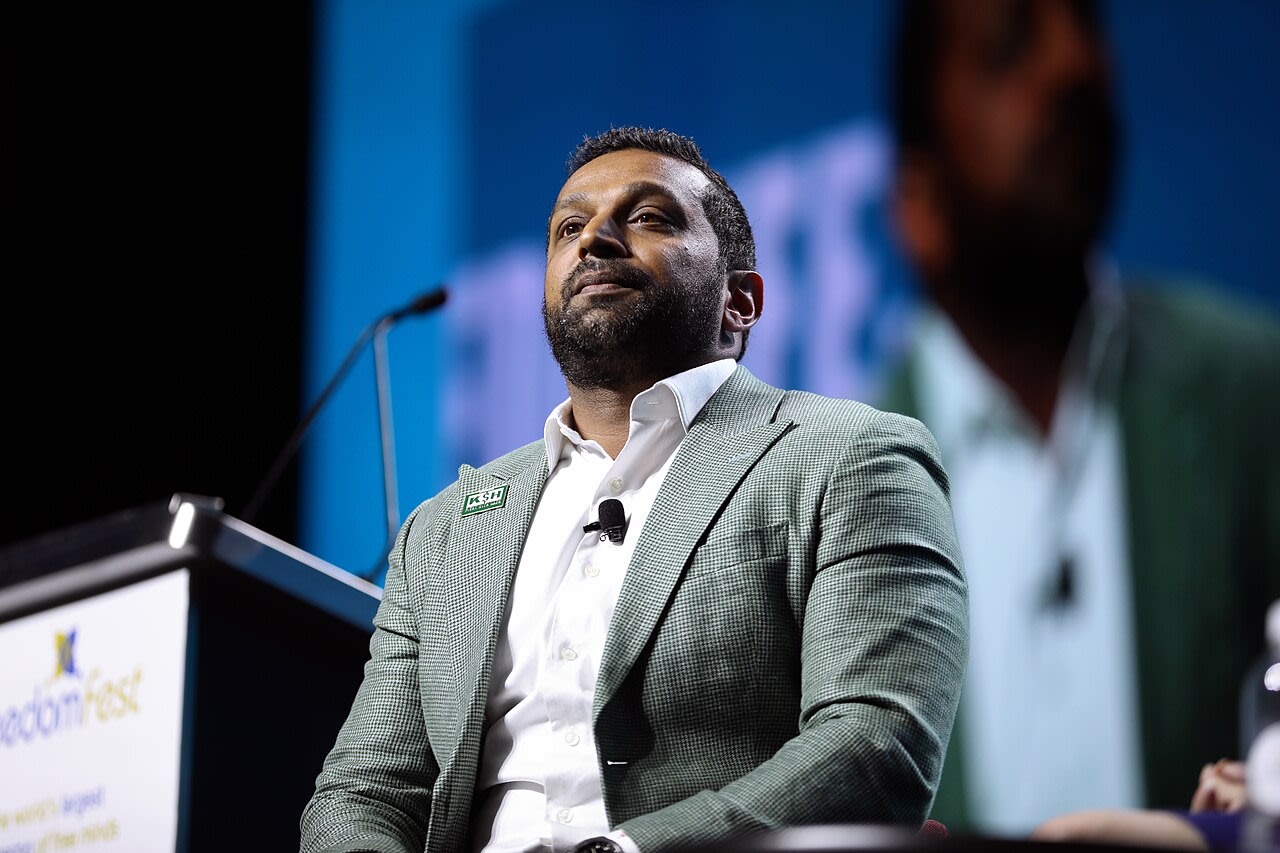
Photo: Gage Skidmore, CC BY-SA 2.0
By BitBrainers Editorial
What Actually Happened
FBI Director Kash Patel purchased between $100,001 and $250,000 in Strategy stock, the company formerly known as MicroStrategy, on November 21. Strategy is the largest publicly listed corporate holder of Bitcoin in the world, built around aggressively accumulating BTC as its primary treasury asset. Patel did not disclose the trade to federal regulators until May 26, six months after the purchase and well past the 45-day window required under the STOCK Act.
His explanation, delivered in a letter to the Office of Government Ethics that same day, was that the trade had been "inadvertently omitted" from an earlier disclosure. Two days later, a Deputy Assistant Attorney General wrote to the same office stating the omission was caused by an unspecified "miscommunication." An FBI official told reporters the late filing was "not realized and unintentional."
Why The Company Matters As Much As The Delay
A late disclosure alone is a paperwork problem. What makes this one worth reading past the headline is who Patel bought stock in. Strategy has done millions of dollars in business with the Department of Justice over the past decade, and the FBI is part of the Department of Justice. Patel now personally holds a six-figure position in a company his own agency writes checks to.
The Deputy Assistant Attorney General who reviewed the case concluded there was no conflict of interest. Government watchdogs disagree with the framing entirely. Dylan Hedtler-Gaudette of the Project on Government Oversight put it in blunt terms: "That's violating the law, no other way to put it." He's referring specifically to the disclosure timeline, not the ethics question, but the two are hard to fully separate here. Late disclosure and financial entanglement with an agency contractor are not the same problem, but they compound each other.
Worth being fair about the baseline here. Senior officials holding stock in companies their agency interacts with is not automatically a scandal, Pentagon officials often hold defense contractor stock, HHS officials hold pharma stock. Passive investment in a publicly traded company isn't prohibited on its own, that's exactly why ethics offices exist to make case-by-case calls rather than ban the practice outright. No evidence has surfaced that Patel steered any DOJ contract toward Strategy, traded on non-public information, or received anything in return for the purchase. The documented complaint is narrower than "corruption": a six-figure trade, a company with agency ties, and a disclosure filed roughly 186 days late. That's still a real problem. It's just a specific one, not a vague one.
This also isn't Patel's first time drawing scrutiny for personal stock trades in office. He purchased shares in Krispy Kreme and ON Semiconductor in 2025, trades that already prompted questions from members of Congress before this latest disclosure issue surfaced. A pattern of individual stock trading while running a federal law enforcement agency is its own separate conversation from any single trade's merits.
The Rules Everyone Ignores
The STOCK Act exists for exactly this reason: to make sure senior officials disclose trades fast enough that the public can see potential conflicts before they compound. The threshold is low, any trade over $1,000, and the window is short, 45 days. Patel's trade sat undisclosed for roughly six times that window.
He is not alone. NOTUS, the outlet that first reported this story, has identified more than 30 members of Congress who filed STOCK Act disclosures late over the past year. The customary penalty for a first violation is a $200 fine, a number small enough that it functions less as a deterrent and more as a rounding error against a quarter-million-dollar trade. Patel has not been fined as of this writing, and multiple watchdog groups doubt he will be.
This is the kind of read you get weekly.
No hype. No "this coin will 100x." Just honest macro on Bitcoin, gold, and the market.
What This Says About Bitcoin's Position In Washington
Set aside the ethics question for a moment and look at what this story confirms about where things actually stand. A sitting FBI director felt comfortable putting a six-figure personal position into a Bitcoin treasury company, one connected to his own agency's contractor relationships, and the mistake that got him in trouble wasn't the trade itself, it was the paperwork. Nobody in this story is arguing Patel shouldn't have bought Strategy stock. The argument is entirely about timing.
That's a meaningful signal on its own. Bitcoin exposure has moved deep enough into Washington's bloodstream that a law enforcement official's personal stake in the largest corporate BTC holder barely registers as controversial, only the six-month delay in reporting it does. A few years ago this trade wouldn't have happened at all, or would have drawn scrutiny on the merits, not just the calendar.
Worth Watching Right Now
Strategy's stock itself remains under separate pressure. Canaccord cut its price target on the company this week even while maintaining a broadly bullish thesis on Bitcoin, part of a wider reassessment of Strategy's capital structure following its recently disclosed unrealized paper losses and new buyback authorization. Meanwhile Trump's own 2025 financial disclosure, released the same week, showed over $1.4 billion in crypto-related income, a separate and much larger story about the overlap between federal power and Bitcoin exposure that deserves its own treatment.
Sources
NOTUS. Kash Patel's Late Stock Disclosure Raises STOCK Act Questions
CoinDesk. FBI Director Kash Patel Caught Sleeping on Required Disclosure of Six-Figure MSTR Investment
Raw Story. Kash Patel Accused of 'Violating the Law' With Massive Undisclosed Stake in DOJ Contractor
BitBrainers. We check the facts so you don't have to.
Disclosure: This is market and policy commentary, not financial or legal advice. We hold Bitcoin. Always do your own research.