By BitBrainers Editorial
A Rate Call With No Map
Tomorrow is a non-SEP meeting. No dot plot, no updated economic projections. Just a short statement at 2pm ET and a press conference at 2:30pm. Fed Chair Kevin Warsh, who took over from Jerome Powell in May, has also been explicit about giving less forward guidance than his predecessors, so even the statement language carries less signal than usual.
Two weeks ago CME FedWatch had hike odds at roughly 11 percent. By late last week that number had climbed above 35 percent, driven by oil trading above 100 dollars a barrel as the US-Iran conflict escalated. Then oil fell sharply on Monday as the two sides paused strikes. The same whipsaw this conflict has produced most of the year.
A rate call that swings 20-plus points on a single weekend of oil headlines isn't a stable signal, it's noise with a percentage sign attached.
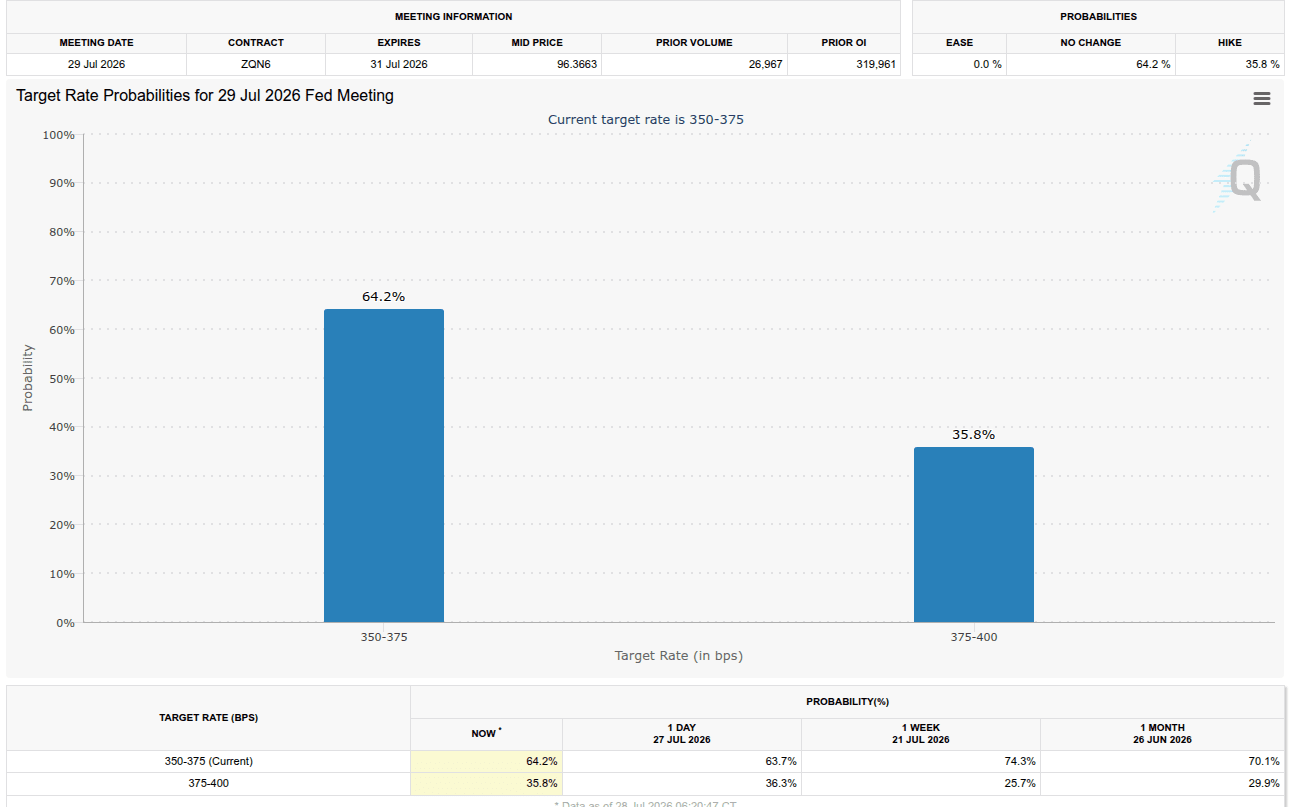
Source: CME FedWatch, July 28, 2026. Hike odds up from 25.7% one week ago to 35.8% today, driven by oil volatility from the US-Iran conflict.
A Chair Who Wants Two Different Things
Warsh has been open about wanting lower rates over time and a smaller Fed balance sheet, which currently sits around 6.7 trillion dollars. Those two goals do not obviously fit together. Cutting rates is stimulative, shrinking the balance sheet drains liquidity from the same system rates are supposed to be easing.
Goldman Sachs Asset Management put it plainly earlier this year: building consensus around meaningful balance sheet reduction takes time, and notable shrinkage is unlikely without committee buy-in and regulatory approval.
Warsh formed a task force after the June meeting to review the balance sheet composition. That review is months from producing anything actionable. Whatever the Fed does with rates tomorrow, the liquidity mechanics under the banking system are not changing this week.
So if the Fed holds, it is more of the same: elevated real rates, a chair giving less guidance than markets are used to, and a balance sheet story still a year or more out. If it hikes, expect the standard knee-jerk risk-off move across equities and crypto together.
Watch the vote count in tomorrow's statement more than the headline number. The June hold passed 12 to 0. Any dissents in favor of a hike would signal the committee is less settled than the language suggests.
One Fed Meeting Will Not Tell You Where Bitcoin Is Actually Headed
We track the liquidity signals underneath the headline rate call. New issues land before the market finishes reacting to the last one.
SubscribeThe Number Bitcoin Used to Watch
Before this year, Bitcoin's clearest macro relationship was not the fed funds rate. It was global M2, the combined money supply across the world's major central banks. When M2 expanded, Bitcoin tended to rally a few months later. That pattern held through most of the last two cycles.
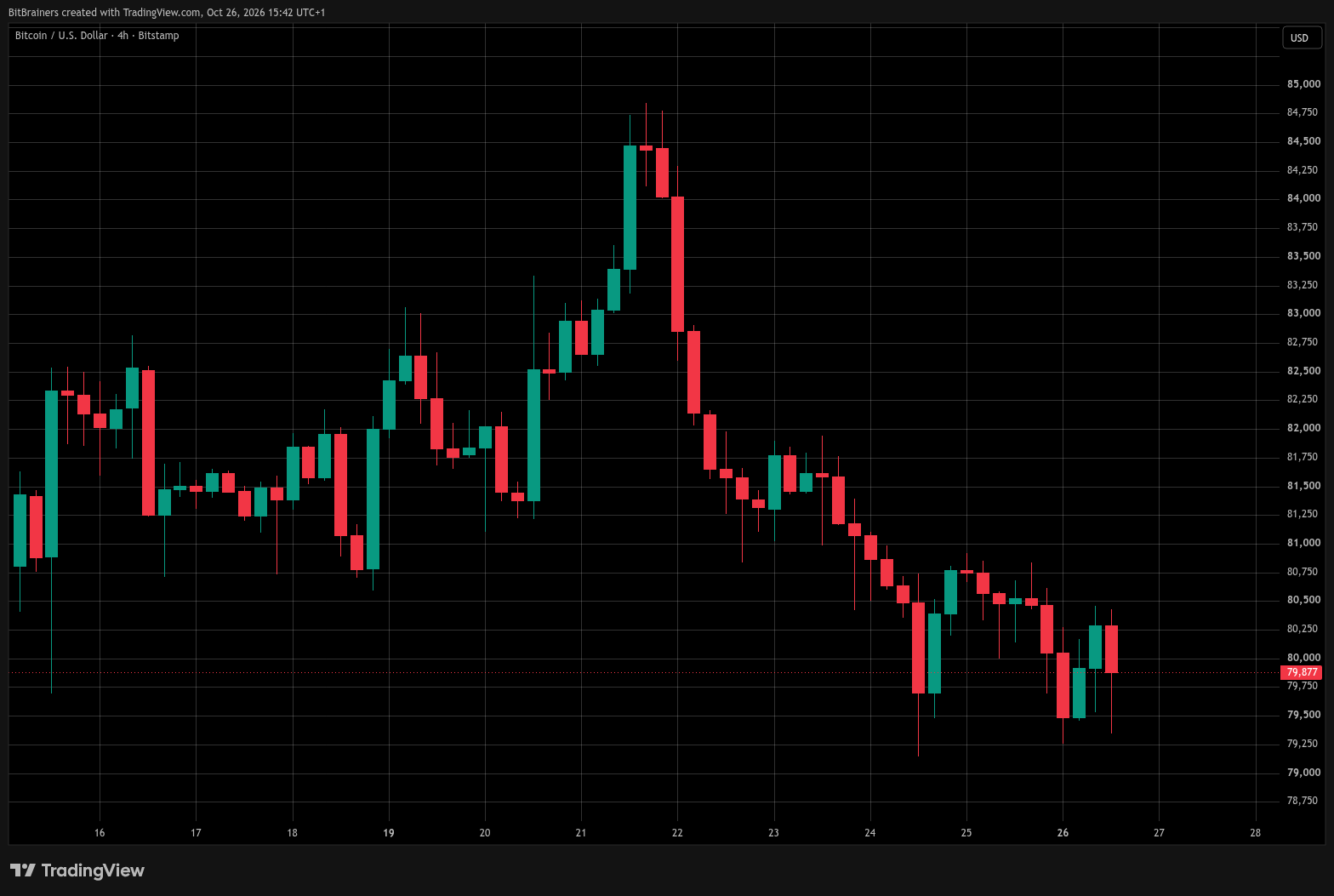
Global M2 hit a record of roughly 135 trillion dollars in June, and gold responded the way the old playbook predicted. Bitcoin was the outlier, falling instead of rising.
Some analysts call this mispricing and expect a catch-up rally once the relationship reasserts itself. Others think the correlation simply broke, now that spot ETF flows make Bitcoin's marginal buyer a portfolio allocator rather than a liquidity hedger.
Goldman Sachs data put Bitcoin's three-month correlation to unprofitable tech stocks at 0.78 earlier this year, the 97th percentile of the past decade, which looks less like a liquidity hedge and more like a risk-on proxy.
Whether that shift is permanent or a phase is the actual open question for Bitcoin right now. A quarter-point call tomorrow does not resolve it either way.
We went deeper on this in Three Models Walk Into 2026, including the cycle model, the liquidity model, and the institutional-ownership thesis. Worth reading before the decision lands.
What Is Actually Worth Watching Wednesday
The rate decision will move headlines and probably move price in the first hour. What is more useful is what happens after. Watch the US dollar index and 2-year Treasury yield in real time during the press conference. Those reprice faster than Bitcoin and tell you how the bond market is reading the guidance before crypto catches up.
If yields drop and the dollar weakens during Warsh's remarks, the statement landed dovish regardless of the headline rate. If yields climb, the hold was hawkish. Bitcoin will follow that signal, usually with a 15 to 30 minute lag.
Also worth tracking afterward: whether spot Bitcoin ETF flows turn positive or keep bleeding regardless of the outcome, and whether Warsh drops any hint about balance sheet timing. Neither shows up in the 2pm number. Both matter more for where Bitcoin trades in August.
The Rest of the Week Does Not Stop at 2pm
Wednesday is not the only clock running. Bitcoin's BIP-110 mandatory signaling window opens in the first days of August. Support has crept up from near zero to roughly 3 percent of hashrate, still nowhere near the 55 percent threshold, and none of the four pools controlling most of the network's hashrate have moved. It is a separate, purely Bitcoin-specific story, unrelated to anything the Fed does tomorrow, and worth tracking on its own terms.
Sources
Federal Reserve: FOMC Minutes, June 16-17, 2026
CBS News: Will the Federal Reserve raise interest rates? Here is what experts predict for July's meeting
CNN Business: Why oil keeps tumbling even when the Iran war drags on
Axios: Battles to shrink the Federal Reserve's balance sheet begin
Goldman Sachs Asset Management: The Fed's Balance Sheet: What Does it Mean for Money Markets?
Bloomberg: Warsh Forms Fed Task Force to Review $6.7 Trillion Balance Sheet
CoinDesk: Bitcoin's BIP-110 fork deadline nears with miner support at zero
This is market commentary, not financial advice. Nothing here is a recommendation to buy or sell any asset. Do your own research.