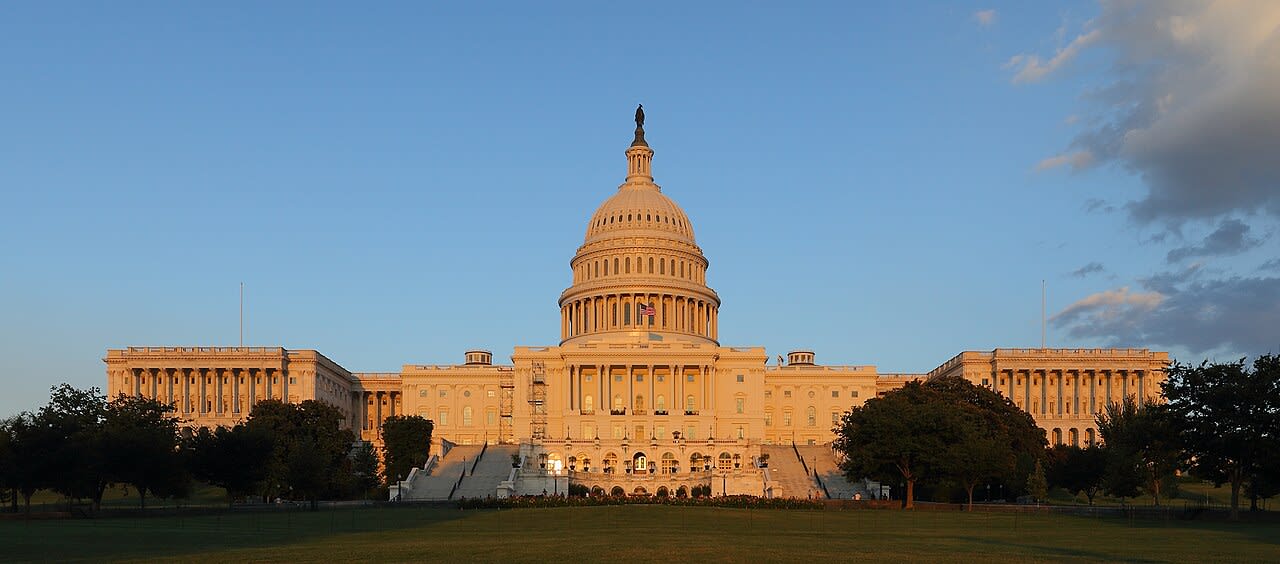
"US Capitol west side at dusk" by Martin Falbisoner, CC BY-SA 3.0, via Wikimedia Commons.
By BitBrainers Editorial
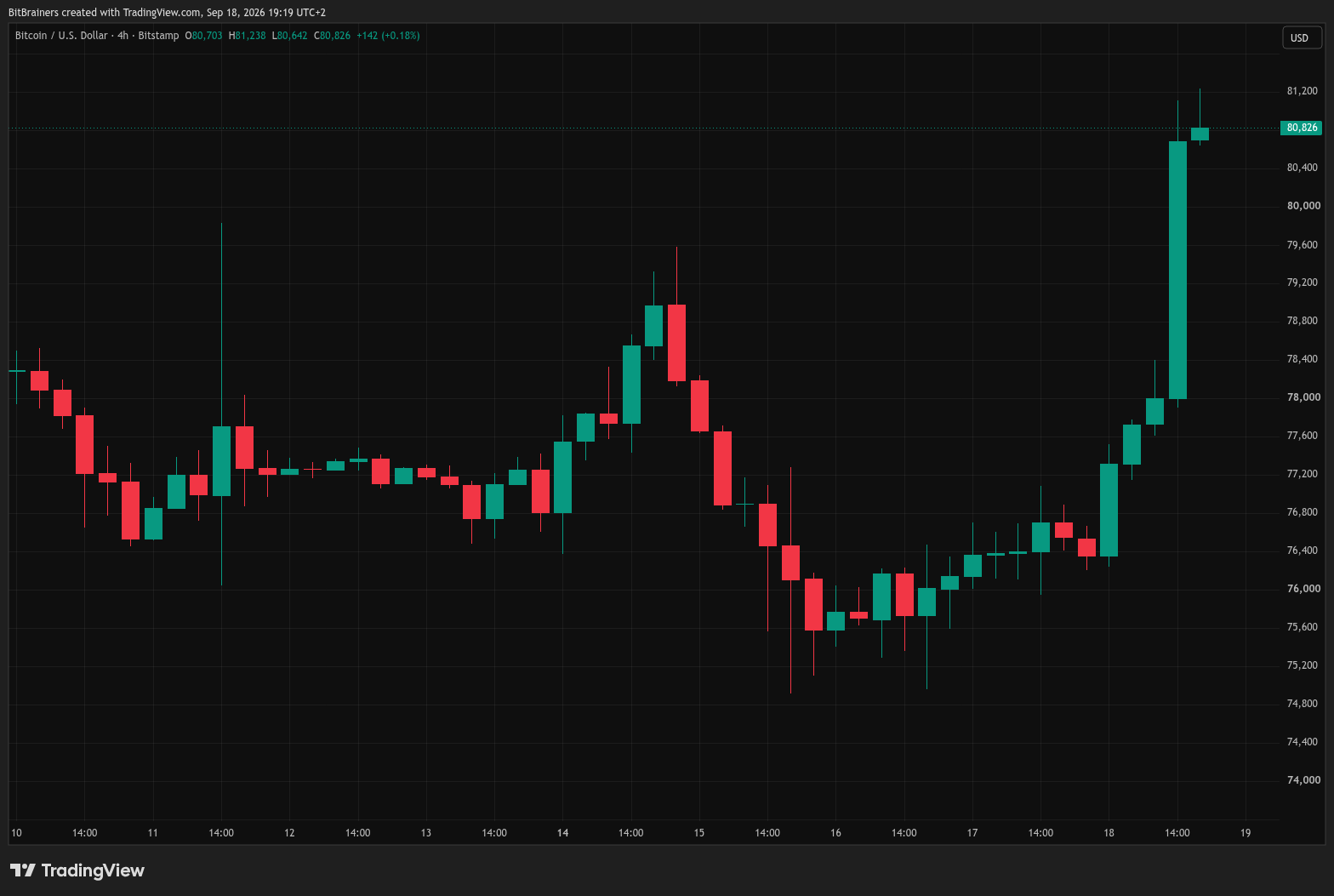
Polymarket had this thing at 82% in February for becoming law in 2026. Monday night the same contract was 18% on about $17.2 million. Afternoon it had ripped to the high 20s, maybe 34%. Then it gave it back. The contract is not today's vote. It pays if the bill clears both chambers and gets a signature by December 31. Kalshi runs a longer clock, which is why you keep seeing 53% next to 18% like they are the same bet, and they keep getting quoted side by side anyway.
If It Clears
If this clears, you get debate. Then the usual Senate mess: post-cloture time, another 60-vote problem on the bill itself, amendments. The House already did its job, 294–134, July 17, 2025, 78 Democrats on the yes side. Banking moved a Senate text 15–9 in May. Only two of those yeses were Democrats, Gallego and Alsobrooks. Whatever the Senate passes is a substitute, so it goes back to a House that is leaving around the 17th and already killed the weeks of the 21st and the 28th. You can win the afternoon and still be looking at lame duck.
The Math
Republicans have 53. Paul and Hawley are nos unless something stupid happens. That makes it nine Democrats, not the seven people keep repeating. Tillis built the ethics package with Gallego. He should be a yes. He is also the kind of senator who finds a reason not to be. Collins and Cornyn are in play because of banks, not because anyone has a secret whip sheet. McConnell showed up Monday, voted, said he'd try to make the hard ones. Treat him as probably there. Don't build a theory out of the wheelchair.
The Democrats who matter have been the same seven since spring: Gallego, Alsobrooks, Warner, Cortez Masto, Warnock, Booker, Hickenlooper. If someone in the press has a real count, they have not put a name on it.
Division C, Line by Line
The fight people will talk about is Division C of the Sunday substitute, EHF26724. Officials, officials-elect, spouses. No issuing or sponsoring a token for consideration. Divest or blind-trust any "significant financial interest," which the draft pegs around $15,000 of equity in a shop that got most of its revenue from issuing or sponsoring tokens in any of the last three years. Penalty is the greater of 20% of the take or $500,000.
It stops at the spouse. Adult kids are out. So are the family vehicles that sit one layer off the official. World Liberty and the tokens that launched before Inauguration Day live in that gap on purpose.
The issuance ban is prospective. Effective date forward. Old deals keep paying.
Blind trust is the easy door. Trustee acts, or an entity the trust owns acts, including issuing or sponsoring a token, and the bill says that is not the official's act. Sell instead and you get tax deferral.
Enforcement is where it gets cartoonish. DOJ holds the penalty. State AGs can sue, but they sue the Attorney General of the United States. District court does facts. Law goes up to an en banc court of appeals. If the ethics office blesses the conduct or posts the divestiture notice — and the official has to post that notice anyway — the state case dies. Warner told Semafor Monday the movement was "not near enough." Same three problems, he said, sitting there six or eight weeks. Gallego and Alsobrooks had not said a word about the Sunday text by Monday night. Lummis is done conceding.
Democrats sent a counteroffer late Monday. Nobody has published it. If it leaks it comes out of those three offices. The tell is whether they try to pull adult children in, treat last year's sponsorship income as ongoing conduct, or poke a hole in the trust.
James and 17 other AGs went after the bill Monday too, but on a different front: their letter fights the preemption of state fraud cases, and it will get mashed into the ethics story anyway.
The Money Fight
Yield is the money fight. No interest that looks like a bank deposit. Rewards for using the thing — payments, transactions, activity — still allowed. Treasury gets 18 months and has to write down that community banks actually lost a lot of deposits before anyone can shut the gap. ABA, ICBA, six more trade groups call that a loophole. Coinbase put $1.35 billion of stablecoin revenue on the 2025 books, up from about $910 million, mostly the Circle reserve split. Rewards are how some of that gets to users. Kill the rewards and you hit the distribution. You do not automatically zero the line. Armstrong has already said the firm might just keep more of it.
The other reason a Democrat who likes market structure still sits: developers, DeFi, AML, cops. The safe harbor that survived is civil. The explicit §1960 criminal shield did not survive, which Coin Center called a tough pill to swallow, and they are not wrong.
If It Fails
If cloture fails, today's path is finished. They can file again. Lame duck exists on a calendar. Eighteen percent was not pricing either of those. It was pricing this week working.
GENIUS is already law. Atkins and Selig are running Project Crypto either way. Spot ETFs are trading. Self-custody language is in the draft. The industry will say the window closed for years. That is the job. The agencies will keep moving.
Watch Paul and Hawley first so you know the GOP floor. Then Collins, Cornyn, Tillis. Then Gallego, Alsobrooks, Warner. If you do not have those seven, you do not have 60.
2:15 p.m. ET.
Sources
Congress.gov | H.R. 3633 text, EHF26724 substitute, vote history
Polymarket | 2026 enactment contract, the tape
Kalshi | Longer-dated contracts
CoinDesk | Odds surge, Kalshi/Polymarket split
NY Attorney General | James plus 17 AGs letter, Sept 14
Bitcoin.com News | Counteroffer, Warner quotes
Semafor | Warner interview
Punchbowl News | Senate whip reporting
Galaxy Research | Banking markup analysis, §604/§1960
TRM Labs | AML and law-enforcement provisions
CryptoBriefing | AG coalition coverage
Coinbase | 2025 stablecoin revenue disclosures
Nothing in this post is financial advice or a recommendation to buy or sell any asset. Do your own research.