Three strategies. One brutal filter. Most people running passive income setups right now have no idea which category they are actually in until the market drops and takes their yield source with it.
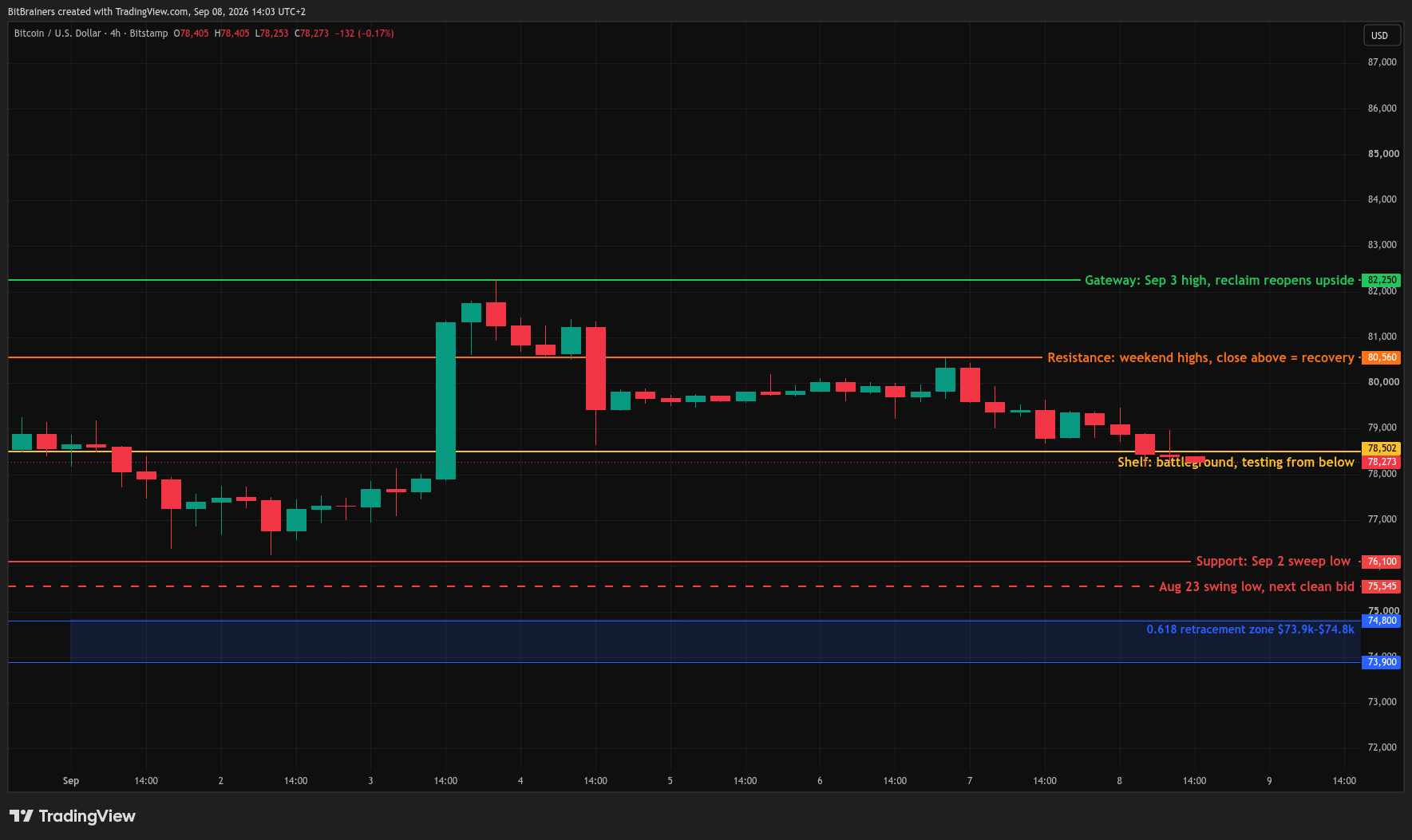
BTC is sitting at $77,024 as of May 19, 2026, down from highs that felt untouchable just months ago. That context matters here. Bear markets do not just compress prices. They expose which passive income methods were built on real mechanics and which ones were built on bull market momentum. This post breaks down staking, lending, and running nodes with zero fluff and a bias toward survival, not hype.
Lending Looks Like Free Money Until the Counterparty Disappears
Crypto lending is the most accessible of the three options and the most dangerous. You deposit BTC or stablecoins into a platform, the platform lends those assets to borrowers, and you collect yield. Simple. Until it is not.
The structural problem is counterparty risk. You are not holding your own assets. You are holding a promise from a centralized entity that it will give those assets back. When credit conditions tighten in a bear market, borrowers default, liquidity dries up, and platforms freeze withdrawals. This has happened multiple times across the industry and the mechanics that caused it have not changed.
Decentralized lending protocols like Aave on Ethereum operate differently. Loans are overcollateralized, meaning borrowers lock up more value than they borrow, and smart contracts handle liquidations automatically. There is no CEO deciding whether to honor withdrawals. But even here, smart contract risk is real, and bear markets bring liquidation cascades that can destabilize entire pools.
On-chain lending data from the first quarter of 2026 shows total value locked across major DeFi lending protocols dropped significantly compared to late 2025 peaks. That shrinkage directly compresses yield rates because fewer borrowers competing for capital means lower interest paid to depositors.
If you are going to touch lending at all, decentralized and overcollateralized is the only model worth considering in a bear. Centralized lending platforms are the first to fail when credit stress hits. Keep that as a hard rule.
Staking Has a Built-In Survival Mechanism That Lending Does Not
Proof-of-stake staking pays you in the network's native token for helping validate transactions. The yield comes from the protocol itself, not from a third-party business that could go insolvent.
Bitcoin runs on proof-of-work, so native BTC staking does not exist. This is a critical point most beginners miss. When someone says they are staking Bitcoin, they are either wrapping BTC into a different ecosystem like Ethereum-based liquid staking protocols, or they are using a centralized platform that is actually lending your BTC under the hood and calling it staking. Neither is the same as staking ETH directly through a validator.
Ethereum staking through the Beacon Chain is the clearest real-world example of a staking system that kept functioning through the 2022 to 2023 bear cycle. Validators continued earning rewards because the reward mechanism is baked into the protocol. It does not require borrowers, credit conditions, or solvent middlemen. You need 32 ETH to run your own validator, which is a significant capital barrier. Liquid staking protocols like Lido lower that barrier but reintroduce smart contract and centralization risk.
The bear market test for staking is simple. If the protocol keeps producing blocks, you keep earning rewards. The yield rates may be lower in native token terms when fewer transactions occur, but the mechanism does not break. That is the key distinction.
One thing most people overlook: staking rewards are typically paid in the token you are staking, which means in a bear market you are accumulating more of an asset that is also dropping in price. The raw token yield looks healthy on paper while your dollar-denominated position bleeds. This is not a reason to avoid staking. It is a reason to only stake assets you already believe in long-term and would hold regardless.
Nodes Require the Most Capital and Return the Most Stability
Running a full node or a masternode is the most misunderstood category here. A full Bitcoin node does not pay you anything. It validates transactions and strengthens the network, but there is no reward. People who tell you otherwise are wrong.
Masternode systems, which exist on networks like Dash, require locking up a specific amount of a given cryptocurrency as collateral, running continuous server infrastructure, and performing network services in exchange for a share of block rewards. The collateral requirement is high by design. For Dash, the requirement has been 1,000 DASH since the masternode concept launched. That capital lock-up is both the cost and the moat.
In bear markets, masternodes do something counterintuitive. Because you have already committed significant capital as collateral, you are incentivized to keep the node running regardless of price. The infrastructure cost in dollar terms actually gets cheaper relative to any fiat income from the rewards as crypto prices fall. Your sunk cost becomes your discipline mechanism.
The real barrier is not technical. Spinning up a VPS on a provider like Vultr or DigitalOcean and configuring a masternode takes a few hours with the right documentation. The barrier is the capital requirement and the network selection risk. Many masternode networks from the 2017 and 2019 eras simply no longer exist. The node operator who locked up capital in a project that died lost everything, yield and principal alike.
This is the contrarian insight that almost no passive income guide mentions: masternode networks that survived multiple bear cycles are a smaller and more selective group than the total number of networks that launched with masternode economics. Survivorship bias makes the category look more viable than it is in aggregate.
Here Is What the Step-by-Step Actually Looks Like
Starting with staking is the most accessible entry point for most people. For Ethereum exposure, acquire ETH through a regulated exchange. If you are in the US, Kraken supports ETH staking directly through its platform and has operated continuously since 2011, making it one of the longer-standing options in the space. For self-custody staking, transfer your ETH to a hardware wallet and explore liquid staking protocols directly.
For nodes, the process looks like this. Step one: identify a network with a documented history of surviving at least one full bear cycle. Step two: verify the collateral requirement and whether you can source it without over-leveraging. Step three: rent a VPS with at least 2 GB RAM and a static IP. Step four: follow the official documentation only, not third-party tutorials of unknown origin. Step five: monitor uptime using a simple service like UptimeRobot.
For lending, if you go this route at all, use only decentralized overcollateralized protocols, connect directly through your own wallet, and never deposit more than you are comfortable losing access to for an extended period.
Regardless of which method you pursue, the assets not actively deployed in a strategy belong in cold storage. A Trezor hardware wallet keeps your BTC and ETH offline and under your direct control, which matters more in a bear market than any yield you could chase. Platforms fail. Hardware wallets do not disappear overnight.
The Assumption This Post Needs to Break Before You Walk Away
Most people reading this came in assuming that more yield equals a better strategy. That assumption is exactly backward in a bear market. Higher advertised yields almost always reflect higher counterparty risk, lower liquidity, or both. The platforms and protocols that paid the most aggressive rates during the last cycle were precisely the ones that could not honor them when conditions shifted. Sustainable passive income in crypto is boring. It comes from owning assets with real network utility, using mechanisms that do not require a functioning credit market, and accepting lower returns in exchange for actual control of your capital. If a yield sounds exciting, that is usually a warning, not an invitation.
With BTC holding at $77,024 this week and on-chain activity showing mixed signals heading into what many analysts are treating as a prolonged consolidation phase, the passive income setups that will still be running in 18 months are the ones built around protocol-level mechanics, not platform promises.
Start with one thing. Pick a staking asset you already hold, move it off a centralized exchange, and explore a self-custody or decentralized staking option. That single step puts you ahead of most people who are still depositing into whatever platform has the highest advertised rate this week.
Disclosure: This post contains affiliate links to Trezor and Kraken. BitBrainers may earn a commission at no extra cost to you. This is not financial advice.
BitBrainers. Follow the data, not the noise.