Sixty days. Multiple AI signal tools. One live trading account on Kraken. That is the actual experiment, not a backtest, not a hypothetical, not a paper trading simulation designed to make the numbers look clean.
I run bots. I use AI tools daily. I have been doing this since 2017, through three full market cycles, and I have seen enough "next-generation alpha signals" to know the difference between a tool built by traders and a tool built by marketers who watched three YouTube videos about machine learning. This post is the unfiltered result of spending 60 days using AI trading signals on live BTC positions, and the results were not what the sales pages promised.
Most AI Signal Tools Are Selling Confidence, Not Edge
The first thing that breaks down in live conditions is conviction. Every signal tool I tested in the first 2 weeks presented its outputs with a clean UI and a green or red label. None of them gave me a realistic picture of their historical miss rate in volatile conditions. Signal confidence scores looked authoritative on screen but had no transparent methodology behind them.
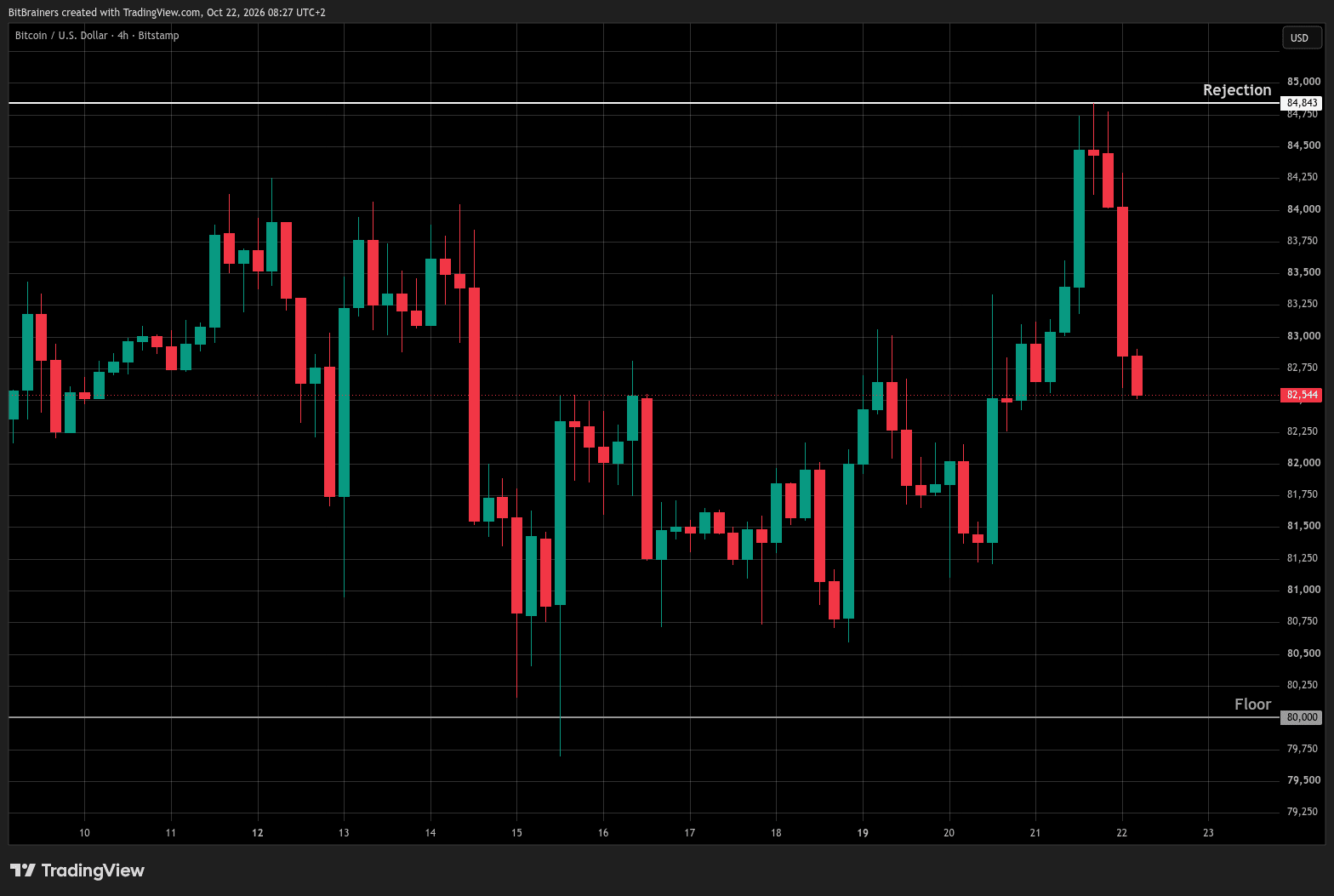
BTC is sitting at $77,458 today, May 20, 2026, and the market has been in a choppy, sideways compression for several days. AI signal tools built on trend-following models broke down visibly during this exact type of consolidation. If a tool only tells you what it got right and never surfaces its failure conditions, that is a red flag before you deposit a single dollar.
The First 30 Days Exposed a Pattern Nobody Talks About
In the first 30 days I tested 4 signal platforms, running them side by side with my own manual read of on-chain data and order book flow. Three of the four gave directionally correct signals on obvious breakouts. The problem was timing. A signal that fires 40 minutes after price has already moved is not a signal, it is a recap.
This is where most review posts fail. They show you whether the direction was right, not whether the entry window was usable. On BTC, a 40-minute lag can mean the difference between a reasonable entry and chasing price into a wall of resistance.
Here Is What Most People Do Not Know About AI Signal Latency
This is the insider piece most posts skip entirely. Many AI signal platforms run inference on hourly candle closes, which means the model does not process the signal until the candle locks. By the time the alert hits your phone, up to 90 minutes of price action may have already played out. That is a structural problem baked into the architecture, not a bug they are fixing.
The platforms that performed best in my 60-day test were pulling from order book depth data every few minutes, not just OHLCV candle data. That distinction matters enormously at 3 AM when BTC makes a 4% move in 12 minutes and your signal fires after the retracement has already started.
The Second 30 Days Changed How I Weighted Signals
By day 31, I stopped treating any single signal as an action trigger. Instead, I started using AI signals as one of 3 confirmation inputs alongside funding rate data and volume delta. When all 3 aligned, I sized up. When only 1 aligned, I waited or reduced position size significantly. This approach materially changed my discipline, not necessarily my win rate in a clean measurable sense, but my discipline.
The second month also exposed which tools held up during the recent market noise. BTC has shown renewed selling pressure this week following broader risk-off sentiment in macro markets, and AI models that were tuned to bullish trend conditions produced a wave of false long signals. Models trained on the 2025 bull run data had not seen this kind of consolidation behavior often enough to price it correctly.
Not All Signal Categories Are Equal and Altcoin Signals Are Worse
I kept BTC as the primary focus for a reason. AI signal tools on ETH worked with roughly similar quality to BTC signals, still imperfect, still laggy, but coherent. The moment I tested altcoin signals, the error rate climbed noticeably. Lower liquidity assets respond differently to the same on-chain patterns, and the models had less training data to work from.
One tool pushed a strong buy signal on a mid-cap altcoin on day 44 of my test. The logic looked clean on the dashboard, but a basic check of the order book on Kraken showed a thin bid wall with no real depth to support it. The signal was technically correct about the momentum pattern, but blind to execution risk. That is a dangerous combination for anyone trading beyond BTC.
The Tools That Actually Added Value Had One Thing in Common
The 2 tools out of the 4 that I kept using past day 60 both had one feature the others lacked. They surfaced the conditions under which their model had historically underperformed, inside the dashboard, before you acted on the signal. One of them actually flagged low-confidence environments based on volatility regime detection, which meant I knew when to stand down. That kind of honest output is rare in this industry.
Signal tools that only show you wins are structurally incentivized to hide failure modes. When a platform buries its loss conditions in fine print or does not surface them at all, that is a business decision, not an oversight.
Running AI Signals Costs More Than the Subscription Fee
The real cost is attention tax. I spent roughly 2 hours per day in the first month cross-referencing signals with manual analysis, documenting which tools called it right or wrong and under what conditions. That is 60 hours of active work over 60 days, on top of standard market monitoring. If you treat AI signals as a passive income machine that runs while you sleep, you are going to get painful results.
Automation helps, and I do run bots through Kraken's API for execution. Kraken gives me the execution infrastructure to act on signals programmatically, which removes the emotional latency of manual entry. But the intelligence layer still requires human oversight to function safely.
Keeping Your Stack Secure While Running Active Strategies
One practical issue that came up during the 60 days was custody. Running active bot strategies meant keeping a working portion of BTC in a hot wallet, which created real exposure. I keep my long-term BTC holdings in cold storage on a Trezor and only move what I actually need for active trading into the exchange. That separation is non-negotiable when you are running automated execution with live API keys.
The worst-case scenario in automated trading is a compromised API key combined with a poorly scoped permission set and a stack sitting fully on exchange. Cold storage is not an optional add-on, it is part of the architecture for any serious automated strategy.
The Assumption You Brought Into This Post Is Probably Wrong
You likely came into this post expecting me to either trash AI signals completely or pitch them as the future of trading. The honest answer is neither. The tools are useful inputs in a larger system, and they are genuinely getting better at identifying momentum conditions in liquid markets like BTC. What they cannot do is replace the skill of knowing when to ignore them, which is a skill that takes time to build and cannot be bought on a monthly subscription.
The assumption that AI replaces judgment is the one that costs traders the most. The traders who get value from these tools use them to sharpen their own read, not to outsource it.
Start with this: Before you test any AI signal tool in live conditions, run it for 2 full weeks in paper mode and specifically document every signal it fires during a sideways, low-volatility period. That is the environment where these tools break. If it holds up in chop, it earns a small live position. If it falls apart, you saved yourself real money finding out on paper first.
Disclosure: This post contains affiliate links to Trezor and Kraken. BitBrainers may earn a commission at no extra cost to you. This is not financial advice.