₿ BTC Loading... via Binance

Wednesday, May 20, 2026

The Honest Results of Using AI Trading Signals for 60 Days

BitBrainers - The Honest Results of Using AI Trading Signals for 60 Days analysis and insights

Sixty days. Multiple AI signal tools. One live trading account on Kraken. That is the actual experiment, not a backtest, not a hypothetical, not a paper trading simulation designed to make the numbers look clean.

I run bots. I use AI tools daily. I have been doing this since 2017, through three full market cycles, and I have seen enough "next-generation alpha signals" to know the difference between a tool built by traders and a tool built by marketers who watched three YouTube videos about machine learning. This post is the unfiltered result of spending 60 days using AI trading signals on live BTC positions, and the results were not what the sales pages promised.

Most AI Signal Tools Are Selling Confidence, Not Edge

The first thing that breaks down in live conditions is conviction. Every signal tool I tested in the first 2 weeks presented its outputs with a clean UI and a green or red label. None of them gave me a realistic picture of their historical miss rate in volatile conditions. Signal confidence scores looked authoritative on screen but had no transparent methodology behind them.

BTC is sitting at $77,458 today, May 20, 2026, and the market has been in a choppy, sideways compression for several days. AI signal tools built on trend-following models broke down visibly during this exact type of consolidation. If a tool only tells you what it got right and never surfaces its failure conditions, that is a red flag before you deposit a single dollar.

The First 30 Days Exposed a Pattern Nobody Talks About

In the first 30 days I tested 4 signal platforms, running them side by side with my own manual read of on-chain data and order book flow. Three of the four gave directionally correct signals on obvious breakouts. The problem was timing. A signal that fires 40 minutes after price has already moved is not a signal, it is a recap.

This is where most review posts fail. They show you whether the direction was right, not whether the entry window was usable. On BTC, a 40-minute lag can mean the difference between a reasonable entry and chasing price into a wall of resistance.

Here Is What Most People Do Not Know About AI Signal Latency

This is the insider piece most posts skip entirely. Many AI signal platforms run inference on hourly candle closes, which means the model does not process the signal until the candle locks. By the time the alert hits your phone, up to 90 minutes of price action may have already played out. That is a structural problem baked into the architecture, not a bug they are fixing.

The platforms that performed best in my 60-day test were pulling from order book depth data every few minutes, not just OHLCV candle data. That distinction matters enormously at 3 AM when BTC makes a 4% move in 12 minutes and your signal fires after the retracement has already started.

The Second 30 Days Changed How I Weighted Signals

By day 31, I stopped treating any single signal as an action trigger. Instead, I started using AI signals as one of 3 confirmation inputs alongside funding rate data and volume delta. When all 3 aligned, I sized up. When only 1 aligned, I waited or reduced position size significantly. This approach materially changed my discipline, not necessarily my win rate in a clean measurable sense, but my discipline.

The second month also exposed which tools held up during the recent market noise. BTC has shown renewed selling pressure this week following broader risk-off sentiment in macro markets, and AI models that were tuned to bullish trend conditions produced a wave of false long signals. Models trained on the 2025 bull run data had not seen this kind of consolidation behavior often enough to price it correctly.

Not All Signal Categories Are Equal and Altcoin Signals Are Worse

I kept BTC as the primary focus for a reason. AI signal tools on ETH worked with roughly similar quality to BTC signals, still imperfect, still laggy, but coherent. The moment I tested altcoin signals, the error rate climbed noticeably. Lower liquidity assets respond differently to the same on-chain patterns, and the models had less training data to work from.

One tool pushed a strong buy signal on a mid-cap altcoin on day 44 of my test. The logic looked clean on the dashboard, but a basic check of the order book on Kraken showed a thin bid wall with no real depth to support it. The signal was technically correct about the momentum pattern, but blind to execution risk. That is a dangerous combination for anyone trading beyond BTC.

The Tools That Actually Added Value Had One Thing in Common

The 2 tools out of the 4 that I kept using past day 60 both had one feature the others lacked. They surfaced the conditions under which their model had historically underperformed, inside the dashboard, before you acted on the signal. One of them actually flagged low-confidence environments based on volatility regime detection, which meant I knew when to stand down. That kind of honest output is rare in this industry.

Signal tools that only show you wins are structurally incentivized to hide failure modes. When a platform buries its loss conditions in fine print or does not surface them at all, that is a business decision, not an oversight.

Running AI Signals Costs More Than the Subscription Fee

The real cost is attention tax. I spent roughly 2 hours per day in the first month cross-referencing signals with manual analysis, documenting which tools called it right or wrong and under what conditions. That is 60 hours of active work over 60 days, on top of standard market monitoring. If you treat AI signals as a passive income machine that runs while you sleep, you are going to get painful results.

Automation helps, and I do run bots through Kraken's API for execution. Kraken gives me the execution infrastructure to act on signals programmatically, which removes the emotional latency of manual entry. But the intelligence layer still requires human oversight to function safely.

Keeping Your Stack Secure While Running Active Strategies

One practical issue that came up during the 60 days was custody. Running active bot strategies meant keeping a working portion of BTC in a hot wallet, which created real exposure. I keep my long-term BTC holdings in cold storage on a Trezor and only move what I actually need for active trading into the exchange. That separation is non-negotiable when you are running automated execution with live API keys.

The worst-case scenario in automated trading is a compromised API key combined with a poorly scoped permission set and a stack sitting fully on exchange. Cold storage is not an optional add-on, it is part of the architecture for any serious automated strategy.

The Assumption You Brought Into This Post Is Probably Wrong

You likely came into this post expecting me to either trash AI signals completely or pitch them as the future of trading. The honest answer is neither. The tools are useful inputs in a larger system, and they are genuinely getting better at identifying momentum conditions in liquid markets like BTC. What they cannot do is replace the skill of knowing when to ignore them, which is a skill that takes time to build and cannot be bought on a monthly subscription.

The assumption that AI replaces judgment is the one that costs traders the most. The traders who get value from these tools use them to sharpen their own read, not to outsource it.


Start with this: Before you test any AI signal tool in live conditions, run it for 2 full weeks in paper mode and specifically document every signal it fires during a sideways, low-volatility period. That is the environment where these tools break. If it holds up in chop, it earns a small live position. If it falls apart, you saved yourself real money finding out on paper first.


Disclosure: This post contains affiliate links to Trezor and Kraken. BitBrainers may earn a commission at no extra cost to you. This is not financial advice.

BitBrainers. We check the facts so you don't have to.
Why Most Crypto Passive Income Is a Lie and What Actually Works

BitBrainers - Why Most Crypto Passive Income Is a Lie and What Actually Works analysis and insights

Every six months, a new passive income meta emerges in crypto. Yield farming, liquidity provision, staking derivatives, real-world asset protocols. Each one gets packaged as "set it and forget it" wealth. Most of them quietly drain your portfolio while you sleep. After nearly a decade in this space and a graveyard of failed strategies behind me, here is what I actually know.

Most Yield in Crypto Pays You With Your Own Money

This is the part nobody explains clearly when they are selling you on a protocol. A significant portion of yield in decentralized finance comes from token emissions. The protocol mints new tokens, distributes them to liquidity providers, and calls it a reward. What actually happens is your share of the pool inflates while the token price drops. You earn 40 tokens a week. The token loses value faster than you accumulate it. Net result: you lost money while technically earning yield.

This is not a fringe problem. It is the structural reality of most DeFi protocols built between 2020 and 2025. The projects that survived that period are the ones with actual fee revenue, meaning real users paying for real activity, not ponzinomics dressed up as innovation.

The lesson here is blunt. Before touching any yield product, ask one question: where does the yield actually come from? If the answer involves a native governance token with no clear utility, walk away.

Liquid Staking Is the One Strategy That Held Up

Let us be specific. Proof-of-stake networks that generate staking rewards through transaction fees and validator incentives produce real yield. Ethereum shifted to proof-of-stake in September 2022. Since then, liquid staking has become one of the most legitimate passive income mechanisms in crypto. Protocols like Lido and Rocket Pool allow users to stake ETH without locking it, receiving a liquid token in return.

Bitcoin does not have native staking. That is worth saying plainly. Anyone telling you they are staking BTC through some wrapper protocol is either confused or misleading you. What they are actually doing is lending BTC, wrapping it in a smart contract, or using a custodial product. Each of those carries a different risk profile and most carry substantially more risk than native staking.

For ETH holders, liquid staking through established protocols with multi-year track records is the most defensible passive income strategy available. It is not risk-free. Smart contract exploits happen. Slashing events happen. But the mechanics are transparent and the yield source is real.

The Contrarian Take Nobody Publishes About Staking Rewards

Most people do not know this: validator centralization is the hidden risk that makes liquid staking yield less secure than it appears. When a large portion of staked assets concentrate with a single protocol, that protocol gains outsized influence over network consensus. Ethereum researchers have flagged this as a systemic concern for years. If a dominant staking provider gets compromised or acts maliciously, the damage is network-wide, not just limited to that protocol's users.

This is not theoretical. Lido at one point controlled a significant fraction of all staked ETH, enough that Ethereum's own developers publicly debated whether this concentration posed an existential risk to the network's neutrality. Ethereum founder Vitalik Buterin has actively discussed using AI-based verification systems to help secure crypto networks against exactly these kinds of structural vulnerabilities. His reasoning, covered in a recent Decrypt report, points toward a future where automated systems can audit network behavior at a scale humans cannot. That work matters for passive income participants because the security of your staking rewards ultimately depends on the health of the network you are staking on.

The contrarian insight is this: diversifying your staking across multiple validators or protocols is more important than maximizing APR. A slightly lower yield from a more decentralized setup is genuinely safer than chasing the highest number on a dashboard.

Bitcoin Holders Have Three Legitimate Options and None of Them Are Easy

BTC sits at $77,461 as of May 20, 2026. If you are holding Bitcoin and want to generate income, your options are narrow and all of them involve tradeoffs.

Option 1: Lending through regulated platforms. Centralized lending platforms allow you to lend BTC and earn interest. The risk is counterparty failure. The collapses of Celsius and BlockFi taught this lesson the hard way. If you cannot verify that your collateral is segregated and your counterparty is solvent, you are exposed.

Option 2: Covered calls on Bitcoin. This is an options strategy where you hold BTC and sell the right to buy it at a higher price. You collect the premium. If BTC rises past the strike price, you miss the upside above that level. This strategy works in sideways or slowly appreciating markets. It requires understanding options mechanics and active management. It is not passive.

Option 3: Running a node on a Bitcoin Layer 2. Networks like Stacks allow participants to earn BTC yield by locking STX tokens through a mechanism called Stacking. The yield comes from BTC transferred by miners. It is real. It is also complex, involves locking tokens for defined cycles, and carries smart contract risk. Not for beginners.

None of these are plug-and-play. Anyone selling you a BTC passive income product with no complexity is either simplifying aggressively or hiding something.

How to Actually Start Without Blowing Up Your Portfolio

Here is a step-by-step approach that does not assume you have everything figured out.

Step 1: Separate your core holdings from your yield-seeking stack. Decide what percentage of your crypto you will never touch for yield purposes. For most people this should be the majority of their BTC. Keep it cold. A hardware wallet like a Trezor keeps your long-term stack genuinely safe from platform collapses, hacks, and smart contract failures. Your passive income attempts should only involve capital you can afford to lose or lock up.

Step 2: Start with native staking on a proof-of-stake network. If you hold ETH, move a portion to a reputable liquid staking protocol and observe how it works for 90 days before scaling up. Understand the mechanics before you increase your position.

Step 3: Track yield sources, not just yield numbers. For every product you use, document where the yield comes from. Token emissions, trading fees, validator rewards, lending interest. Each source has a different risk profile. Token emissions are the most fragile. Fee-based yield is the most durable.

Step 4: Set a re-evaluation schedule. Passive income in crypto is not set-and-forget. Protocols get exploited. Tokenomics change. Governance votes can alter reward structures overnight. Check your positions monthly at minimum and understand what changed.

Step 5: Never stake or lend more than you would be comfortable losing. This is not pessimism. It is position sizing. Every yield product in crypto carries tail risk that traditional finance products do not.

The Assumption You Walked In With Is Probably Wrong

You likely came here believing passive income in crypto is either completely broken or that some new protocol has finally solved the problem. Neither is accurate. The reality is more specific. Passive income strategies tied to real network activity, such as validator rewards and genuine fee revenue, have held up. Strategies built on token inflation, artificial APR, and undercollateralized lending have collapsed repeatedly since 2021. The split is not between old and new or between DeFi and CeFi. It is between protocols with real revenue and protocols that print yield from nothing. One of those is an income strategy. The other is a slow liquidation dressed up in a dashboard.

A development worth watching right now: in May 2026, AI-assisted network verification is moving from research to early implementation across several blockchain projects. If Buterin's vision for AI-based security auditing gains traction, it could change how staking security is assessed and how risk in liquid staking protocols gets priced. That is not reason to act today. It is reason to stay informed.

Realistic expectations: Building meaningful passive income from crypto takes capital, time, and tolerance for complexity. It is not a shortcut. The strategies that work require active monitoring and periodic rebalancing. Start with a small allocation, learn the mechanics of one strategy properly, and expand only after you understand the risks.

Your first action step: Audit every yield product you currently use. Write down the yield source for each one. If you cannot explain where the yield comes from in one sentence, you do not understand the risk you are taking.


Disclosure: This post contains affiliate links to Trezor and Kraken. BitBrainers may earn a commission at no extra cost to you. This is not financial advice.

Sources
Decrypt. Ethereum Founder Vitalik Buterin Says AI Verification Could Help Secure Crypto Networks

BitBrainers. The crypto analysis you wish you had yesterday.

The Bitcoin Reserve Nobody Can Verify

BitBrainers - The Bitcoin Reserve Nobody Can Verify

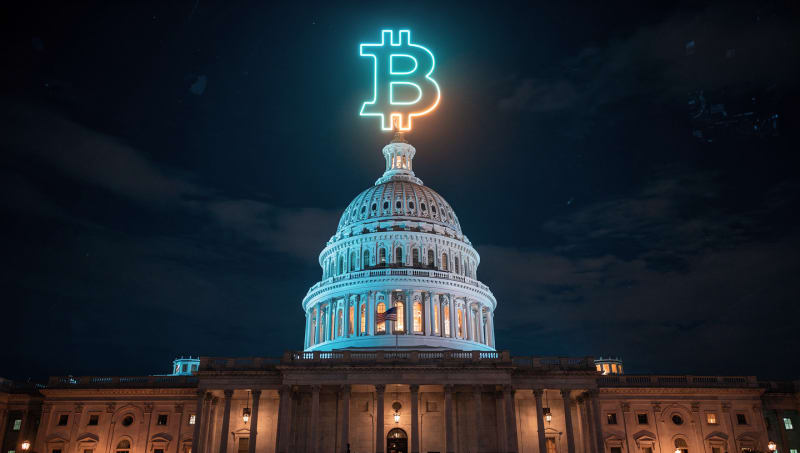
Over 14 months ago, President Trump signed an executive order establishing the U.S. Strategic Bitcoin Reserve. Since then, the government has said very little about what actually exists, how much it holds, or whether it functions at all.

That silence just got a deadline.

Patrick Witt, executive director of the President's Council of Advisors for Digital Assets, stood on stage at Consensus Miami on May 6 and told the audience an announcement on the SBR is coming "in the next few weeks." He had already previewed the same message days earlier at Bitcoin 2026 in Las Vegas. Two conferences, same line. The White House is signaling something is coming. What exactly, nobody knows yet.

What the White House Actually Said

Witt's comments were specific in tone and vague in substance. He confirmed the administration has spent months counting, consolidating, and attempting to secure Bitcoin held across dozens of federal agencies. The work, he said, has been happening "largely out of public view."

That custody work turned out to be more complicated than anyone anticipated. Witt revealed that some cold wallets were discovered stored in desk drawers across various agencies before the White House moved to centralize oversight. This is the world's largest sovereign Bitcoin holder. Desk drawers.

The situation got worse. In January 2026, Bloomberg reported the U.S. Marshals Service was investigating a possible hack of government digital-asset accounts after on-chain investigator ZachXBT claimed a hacker stole more than $60 million from government seizure wallets in late 2025. A separate $24 million theft was traced to October 2024.

Witt cited these incidents directly as the reason centralized custody is not optional. "Custody is unique for digital assets," he said. The government had apparently not figured that out until now.

How Much Bitcoin Does the U.S. Actually Hold?

Witt declined to give a specific number. He estimated federal holdings at somewhere between 198,000 and 328,000 BTC. That is a 130,000 BTC range. At current prices, the uncertainty alone is worth roughly $10 billion. The world's most powerful government cannot tell you within $10 billion how much Bitcoin it holds. That is the state of the Strategic Bitcoin Reserve in May 2026.

For context, China is estimated to hold roughly 190,000 BTC from various seizures, and the United Kingdom holds approximately 61,000 BTC. El Salvador, which adopted Bitcoin as legal tender, holds around 6,174 BTC. None of these countries have announced plans to treat Bitcoin as a formal reserve asset on the scale the U.S. is contemplating.

The Legislation Problem

The executive order that created the SBR has a structural weakness. It can be revoked by any future president. That is why codification through Congress is critical, and it is exactly where the process currently sits.

Two bills are in motion. In the Senate, Wyoming Senator Cynthia Lummis has introduced the BITCOIN Act, which would direct the Treasury to purchase 200,000 BTC per year for five years and hold those coins for a minimum of 20 years. In the House, Representative Nick Begich has introduced the American Reserves Modernization Act. Neither has passed. Neither has a clear timeline.

If the BITCOIN Act passes, the Treasury is estimated to begin its first official Bitcoin purchase in Q4 2026, which would make the United States the first sovereign nation to actively accumulate Bitcoin as a strategic reserve asset. The proposal to acquire 1 million BTC over five years would represent, at current prices, roughly $81 billion in committed purchasing. Whether Congress has the appetite to pass it remains the open question.

Witt was direct about the constraint. "It always needs to be followed up with proper legislation," he said. What he did not say is when that legislation will actually move.

What the Announcement Might Actually Mean

Based on Witt's framing at both conferences, the coming announcement will focus on operational structure and legal footing, not new purchases. The White House will tell the world it has organized its Bitcoin, fixed its custody, and established a legal framework. It will not announce that the U.S. is buying more Bitcoin. Not yet.

That distinction matters for price. The market has been pricing in a policy catalyst. What it may get is a progress report.

What Individual Holders Should Take From This

The U.S. government storing Bitcoin in desk drawers across federal agencies before a rushed centralization effort is not just a bureaucratic embarrassment. It is a reminder of what self-custody actually means and why it matters even at the institutional level.

If the world's most powerful government cannot manage its own Bitcoin securely without losing tens of millions to hacks and mismanagement, the argument for holding your own keys becomes harder to dismiss. Custody is not a technical detail. It is the whole point.

The broader takeaway from the SBR situation for individual holders is this: sovereign accumulation at scale, even slow and disorganized, reduces the supply available to everyone else. Every Bitcoin a government locks away for 20 years under the BITCOIN Act is one that cannot be sold into the market. The direction of travel is clear regardless of the legislative timeline.

For anyone sitting on exchange balances waiting for a better time to move to cold storage, the SBR story is the case study. Start with a Trezor and get your coins off exchange before the window of easy access narrows further. The government learned this lesson expensively. You do not have to.

Why This Still Matters

The SBR announcement, whatever form it takes, is the most significant Bitcoin policy event of 2026. A credible custody framework from the U.S. government removes a genuine risk, the risk that seized assets get sold or mismanaged, and replaces it with the implicit signal that Washington treats Bitcoin as a long-term strategic asset.

That signal, even without new purchases, has weight. Every sovereign wealth fund, every central bank, every institutional allocator watching from the sidelines reads the same thing: the U.S. is not selling.

The announcement Witt promised is now overdue. Bitcoin is trading near $78,000. Congress is slow. The desk drawers have been emptied.

The reserve exists. Probably. The announcement is coming. Supposedly.


Sources: CoinDesk, TheStreet, Bitcoin.com


BitBrainers. We check the facts so you don't have to.
Tuesday, May 19, 2026

How AI Detects Rug Pulls Before the Exit Liquidity Gets Pulled

BitBrainers - How AI Detects Rug Pulls Before the Exit Liquidity Gets Pulled analysis and insights

Most traders find out about a rug pull the same way. They refresh their portfolio, see a zero, and spend twenty minutes convincing themselves it's a glitch. It is not a glitch. The liquidity is gone, the dev wallet vanished three blocks ago, and you were the exit liquidity.

The gap between when a rug happens and when you notice is usually measured in seconds. AI is starting to close that gap before the pull even triggers.

Rug Pulls Have Predictable Fingerprints That Humans Miss in Real Time

A rug pull is not random. It follows a pattern: token deploys, liquidity gets added, social buzz gets manufactured, wallets accumulate, then the top wallet dumps and pulls liquidity in the same transaction bundle. That sequence leaves forensic traces at every step, and most of those traces are detectable before the final move.

The problem is that a human watching a Telegram channel cannot process 47 wallet interactions, a suspicious mint function buried in contract bytecode, and a liquidity lock with a 48-hour expiry all at the same time. An AI system running on-chain data can flag all three in under a second. The bottleneck was never the data. It was processing speed.

On-chain analysis tools now monitor token contract deployments in real time, scanning for known dangerous function signatures like hidden mint calls, owner-only transfer restrictions, and blacklist mechanisms baked into the code. These are not theoretical red flags. They are the literal code that lets a dev drain a pool or freeze your tokens so you cannot sell.

Smart Contract Analysis Is the First Layer and Most Traders Skip It

Before a single dollar of liquidity goes in, the contract already tells you most of what you need to know. AI-powered scanners read the compiled bytecode and flag functions that allow the owner to modify taxes to 99%, pause trading, or mint unlimited supply. These functions are not bugs. They are intentional backdoors.

Tools like Token Sniffer and Honeypot.is have been running this type of contract analysis for years. They cross-reference function signatures against databases of known exploit patterns. The limitation is that they are reactive. They catch the patterns they have already seen.

The more sophisticated AI layers now use classification models trained on thousands of confirmed rug contracts, and they flag novel patterns that do not match any known signature but statistically resemble the structural profile of past rugs. That is the actual upgrade. Pattern recognition on structure, not just known code fingerprints.

Wallet Clustering Reveals the Dev Before the Dev Reveals Themselves

Here is what most people outside of on-chain analytics firms do not know: a rug pull team almost always funds their deployment wallet from the same upstream source as their last rug. They use mixers, sure, but mixing is imperfect, and the timing and denomination patterns of mixer outputs are themselves traceable. AI graph analysis can cluster wallets by behavioral similarity even when direct links are obscured.

Arkham Intelligence and Nansen both use entity clustering to map wallet relationships. When a new token launches and the deployer wallet shares behavioral DNA with 3 previous rugged tokens, that is a signal the tools can surface in seconds. A trader manually checking Etherscan would never connect those dots before the rug.

The dev wallet behavior in the 6 to 12 hours before a rug also follows a consistent pattern. Small test transactions, LP position adjustments, sometimes a final small buy to pump price and trigger FOMO buys. AI systems monitoring mempool activity can detect that pre-rug signature even before it executes on-chain.

Liquidity Lock Analysis Is Easier to Game Than You Think

Liquidity locks are the one piece of rug pull prevention that retail traders learned to demand. See a lock, feel safe. This is the assumption that will get you rugged in 2026. A lock on Unicrypt or Team Finance means nothing if the lock duration is 24 hours, the lock covers only a fraction of the pool, or the locked token is the LP token for a pool the dev controls.

AI tools now break down the lock parameters in plain language and flag whether the lock percentage, duration, and locker contract actually provide meaningful protection. A 30-day lock on 40% of liquidity is not safety. It is a countdown timer with a marketing wrapper.

The more important signal is what happens to liquidity velocity after the lock expires. AI systems monitoring pools in real time can detect when large LP positions start moving in the hours surrounding an expiry, sometimes before the window even opens, because the dev is staging the exit. That staging behavior, withdrawal from staking contracts, bridging of connected wallets, and gas top-ups on exit addresses, is detectable and is increasingly being flagged automatically.

The Real-World Failure Case That Shows Where AI Still Falls Short

The Magnate Finance collapse on Base is a documented case where multiple warning signals were present and largely ignored until it was too late. The deployer wallet had connections to a previous protocol exploit, the contract contained admin functions that should have triggered scanner alerts, and the liquidity behavior in the final hours before the drain showed abnormal patterns. The on-chain data was there. The tools existed. The integration between the warning and the trader was broken.

That gap between the signal and the user action is where most rug pull losses still happen. AI detection is only useful if the output reaches you before you transact, not after. The tooling layer is ahead of the user interface layer by a significant margin right now.

BNB Chain remains the highest-volume environment for rug pulls because deployment costs are low and the dev community is anonymous by default. AI monitoring on BNB Chain is more mature than on newer chains precisely because the data set is larger. Newer chains like Base and some Solana ecosystems have less training data, which means AI models are less reliable there. This week, Solana meme token activity has spiked again alongside BTC hovering at $76,528, and that correlation between BTC sideways movement and alt token FOMO is exactly the environment where rug frequency historically climbs.

Contrarian Take: AI Detection Tools Are Already Being Used to Build Better Rugs

This is what the rug pull tutorial threads on closed Telegram channels are actually discussing right now. Sophisticated scam teams run their own contracts through Token Sniffer, Honeypot.is, and similar tools before they deploy. They iterate until the contract gets a clean score. Clean score, real launch, rug anyway.

The AI arms race is real. A contract that passes all automated checks but still has a multi-sig admin wallet with a 24-hour timelock can still be drained. The tools detect what they are trained to detect. The scam ecosystem actively trains against those detections. This does not mean the tools are useless. It means you cannot rely on a single scanner and think you are protected. You need layered analysis.

The Setup That Actually Works for Active Traders

Running a workflow where you combine contract scanning, wallet clustering, and liquidity monitoring gives you a detection layer that is hard to beat at the speed retail traders operate. The practical stack looks like this: Token Sniffer or Go Plus Security for contract analysis, Bubblemaps for wallet distribution visualization, and Arkham or Nansen for entity history on the deployer address. None of these tools alone is sufficient. Together they cover the three main attack vectors.

For anything you plan to hold longer than a few hours, move it off exchange immediately after your entry. A Trezor hardware wallet keeps your stack cold even while your scanning tools stay hot. The tokens a rug pull cannot touch are the ones sitting in a wallet only you control.

For the exchange side, if you are converting profits or bridging back to BTC after a successful alt trade, Kraken has reliable liquidity and a compliance track record that matters when you are moving real volume. Use regulated infrastructure for your exit routes. Use cold storage for your holdings. Do not mix those two functions up.

The Assumption This Post Is Asking You to Drop

You came into this post believing that AI rug pull detection is a tool for degens trading micro-cap garbage. It is not. The same on-chain behavioral analysis that catches a $200k rug on BNB Chain is being applied to mid-cap DeFi protocols with nine-figure TVL. The attack surface is not limited to obvious scam tokens. Smart contract exploits, admin key compromises, and governance attacks all leave pre-execution signals that the same AI frameworks are designed to catch. The scale of the target does not change the forensic method. Treating rug pull detection as a niche tool for low-cap plays is the assumption that leaves serious traders exposed on serious positions.

The one thing to try first: run the contract address of your next planned DeFi entry through Go Plus Security's API before you touch it. Free, takes four seconds, and will immediately show you whether the contract has mint functions, blacklist capabilities, or trading pause controls. Do that once and you will do it every time.


Disclosure: This post contains affiliate links to Trezor and Kraken. BitBrainers may earn a commission at no extra cost to you. This is not financial advice.

BitBrainers. Follow the data, not the noise.

Staking vs Lending vs Nodes: Which Passive Income Method Survives a Bear Market

BitBrainers - Staking vs Lending vs Nodes: Which Passive Income Method Survives a Bear Market analysis and insights

Three strategies. One brutal filter. Most people running passive income setups right now have no idea which category they are actually in until the market drops and takes their yield source with it.

BTC is sitting at $77,024 as of May 19, 2026, down from highs that felt untouchable just months ago. That context matters here. Bear markets do not just compress prices. They expose which passive income methods were built on real mechanics and which ones were built on bull market momentum. This post breaks down staking, lending, and running nodes with zero fluff and a bias toward survival, not hype.

Lending Looks Like Free Money Until the Counterparty Disappears

Crypto lending is the most accessible of the three options and the most dangerous. You deposit BTC or stablecoins into a platform, the platform lends those assets to borrowers, and you collect yield. Simple. Until it is not.

The structural problem is counterparty risk. You are not holding your own assets. You are holding a promise from a centralized entity that it will give those assets back. When credit conditions tighten in a bear market, borrowers default, liquidity dries up, and platforms freeze withdrawals. This has happened multiple times across the industry and the mechanics that caused it have not changed.

Decentralized lending protocols like Aave on Ethereum operate differently. Loans are overcollateralized, meaning borrowers lock up more value than they borrow, and smart contracts handle liquidations automatically. There is no CEO deciding whether to honor withdrawals. But even here, smart contract risk is real, and bear markets bring liquidation cascades that can destabilize entire pools.

On-chain lending data from the first quarter of 2026 shows total value locked across major DeFi lending protocols dropped significantly compared to late 2025 peaks. That shrinkage directly compresses yield rates because fewer borrowers competing for capital means lower interest paid to depositors.

If you are going to touch lending at all, decentralized and overcollateralized is the only model worth considering in a bear. Centralized lending platforms are the first to fail when credit stress hits. Keep that as a hard rule.

Staking Has a Built-In Survival Mechanism That Lending Does Not

Proof-of-stake staking pays you in the network's native token for helping validate transactions. The yield comes from the protocol itself, not from a third-party business that could go insolvent.

Bitcoin runs on proof-of-work, so native BTC staking does not exist. This is a critical point most beginners miss. When someone says they are staking Bitcoin, they are either wrapping BTC into a different ecosystem like Ethereum-based liquid staking protocols, or they are using a centralized platform that is actually lending your BTC under the hood and calling it staking. Neither is the same as staking ETH directly through a validator.

Ethereum staking through the Beacon Chain is the clearest real-world example of a staking system that kept functioning through the 2022 to 2023 bear cycle. Validators continued earning rewards because the reward mechanism is baked into the protocol. It does not require borrowers, credit conditions, or solvent middlemen. You need 32 ETH to run your own validator, which is a significant capital barrier. Liquid staking protocols like Lido lower that barrier but reintroduce smart contract and centralization risk.

The bear market test for staking is simple. If the protocol keeps producing blocks, you keep earning rewards. The yield rates may be lower in native token terms when fewer transactions occur, but the mechanism does not break. That is the key distinction.

One thing most people overlook: staking rewards are typically paid in the token you are staking, which means in a bear market you are accumulating more of an asset that is also dropping in price. The raw token yield looks healthy on paper while your dollar-denominated position bleeds. This is not a reason to avoid staking. It is a reason to only stake assets you already believe in long-term and would hold regardless.

Nodes Require the Most Capital and Return the Most Stability

Running a full node or a masternode is the most misunderstood category here. A full Bitcoin node does not pay you anything. It validates transactions and strengthens the network, but there is no reward. People who tell you otherwise are wrong.

Masternode systems, which exist on networks like Dash, require locking up a specific amount of a given cryptocurrency as collateral, running continuous server infrastructure, and performing network services in exchange for a share of block rewards. The collateral requirement is high by design. For Dash, the requirement has been 1,000 DASH since the masternode concept launched. That capital lock-up is both the cost and the moat.

In bear markets, masternodes do something counterintuitive. Because you have already committed significant capital as collateral, you are incentivized to keep the node running regardless of price. The infrastructure cost in dollar terms actually gets cheaper relative to any fiat income from the rewards as crypto prices fall. Your sunk cost becomes your discipline mechanism.

The real barrier is not technical. Spinning up a VPS on a provider like Vultr or DigitalOcean and configuring a masternode takes a few hours with the right documentation. The barrier is the capital requirement and the network selection risk. Many masternode networks from the 2017 and 2019 eras simply no longer exist. The node operator who locked up capital in a project that died lost everything, yield and principal alike.

This is the contrarian insight that almost no passive income guide mentions: masternode networks that survived multiple bear cycles are a smaller and more selective group than the total number of networks that launched with masternode economics. Survivorship bias makes the category look more viable than it is in aggregate.

Here Is What the Step-by-Step Actually Looks Like

Starting with staking is the most accessible entry point for most people. For Ethereum exposure, acquire ETH through a regulated exchange. If you are in the US, Kraken supports ETH staking directly through its platform and has operated continuously since 2011, making it one of the longer-standing options in the space. For self-custody staking, transfer your ETH to a hardware wallet and explore liquid staking protocols directly.

For nodes, the process looks like this. Step one: identify a network with a documented history of surviving at least one full bear cycle. Step two: verify the collateral requirement and whether you can source it without over-leveraging. Step three: rent a VPS with at least 2 GB RAM and a static IP. Step four: follow the official documentation only, not third-party tutorials of unknown origin. Step five: monitor uptime using a simple service like UptimeRobot.

For lending, if you go this route at all, use only decentralized overcollateralized protocols, connect directly through your own wallet, and never deposit more than you are comfortable losing access to for an extended period.

Regardless of which method you pursue, the assets not actively deployed in a strategy belong in cold storage. A Trezor hardware wallet keeps your BTC and ETH offline and under your direct control, which matters more in a bear market than any yield you could chase. Platforms fail. Hardware wallets do not disappear overnight.

The Assumption This Post Needs to Break Before You Walk Away

Most people reading this came in assuming that more yield equals a better strategy. That assumption is exactly backward in a bear market. Higher advertised yields almost always reflect higher counterparty risk, lower liquidity, or both. The platforms and protocols that paid the most aggressive rates during the last cycle were precisely the ones that could not honor them when conditions shifted. Sustainable passive income in crypto is boring. It comes from owning assets with real network utility, using mechanisms that do not require a functioning credit market, and accepting lower returns in exchange for actual control of your capital. If a yield sounds exciting, that is usually a warning, not an invitation.

With BTC holding at $77,024 this week and on-chain activity showing mixed signals heading into what many analysts are treating as a prolonged consolidation phase, the passive income setups that will still be running in 18 months are the ones built around protocol-level mechanics, not platform promises.

Start with one thing. Pick a staking asset you already hold, move it off a centralized exchange, and explore a self-custody or decentralized staking option. That single step puts you ahead of most people who are still depositing into whatever platform has the highest advertised rate this week.

Disclosure: This post contains affiliate links to Trezor and Kraken. BitBrainers may earn a commission at no extra cost to you. This is not financial advice.

BitBrainers. Follow the data, not the noise.

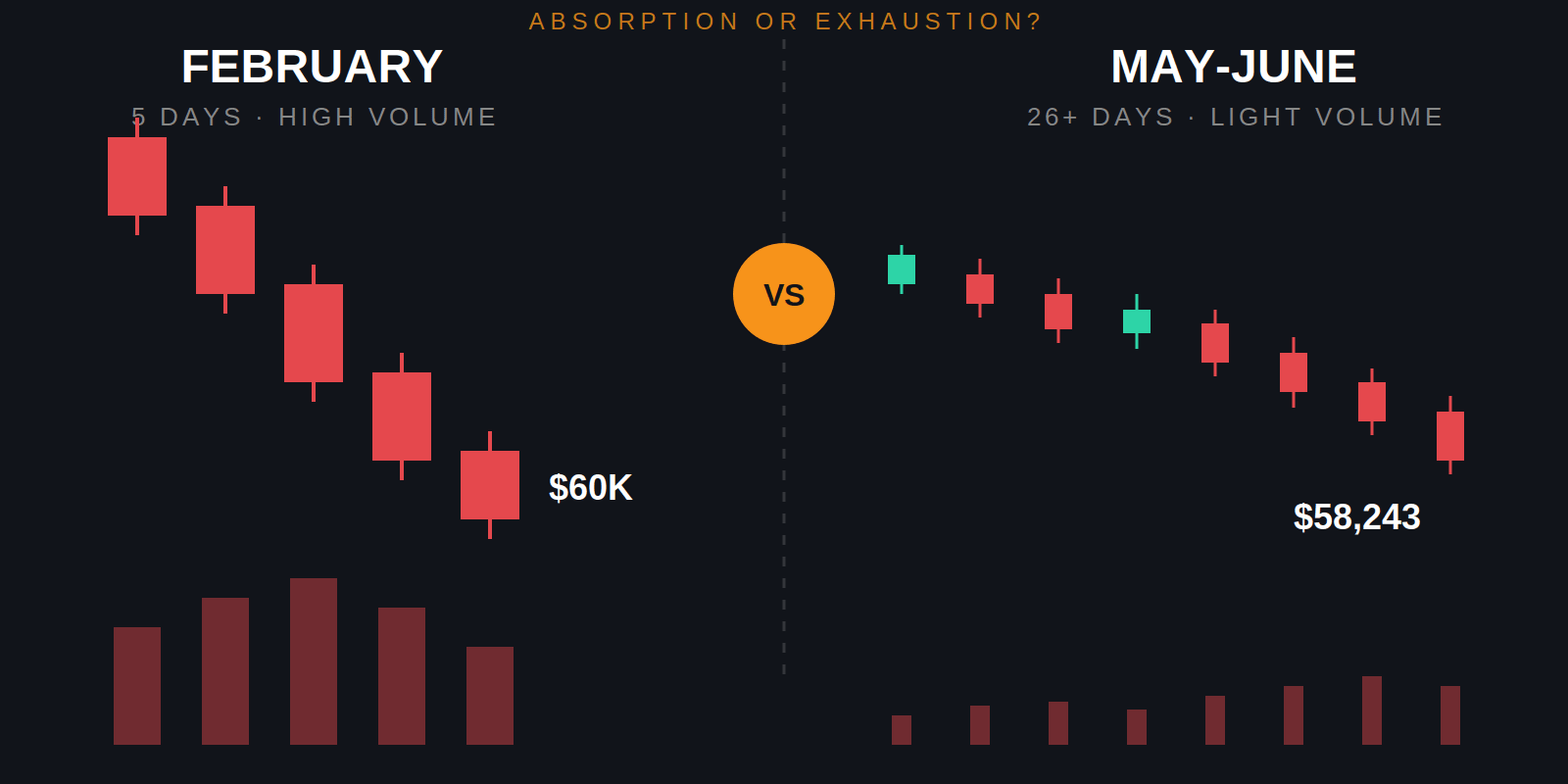
Absorption or Exhaustion: What BTC's Slow Bleed to $58K Is Telling Traders.

By BitBrainers Editorial Bitcoin has now made the trip down to the $60,000 zone twice this year, and the two trips don't look anyth...

Absorption or Exhaustion: What BTC's Slow Bleed to $58K Is Telling Traders.